
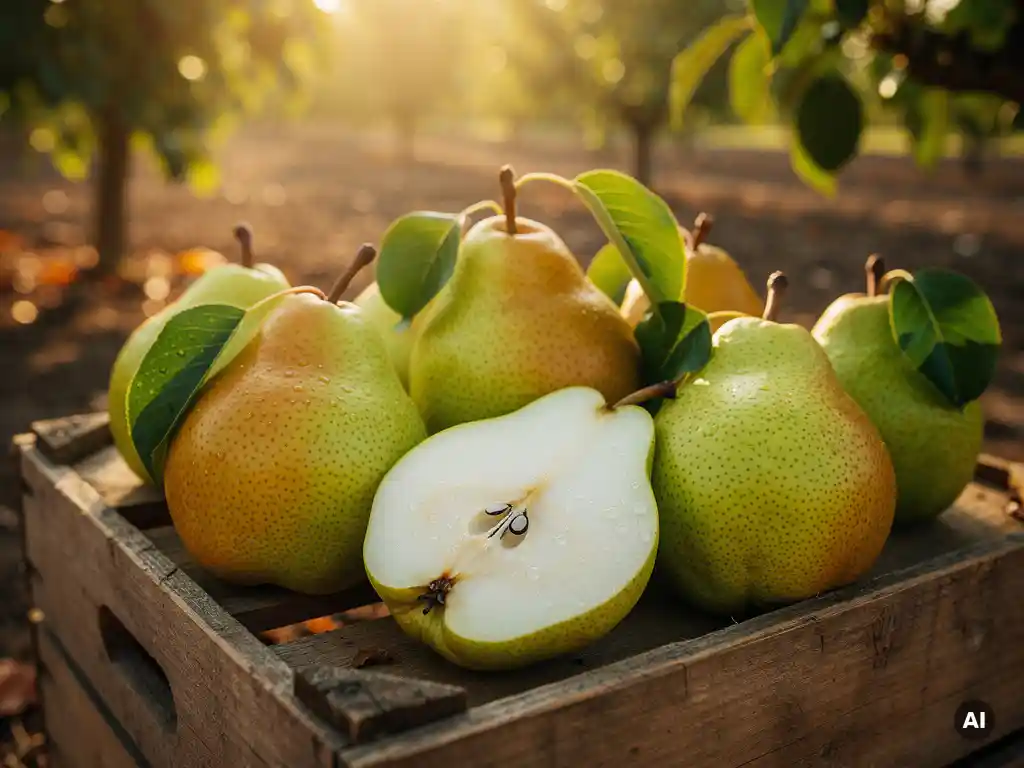
The pear varieties with the crunchiest texture are Asian pears such as Hosui, Shinseiki, and 20th Century, along with certain European varieties like Bosc and Conference when eaten slightly underripe. Texture in pears is largely determined by cell structure and the concentration of stone cells, which give the flesh its characteristic firmness. Below, we answer the most common questions about crunchy pear varieties, from what drives that satisfying snap to which ones taste best eaten fresh. If you’d like to explore our work in pear breeding, feel free to get in touch with us directly.
What makes a pear variety crunchy instead of soft?
A pear variety is crunchy rather than soft because of the density and distribution of stone cells (also called sclerenchyma cells or grit cells) in its flesh, combined with high turgor pressure in the fruit’s cells. Varieties with many tightly packed stone cells and thick cell walls resist compression when you bite into them, producing that firm, snappy texture. Varieties with fewer stone cells and thinner cell walls soften quickly as they ripen.
Beyond cell structure, the water content and sugar composition of a variety also play a role. Firmer pears tend to hold more water in a structured cell matrix, which contributes to juiciness without the mushy collapse you get in softer types. Genetics is the primary driver here. Breeders select for these structural traits deliberately, because texture is one of the most important quality characteristics for consumers and retailers alike. At Better3Fruit, our pear breeding program evaluates texture alongside taste, disease tolerance, and grower performance to develop varieties that deliver consistently across the supply chain.
Which pear varieties are known for their crunchy texture?
The pear varieties most consistently known for their crunchy texture include Asian pear types and a handful of European varieties that retain firmness even at full ripeness. Asian pears are the gold standard for crunch, but some European cultivars offer a firm bite when harvested and eaten at the right moment.
- Hosui – a Japanese Asian pear with dense, juicy flesh and a pronounced crunch
- Shinseiki (New Century) – mild and sweet with a reliably firm, crisp texture
- 20th Century (Nijisseiki) – fine-grained flesh, refreshing crunch, widely grown in Asia
- Bosc – a European variety with denser, firmer flesh than most, holding its texture well
- Conference – firm when slightly underripe, popular in Europe for its balance of crunch and flavor
- Concorde – a cross between Conference and Comice that stays firmer longer than many European types
If you want to explore the full range of pear cultivars available for licensing and commercial growing, you can browse our pear variety portfolio to see what traits each selection prioritizes.
How does ripeness affect a pear’s crunchiness?
Ripeness has a direct and significant effect on a pear’s crunchiness. As a pear ripens, enzymes break down the cell walls and convert starches to sugars, softening the flesh progressively. A pear that is firm and crunchy at harvest will become softer and more buttery as it approaches full ripeness. Eating a pear slightly before peak ripeness preserves the most crunch.
This is why the same variety can feel completely different depending on when you eat it. A Conference pear eaten two days after purchase may still have a satisfying snap, while the same pear left on the counter for a week will be noticeably softer and more yielding. Asian pears are an exception to this pattern. They are designed to stay crisp even at full ripeness, which is one of the key reasons they appeal to consumers who prefer texture over the traditional buttery softness of European pears. For most European varieties, the window for eating at peak crunch is relatively short and depends heavily on storage conditions and temperature.
What’s the difference between Asian pears and European pears in texture?
The key difference between Asian pears and European pears in texture is that Asian pears remain crisp and crunchy even when fully ripe, while European pears are bred to soften into a smooth, buttery texture at peak ripeness. This distinction comes down to genetics and the way each group’s cell walls respond to the ripening process.
Asian pear texture
Asian pears (Pyrus pyrifolia and related species) have a round, apple-like shape and coarse, grainy flesh that stays firm throughout ripening. Their stone cells are distributed more evenly through the flesh, and their cell walls degrade more slowly during ripening. The result is a juicy, crunchy fruit that can be eaten straight from the tree or after cold storage without losing its characteristic snap.
European pear texture
European pears (Pyrus communis) are typically harvested before full ripeness and then allowed to ripen off the tree. As they ripen, their flesh transitions from firm and slightly gritty to smooth, melting, and aromatic. Varieties like Williams (Bartlett), Comice, and Doyenné du Comice are celebrated precisely for this buttery quality. The trade-off is a much shorter eating window and greater sensitivity to over-ripening, which can result in a mealy or grainy texture if the timing is missed.
Do crunchy pears taste different from soft pears?
Yes, crunchy pears and soft pears do taste noticeably different, and the difference goes beyond texture alone. Crunchy pears tend to have a milder, fresher, more neutral sweetness, often with light floral or honey notes. Soft, ripe European pears develop deeper, more complex aromatics, a richer sweetness, and a more intense pear flavor as their cell walls break down and volatile compounds are released.
This is not a matter of one being better than the other. It is a genuine difference in flavor profile suited to different preferences and uses. Crunchy Asian pears are refreshing and clean-tasting, making them popular as a snack or in salads where their texture adds contrast. Soft European pears offer a more indulgent, aromatic eating experience that pairs well with cheese, desserts, and wine. Some consumers who grew up with Asian pears find European pears too soft and almost overripe-tasting at peak ripeness, while those accustomed to European varieties may find Asian pears lacking in depth. Both profiles have strong commercial appeal in different markets.
Which crunchy pear varieties are best for eating fresh?
The best crunchy pear varieties for eating fresh are those that combine firm texture with good sweetness, juiciness, and balanced flavor. For raw eating, you want a variety that delivers an immediate sensory reward without needing cooking or processing to express its best qualities.
- Hosui – widely regarded as one of the finest Asian pears for fresh eating, with exceptional juiciness and a rich, honeyed sweetness
- 20th Century (Nijisseiki) – a clean, refreshing choice with mild sweetness and a satisfying crunch that appeals to a broad range of palates
- Shinseiki – reliable, consistent, and easy to eat; a good entry point for those new to Asian pears
- Bosc – the best European option for those who want some crunch with a deeper, spiced flavor profile
- Concorde – a firm European variety with a long shelf life and pleasant vanilla notes, ideal for fresh snacking
When choosing a crunchy pear for fresh consumption, consider the eating context. A lunchbox snack benefits from a variety that stays firm without refrigeration for a few hours, while a fruit platter calls for something visually appealing and consistently textured. Variety selection matters enormously for growers and retailers who need predictable quality across a season. Ready to find the right pear variety for your growing or commercial needs? Contact us, and we will be happy to guide you through our portfolio and licensing options.
This content was generated with the help of AI and it may contain mistakes