
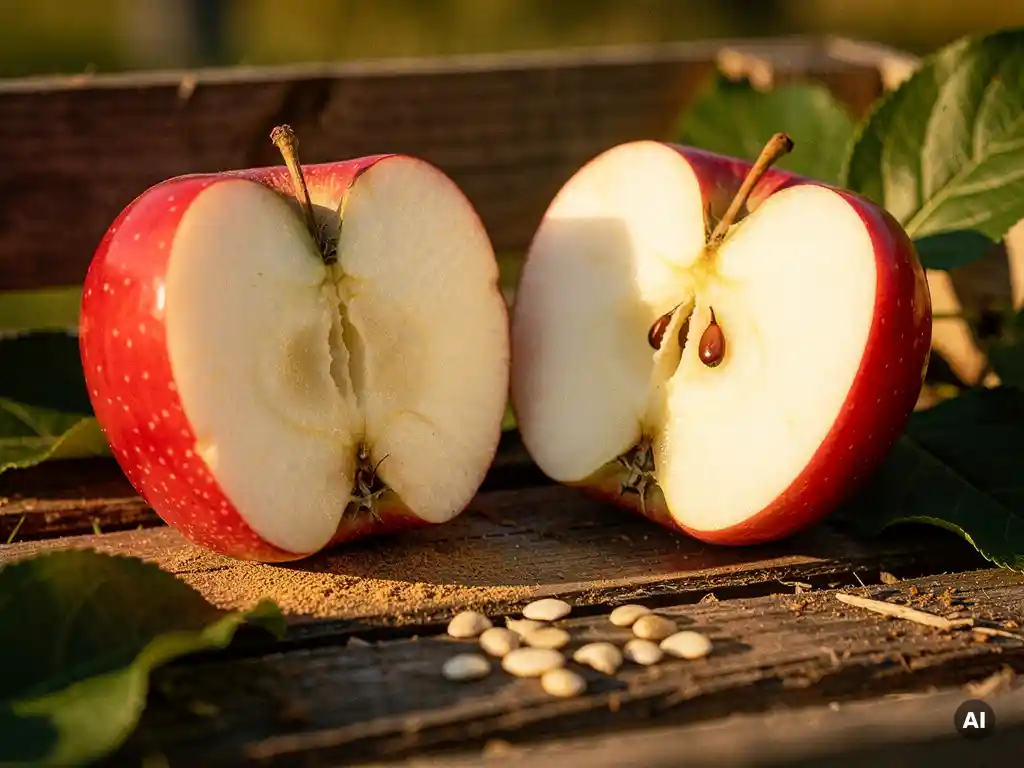
New apple varieties are generally firmer and crunchier than old ones, and the difference comes down to both genetics and deliberate breeding choices. Over decades, apple breeders have selected for apple flesh texture traits that consumers and retailers demand: snap, juiciness, and a satisfying resistance to the bite. If you want to learn more about how we approach variety development, feel free to get in touch with us directly. The sections below unpack why texture varies so dramatically between old and new apple varieties, and how those differences are shaped, measured, and applied in practice.
How does apple texture change as a variety ages on the tree?
Apple texture becomes progressively softer and less crisp as a variety ages on the tree. Cell walls break down as the fruit ripens, starches convert to sugars, and moisture distribution shifts within the flesh. The longer a variety stays on the tree past its optimal harvest window, the more pronounced this softening becomes, regardless of whether it is an old or new cultivar.
That said, the rate and degree of softening are strongly influenced by genetics. Some apple varieties are naturally programmed to soften quickly after ripening, while others maintain their firmness for weeks or even months in storage. This is one reason why modern apple cultivars are often evaluated not just at harvest, but after extended cold storage and shelf simulation. A variety that arrives at the supermarket firm and snappy after three months in controlled atmosphere storage is far more commercially valuable than one that softens within days of picking. Breeders therefore look at texture at multiple points across the harvest and post-harvest window, not just at a single moment.
What makes new apple varieties crunchier than old ones?
New apple varieties tend to be crunchier because modern apple breeding has deliberately prioritized cell structure traits that produce a firm, high-density flesh. Specifically, breeders select for smaller, tightly packed cells with strong cell walls, higher cellular turgor, and a flesh composition that resists enzymatic breakdown. These traits together produce the audible snap and firm resistance that consumers associate with apple crunchiness.
Consumer preference data gathered over the past few decades have consistently pointed toward firmness as a top-tier quality attribute, particularly in fresh eating markets. This feedback has driven breeding programs to treat texture as a primary selection criterion rather than a secondary one. At Better3Fruit, we evaluate texture alongside taste and disease tolerance from very early in the selection process, because a variety that scores poorly on crunchiness rarely survives to commercial release regardless of its other qualities.
There is also a technological dimension. The use of molecular markers now allows breeders to identify seedlings carrying favorable texture-related genetics at a very early stage, long before the fruit is physically assessable. This accelerates the selection process and means that varieties entering commercial evaluation today have already been pre-screened for the genetic potential to produce firm, crunchy flesh.
Why do heritage apple varieties have a softer, mealier texture?
Heritage apple varieties tend to have softer, mealier flesh because they were bred or selected in an era when texture was not a primary commercial concern. Many old apple varieties were valued for flavor complexity, regional adaptation, or cooking performance rather than the crisp bite that dominates modern fresh markets. Their cell structures are often larger and less tightly bound, which produces a floury or mealy mouthfeel, especially as the fruit ripens fully.
Mealiness in apples is caused by a breakdown of the middle lamella, the pectin-rich layer that holds cells together. When this layer degrades, cells separate from one another rather than rupturing when you bite into the fruit. The result is a dry, powdery texture rather than a juicy crunch. In heritage varieties, this breakdown tends to happen earlier and more completely, partly because those varieties were never selected against it.
It is worth noting that softness is not inherently a flaw. Many heritage varieties were specifically suited to culinary uses where a softer texture is desirable, such as sauce-making, baking, or cider production. The issue arises when those same varieties are judged by the standards of the fresh eating market, where apple texture expectations have shifted significantly over the past generation.
How do apple breeders measure and select for texture?
Apple breeders measure texture using a combination of instrumental and sensory methods. The most common instrumental tool is a penetrometer, which measures the force required to push a probe into the apple flesh. This gives a quantitative firmness reading that can be compared across varieties and over time. More advanced texture analysis equipment can also measure parameters like crispness, juiciness, and the mechanical properties of the cell wall.
Sensory panels complement the instrumental data. Trained tasters evaluate attributes such as crunchiness, mealiness, graininess, and juiciness using standardized scales. This human assessment captures qualities that instruments can miss, particularly the complex interplay between texture and flavor perception.
In modern programs like ours, molecular marker technology adds a third layer. By identifying genetic markers associated with desirable texture traits, we can screen thousands of seedlings at the DNA level and eliminate candidates with poor texture potential before they ever produce fruit. This dramatically increases the efficiency of the breeding pipeline. Varieties like Kanzi® and the more recently developed Morgana® and Giga® reflect years of selection pressure applied at all three levels: genetic, instrumental, and sensory.
Does texture differ between apple varieties bred for eating versus processing?
Yes, texture differs significantly between apple varieties bred for fresh eating and those bred for processing, and the differences are intentional. Fresh eating varieties are selected for high firmness, crispness, and juiciness because these traits drive consumer satisfaction at the point of purchase and consumption. Processing varieties, by contrast, are often selected for softer flesh that breaks down predictably during cooking, pressing, or milling.
For cider apples, tannin content and sugar levels take priority over texture, and a degree of softness actually aids juice extraction. For culinary apples used in baking or sauce production, a flesh that softens evenly and holds moisture during cooking is preferred over one that stays firm. These are fundamentally different end goals, and breeding programs target them with different selection criteria from the outset.
The distinction also affects how varieties perform in storage and supply chains. Fresh market apples must maintain their apple flesh texture through months of cold storage and the rigors of retail handling. Processing apples face a different set of logistical demands and are typically assessed on yield, juice quality, or cooking behavior rather than raw firmness. Understanding which end use a variety is being bred for shapes every texture-related decision made throughout the development process.
Texture is one of the most visible and commercially consequential traits that separates the apples of today from those of previous generations, and it does not happen by accident. It is the result of sustained, science-driven selection guided by consumer insight, market feedback, and increasingly precise genetic tools. If you are interested in exploring what our breeding program has developed in terms of texture-forward varieties, contact us to start the conversation.
This content was generated with the help of AI and it may contain mistakes