
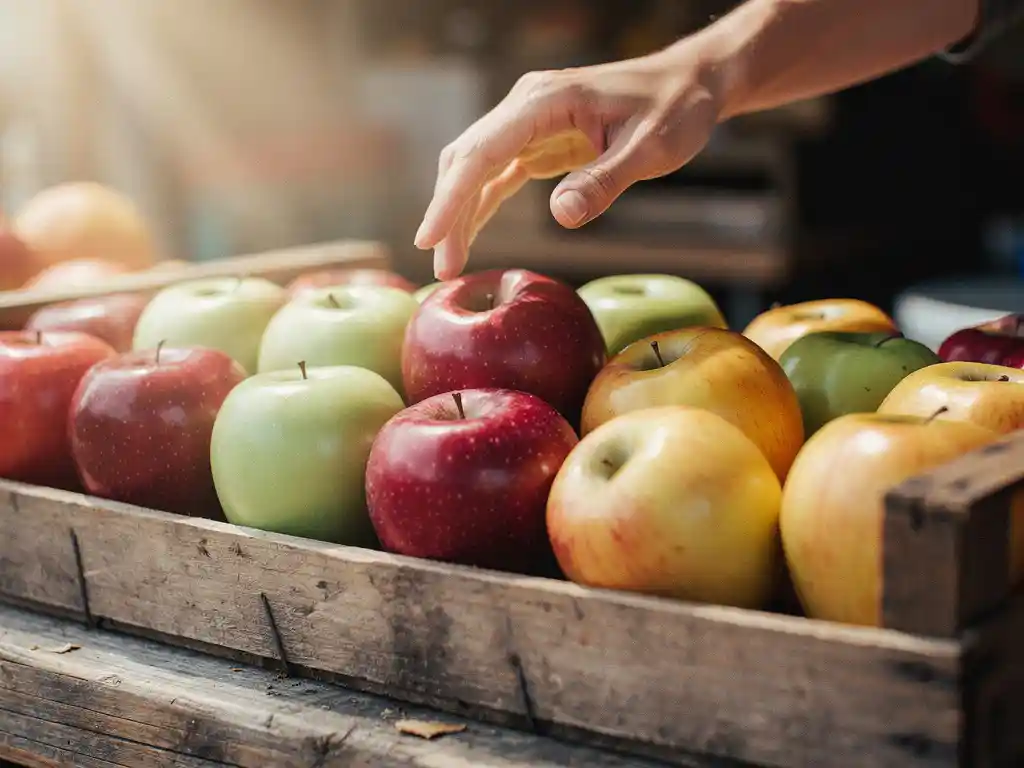
Apple skin color is one of the most powerful visual cues shoppers use when making purchase decisions at the fruit counter. Before a consumer ever picks up an apple, its color has already shaped their expectations about taste, freshness, and quality. If you want to understand how color influences buying behavior, or if you are curious about how we at Better3Fruit approach color as part of our broader breeding strategy, read on.
Does apple skin color really influence what shoppers buy?
Yes, apple skin color significantly influences consumer buying decisions. Color is the first trait shoppers notice on the shelf, and it acts as a shorthand for ripeness, sweetness, and overall appeal. Research in consumer behavior consistently shows that visual appearance drives initial product selection, and for apples, color is the dominant visual signal.
This influence goes beyond simple aesthetics. Shoppers use color as a proxy for flavor expectations. A deep red apple signals sweetness and richness to many consumers, while a bright green apple suggests tartness and crunch. These associations are deeply ingrained through years of marketing, retail presentation, and personal experience. Retailers and marketers have long understood this, which is why color consistency is treated as a non-negotiable quality standard across supermarket supply chains.
What apple colors are most popular with consumers?
Red apples are the most commercially dominant color globally, driven by decades of consumer familiarity and strong retail positioning. Bicolor apples, which combine red and yellow or red and green tones, are growing rapidly in popularity. Green apples hold a loyal niche audience, particularly among consumers who prefer sharper, more acidic flavor profiles.
Consumer preference does vary meaningfully by region. In North America and much of Europe, red and bicolor varieties tend to outperform green varieties in volume. In some Asian markets, particularly Japan and South Korea, a premium is placed on intensely colored red apples with a near-perfect skin finish. Understanding these regional differences is essential for anyone selecting apple varieties for a specific market.
How does apple color connect to perceived taste and quality?
Apple color directly shapes perceived taste before the first bite. Consumers reliably associate red skin with sweetness and full flavor, yellow or golden skin with mild sweetness and softness, and green skin with tartness and firmness. These perceptions influence not just purchase decisions but also satisfaction after eating, because expectations shape the taste experience.
Color also connects to perceived freshness and ripeness. A dull or uneven skin tone can signal age or poor storage to a shopper, even when the fruit inside is perfectly fine. This is why post-harvest color retention matters as much as color development on the tree. Varieties that hold their visual appeal through storage and retail handling have a structural advantage in the marketplace.
What’s the difference between red, bicolor, and green apple varieties in retail performance?
Red apple varieties typically achieve the broadest retail reach and the highest volume sales due to strong consumer recognition. Bicolor varieties command growing shelf space and often achieve premium pricing because they combine visual complexity with broad flavor appeal. Green varieties occupy a smaller but stable niche, often associated with specific culinary uses or health-conscious consumers.
Red varieties
Solid red varieties benefit from immediate shelf impact and widespread consumer trust. They are often the default choice for promotions and high-visibility display positions. However, their market is also the most competitive, with many established varieties competing for the same consumers.
Bicolor varieties
Bicolor apples have gained significant ground in premium retail segments. Their visual complexity tends to stand out on the shelf, and their flavor profiles often bridge the gap between sweet and aromatic, appealing to a wide demographic. Varieties like our own Kanzi® and the fast-growing Morgana® demonstrate how bicolor aesthetics, when combined with outstanding eating quality, can build strong brand recognition and consumer loyalty.
Green varieties
Green apples perform reliably in segments where tart flavor is a selling point, and they are particularly strong in foodservice and culinary channels. In fresh retail, they tend to attract a specific, repeat-purchasing consumer rather than broad impulse buyers.
How are apple breeders using color as a breeding target?
Apple breeders actively target skin color as a key selection trait, using it alongside taste, texture, and disease tolerance to develop commercially viable new varieties. Modern breeding programs use molecular markers to identify color-linked genes early in the selection process, allowing breeders to screen thousands of seedlings efficiently before committing to field trials.
At Better3Fruit, we evaluate over 10,000 new variety selections each year, and color is assessed as part of a multi-trait scoring system from the earliest stages onward. The goal is never color in isolation. A visually striking apple that lacks flavor, storability, or grower productivity will not progress through our selection pipeline. Color must work in combination with the full package of traits that make a variety commercially successful. This integrated approach is what has allowed us to develop varieties that perform well both on the retail shelf and in the orchard.
Should growers prioritize apple color when choosing a variety to grow?
Growers should consider apple color an important commercial factor, but not the primary one. Color determines retail eligibility and shelf appeal, but it must be evaluated alongside yield potential, disease tolerance, climate suitability, storage performance, and market access. Choosing a variety based on color alone, without matching it to market demand and growing conditions, is a high-risk strategy.
The most practical approach is to start with the target market and work backward. If your target retailer or market segment demands a specific color profile, that narrows your variety shortlist. From there, growers should evaluate which varieties within that color category offer the best agronomic performance for their specific location and growing system. A beautiful red apple that underperforms in your climate or requires intensive spray programs to manage disease will not deliver long-term profitability.
Color trends also shift over time, and growers planting today are making decisions that will shape their orchard for 15 to 20 years. Selecting varieties with strong underlying genetics, backed by a credible breeding program, gives growers more resilience against shifting consumer preferences. Contact us to explore which of our varieties best match your target market, growing conditions, and long-term commercial goals.
This content was generated with the help of AI and it may contain mistakes