
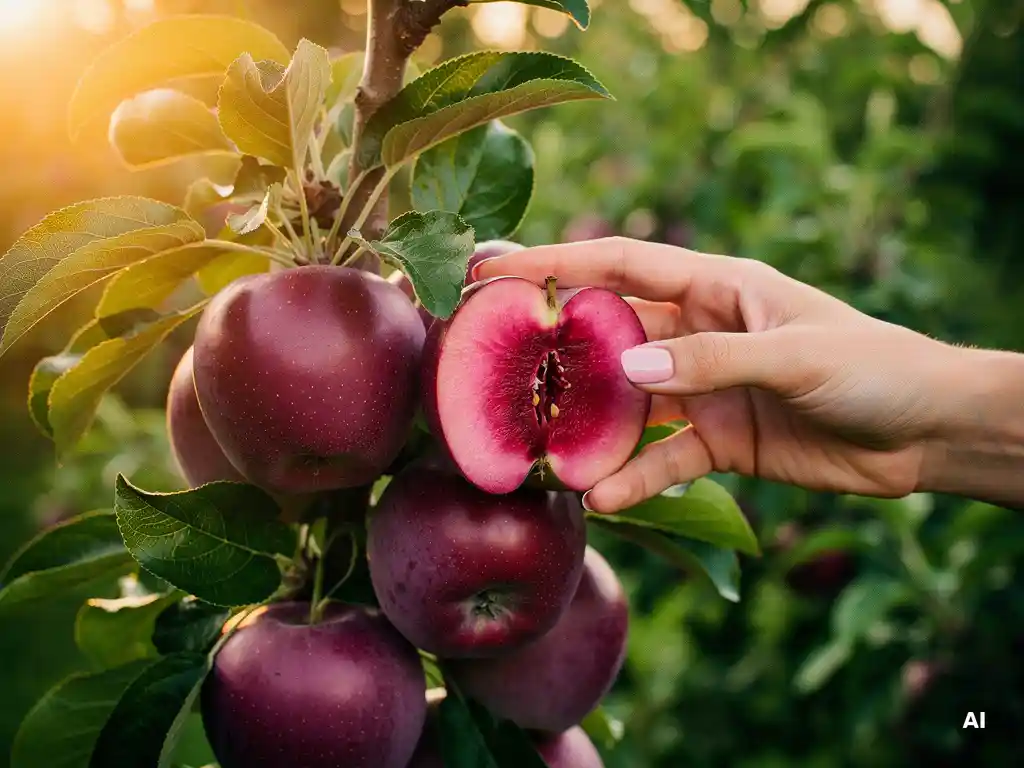
Fruit breeders develop varieties for Gen Z by working backwards from consumer research, identifying the flavour profiles, visual appeal, sustainability credentials, and convenience traits that younger consumers actively seek, then setting those as measurable breeding targets from day one. The process is far more deliberate than simply growing a nice apple and hoping it sells. Below, we unpack the specific questions that shape how a modern breeding programme translates a generation’s preferences into fruit that actually lands on shelves. If you want to talk through any of this with us directly, feel free to get in touch.
What traits do Gen Z consumers actually look for in fruit?
Gen Z consumers consistently prioritise bold, intense flavour, striking appearance, and verifiable sustainability. Unlike previous generations who often defaulted to familiar varieties, Gen Z food preferences lean towards novelty and authenticity, they want fruit that looks interesting, tastes memorable, and comes with a story they can trust and share.
In practical terms, this translates into a preference for apples and pears with a high sugar-acid balance that delivers a genuinely complex eating experience rather than bland sweetness. Texture matters enormously: a crisp, juicy bite is frequently cited as a dealbreaker in consumer panels. Visually, Gen Z is drawn to distinctive colouring, deep reds, unusual bi-colours, or striking blush patterns that photograph well and stand out in a retail display or on social media.
Convenience is another defining factor. Smaller fruit size, thinner skin, and longer shelf life all reduce friction between purchase and consumption. Gen Z eats on the go and tends to snack rather than sit down to a formal fruit course, so a variety that holds up in a bag or lunchbox without bruising quickly earns loyalty.
How do breeders translate consumer preferences into breeding targets?
Breeders translate consumer preferences into breeding targets by converting qualitative feedback, what people say they want, into measurable, heritable traits that can be selected for across thousands of seedlings. Consumer insight informs the specification; molecular breeding tools make it achievable at scale.
At Better3Fruit, we begin with consumer research and market intelligence to define a variety concept. That concept is then broken down into specific trait targets: a particular Brix level for sweetness, a defined firmness range for texture, a colour pattern that meets visual appeal criteria, and disease resistance profiles that reduce chemical inputs. Each of these becomes a selection criterion applied at multiple stages of our evaluation pipeline.
Molecular markers play a central role here. Rather than waiting years to taste a seedling’s fruit, we can screen young plants for genetic markers associated with target traits and eliminate poor candidates early. This dramatically increases the efficiency of the programme and means we spend more time evaluating genuinely promising material. With over 30,000 new varieties under evaluation at any given time, that early filtering is essential to making progress at a meaningful pace.
How long does it take to breed a variety for a new target audience?
Breeding a new apple or pear variety from initial cross to commercial release typically takes between 15 and 25 years. Even with modern tools accelerating early selection, fruit breeding remains a long-cycle endeavour because trees must grow, fruit must be evaluated across multiple seasons, and commercial trials must confirm performance in real growing conditions.
The timeline broadly breaks into three phases. The first covers crossing and early seedling selection, where molecular markers help eliminate unsuitable candidates within the first few years. The second phase involves growing out promising selections, evaluating fruit quality across seasons, and testing for disease resistance and yield stability. The third phase is pre-commercial trialling with growers and retail partners, which confirms that the variety performs consistently and meets market expectations at scale.
What modern breeding programmes have changed is not the biological minimum but the hit rate. By entering 10,000 new varieties of each crop into the field every year and applying rigorous molecular and sensory screening, we identify the genuinely exceptional candidates faster and with greater confidence than was possible even two decades ago. The goal is not to rush the process but to ensure that the varieties that do make it to market are worth the wait.
What role does sustainability play in Gen Z-targeted apple breeding?
Sustainability is a primary breeding goal, not an afterthought, in apple and pear programmes targeting Gen Z. This generation treats environmental credentials as a baseline expectation rather than a premium feature, which means varieties that require fewer pesticide applications, tolerate climate variability, and support lower-input growing systems have a structural advantage in the market.
At the breeding level, this means prioritising disease and pest tolerance as core selection criteria alongside flavour and appearance. A variety that is naturally resistant to scab, for example, reduces the number of spray applications a grower needs to make across a season. That has direct environmental benefits and also reduces production costs, making the variety more commercially attractive to growers, which in turn supports wider adoption.
Climate resilience is increasingly important as growing regions face more variable seasons. We focus on developing varieties that maintain consistent fruit quality across a wider range of temperature and rainfall conditions, reducing the risk of crop failure and supporting growers in regions where climate patterns are shifting. For Gen Z consumers who follow supply chain stories and care about where their food comes from, a variety with built-in resilience carries genuine marketing value alongside its environmental merit.
How do club variety models help bring Gen Z-focused fruit to market?
Club variety models help bring Gen Z-focused fruit to market by creating the coordinated supply, consistent quality, and strong brand identity that younger consumers respond to. Rather than releasing a variety openly and allowing fragmented, uncontrolled production, a club model licenses production to a selected group of growers who meet defined quality and volume standards.
For a generation that shops with brand awareness and expects consistency, this matters. Gen Z consumers who try a club apple and enjoy it expect the next one they buy to deliver the same experience. A club structure makes that possible by aligning growers, packers, and retailers around shared quality benchmarks and marketing messaging.
The model also supports the storytelling that resonates with Gen Z food preferences. A variety with a clear name, a defined origin story, and a consistent visual identity is far easier to market through digital channels than a commodity product. Our commercial varieties like Kanzi® and the fast-emerging Morgana® and Giga® demonstrate how a well-managed club approach can build genuine consumer recognition and loyalty over time. We carefully select the right partner for each variety to build critical mass, develop the market, and grow a brand that stands for something, which is exactly the kind of authenticity Gen Z consumers look for.
Fruit breeding for Gen Z is ultimately about combining scientific precision with genuine consumer empathy, understanding what a generation values and building those values into varieties from the ground up. If you are interested in exploring what a partnership with us could look like, reach out and plan a conversation with our team.
This content was generated with the help of AI and it may contain mistakes