
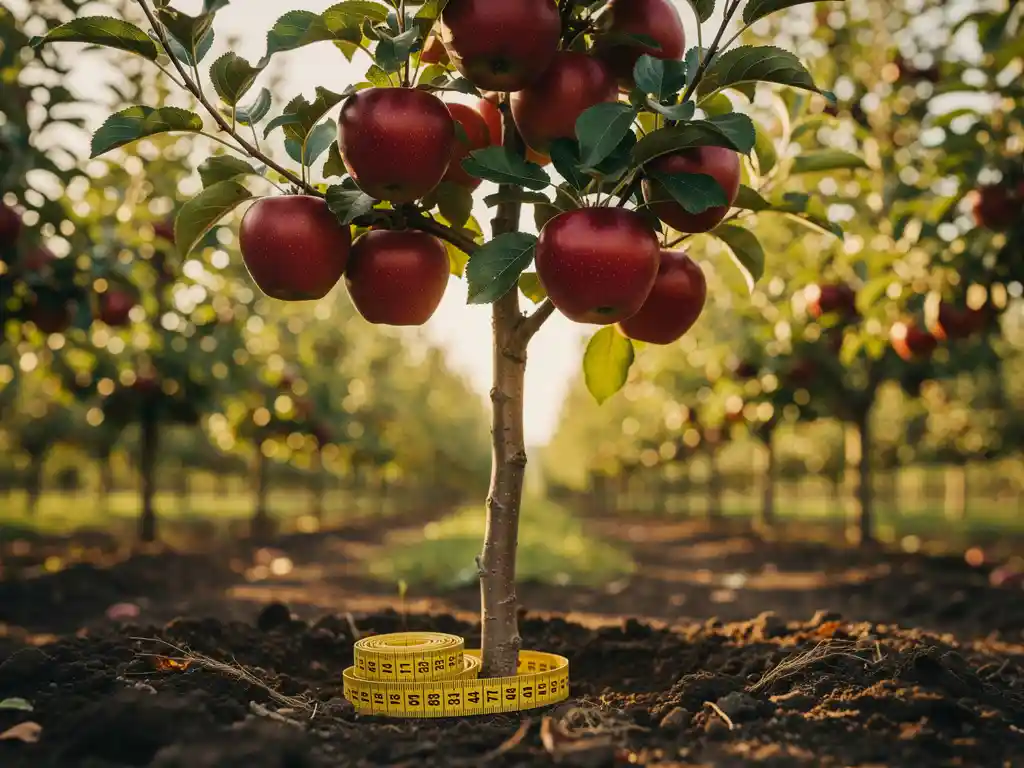
If you are planning an orchard or simply want to enjoy homegrown fruit sooner rather than later, understanding how quickly different apple varieties produce their first harvest is essential. The variety you choose has a major influence on how long you wait, but rootstock, growing conditions, and breeding background all play a role, too. If you would like to speak with someone about variety selection for your specific situation, feel free to get in touch with us, and we will be happy to help.
This article answers the most common questions growers and enthusiasts ask about apple fruiting timelines, from what “time to first fruit” actually means to how modern breeding programs are working to bring that timeline forward.
What does “time to first fruit” mean for apple trees?
Time to first fruit refers to the number of years between planting a young apple tree and harvesting its first meaningful crop. For most apple varieties, this window ranges from two to five years, depending on the variety, rootstock, and growing system. A single stray fruit in year one does not count as a reliable first harvest.
The distinction matters because growers and consumers often confuse flowering with fruiting. A tree may produce blossoms in its second or third year without setting fruit reliably enough to evaluate quality or yield. A genuine first crop means enough fruit to assess the variety’s commercial or culinary potential, which typically requires the tree to reach a degree of structural maturity first.
For commercial orchardists, time to first fruit has a direct financial impact. Every additional year before a productive harvest represents a cost without a return. This is why the industry pays close attention to early cropping ability as a selection trait, and why it has become an increasingly important goal in apple breeding programs worldwide.
Which apple varieties produce fruit the fastest after planting?
Early-bearing apple varieties such as Gala, Fuji, and Braeburn can begin producing a meaningful crop within two to three years of planting when grown on dwarfing rootstocks. Club varieties developed through intensive breeding programs are often selected partly for their precocity, meaning their tendency to begin cropping early in the tree’s life.
Among well-established varieties, Gala is widely recognised for its relatively fast entry into production. It tends to crop reliably in year two or three under favourable conditions. Varieties with a more vigorous growth habit, such as some traditional heritage types, often take longer because the tree prioritises vegetative growth over reproductive development in its early years.
Modern club varieties developed through structured breeding programs are increasingly selected for early cropping alongside taste and appearance. You can explore a range of commercially released apple varieties that reflect this kind of multi-trait selection, where early productivity is balanced against long-term orchard performance and fruit quality.
How does rootstock choice affect how quickly apples fruit?
Rootstock is one of the most powerful tools for controlling when an apple tree begins to fruit. Dwarfing rootstocks such as M9 induce early cropping, often within two years of planting, because they limit vegetative vigour and redirect the tree’s energy towards fruit production. Semi-vigorous and vigorous rootstocks delay fruiting, sometimes by several additional years.
The mechanism behind this is relatively straightforward. A tree on a dwarfing rootstock reaches reproductive maturity faster because it does not need to build a large canopy and root system before switching from vegetative to generative growth. This makes dwarfing rootstocks the standard choice in high-density commercial orchards, where early return on investment is a priority.
Balancing early fruiting with long-term productivity
While dwarfing rootstocks accelerate first fruit, they also require more intensive management, including irrigation, staking, and careful nutrition. A tree that crops very early may exhaust itself if the fruit load is not managed properly in those first years. Growers often remove early fruitlets deliberately to allow the tree to develop a stronger structure before carrying a full crop. The right rootstock choice depends on the variety, the growing system, and the commercial goals of the orchard.
What factors slow down or speed up apple tree fruiting?
Several factors beyond variety and rootstock influence how quickly an apple tree begins to fruit. Climate, soil quality, pruning approach, and nutrition all affect the transition from vegetative to generative growth. Trees under stress, whether from drought, poor soil, or disease pressure, tend to delay fruiting as they prioritise survival over reproduction.
Pruning plays a particularly important role. Hard pruning in the early years stimulates vigorous shoot growth, which delays fruiting. Light pruning or training to a horizontal position encourages the formation of fruiting spurs earlier. Experienced growers use bending and tying techniques to slow sap flow and trigger earlier flowering without stressing the tree.
Temperature and light availability also matter. Apple trees require sufficient chilling hours during winter dormancy to break bud and flower reliably. In climates where winters are too mild, trees may flower erratically or fail to set fruit consistently, which disrupts the normal fruiting timeline. Choosing a variety that matches the local climate is therefore as important as any cultural practice.
How are modern apple breeding programs improving fruiting speed?
Modern apple breeding programs are actively selecting for precocity, the genetic tendency of a variety to begin fruiting early in its life. By identifying molecular markers associated with early cropping, breeders can screen thousands of seedlings at an early stage and eliminate late-bearing candidates before they ever reach the field, dramatically shortening the selection cycle.
At Better3Fruit, we run one of the most innovative and largest apple and pear breeding programs in the world, evaluating over 10,000 new variety selections every year. We use molecular markers alongside traditional crossing and selection methods to bring together multiple desirable traits in a single variety. Early cropping ability is one of those traits, evaluated alongside taste, texture, disease tolerance, and storability.
The practical result of this approach is that newer commercially released varieties tend to be more precocious than older traditional cultivars. Breeders are not simply selecting for speed in isolation. Early fruiting must be combined with consistent quality, reliable yield, and resilience to disease and climate stress. Achieving all of these together is what makes modern variety development both complex and genuinely valuable for growers and the wider fruit industry.
Whether you are an orchardist evaluating new plantings, a fruit industry professional looking for the next high-performing variety, or simply curious about what drives apple variety development, the answer always starts with understanding the genetics behind the fruit. Contact us to find out more about our current variety portfolio and how we can help you identify the right apple variety for your goals.
This content was generated with the help of AI and it may contain mistakes