
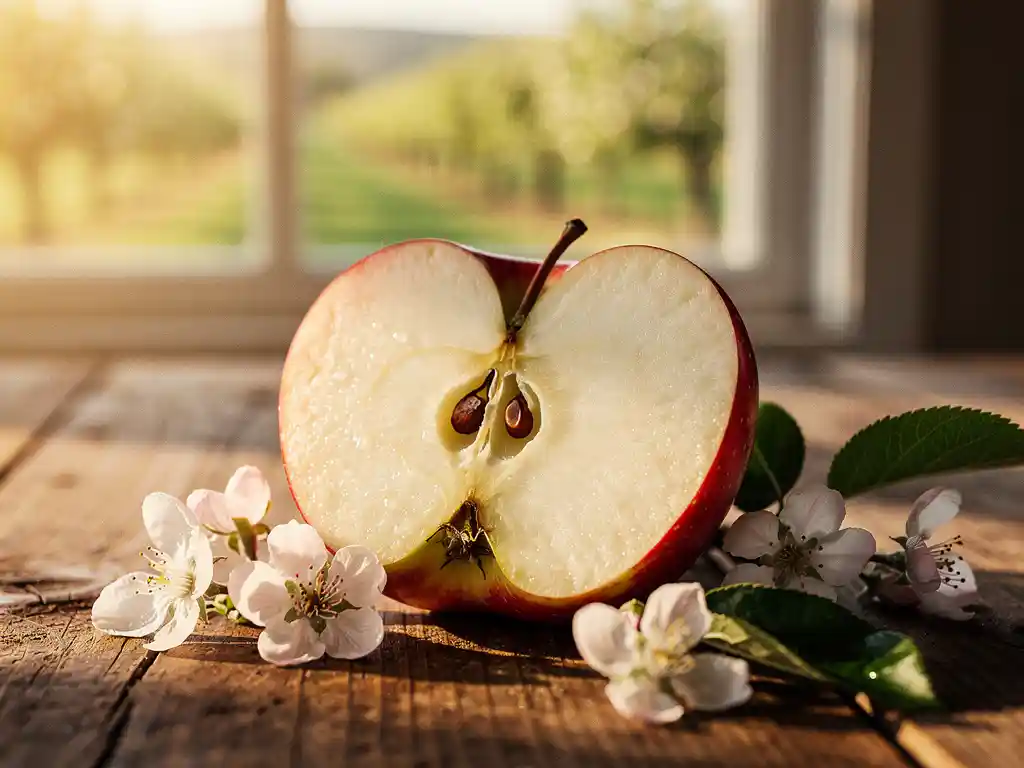
Not all apple varieties are created equal. Some dazzle in appearance but disappoint in flavour. Others taste incredible but fall apart in storage or struggle in the orchard. Developing a genuinely better apple variety means getting all of these things right at once, which is far harder than it sounds. If you want to learn more about our work or explore what we do, feel free to get in touch with us directly.
At Better3Fruit, we have been running one of the world’s most innovative apple and pear breeding programmes since 2000, evaluating more than 10,000 new selections every single year. The questions below reflect what growers, retailers, and fruit lovers most often ask about how new apple varieties come to life and what sets the best ones apart.
What makes a new apple variety worth releasing?
A new apple variety is worth releasing when it offers a meaningful, demonstrable improvement over existing options in at least one critical area, without compromising the others. That means better flavour, stronger disease resistance, improved storability, or higher productivity—ideally, a combination of several of these traits working together.
The bar for release is genuinely high. With thousands of new seedlings evaluated every year, only a tiny fraction ever make it through the full selection process. A variety that merely looks attractive or performs well in one season is not enough. It needs to prove itself across multiple years, locations, and growing conditions before we consider it ready for commercial release. The goal is always to bring something to market that growers want to grow and consumers want to eat again and again.
How does modern apple breeding actually work?
Modern apple breeding combines traditional crossing and selection methods with advanced molecular tools to accelerate the development of new varieties. Breeders manually transfer pollen from one parent variety to another, producing seeds that carry genetic traits from both. Those seedlings are then grown, observed, and rigorously evaluated across multiple stages of selection.
The role of molecular markers
One of the most significant advances in apple breeding is the use of molecular markers. These are genetic signposts that allow breeders to identify, at the seedling stage, whether a young plant carries desirable traits such as disease resistance or specific flavour characteristics. This means we can screen out unsuitable candidates years earlier than traditional observation alone would allow, saving enormous amounts of time and resources.
Scale and rigour in selection
Scale matters enormously in breeding. We introduce more than 10,000 new variety selections into evaluation every year, with more than 30,000 under assessment at any given time. That volume gives us the statistical depth to identify genuinely exceptional candidates rather than settling for good enough. Each selection moves through progressively stricter evaluation stages before it reaches commercial consideration.
What traits do breeders prioritise in a new apple variety?
Apple breeders prioritise a combination of consumer-facing traits and production-side traits. On the consumer side, that means flavour, texture, aroma, and appearance. On the production side, it means yield, storability, disease tolerance, and adaptability to different growing environments. The best new varieties perform well across all of these dimensions.
Taste and texture sit at the heart of consumer appeal. An apple that does not deliver a satisfying eating experience will not drive repeat purchases, regardless of how well it performs in the orchard. At the same time, a variety that tastes exceptional but rots quickly in storage, or requires heavy chemical inputs to stay healthy, creates real commercial problems for growers and retailers. Climate resilience is increasingly important too, as growing regions face more variable weather patterns and the need to reduce inputs grows stronger across the industry.
What is a club variety, and how is it different from a standard apple?
A club variety is an apple cultivar that is grown and sold exclusively through a licensed network of growers, packers, and marketers. Unlike standard open-market varieties that any grower can plant freely, club varieties are managed under strict quality and supply controls to maintain consistency, build brand recognition, and protect the value of the variety for everyone in the chain.
The club model exists because it aligns the interests of breeders, growers, and retailers around a shared goal: delivering a consistent, high-quality product to consumers. When a variety is available to anyone without restriction, quality can vary enormously depending on who grows it and how. A club structure allows for coordinated marketing, controlled volume, and enforceable quality standards. Our own Kanzi® apple is one of the most successful club varieties of the past two decades, and newer varieties like Morgana® and Giga® follow a similarly careful, managed approach. You can explore our current apple and pear varieties to see the full range we have developed.
How long does it take to develop a new apple variety?
Developing a new apple variety from initial cross-pollination to commercial release typically takes between 15 and 25 years. This long timeline reflects the biological reality of tree-fruit breeding, where each generation takes years to mature, and thorough evaluation across multiple seasons and locations is essential before a variety can be trusted at commercial scale.
The process begins with a controlled cross between two parent varieties chosen for their complementary traits. The resulting seeds are grown into seedlings, and the first round of selection begins. Promising candidates are then grafted and grown in trial orchards, where they are evaluated over several seasons for flavour, yield, disease performance, and storability. Only after passing through multiple rounds of increasingly rigorous assessment does a variety move towards commercial release. Molecular marker technology has helped us shorten parts of this timeline by identifying unsuitable candidates early, but the fundamental need for multi-year field evaluation remains unchanged.
Why does disease resistance matter in new apple varieties?
Disease resistance matters in new apple varieties because it directly reduces the need for chemical sprays, lowers production costs for growers, and supports more sustainable farming practices. Varieties that are naturally tolerant or resistant to common diseases like scab, mildew, or fire blight are easier and cheaper to grow, and they are better positioned for a future where input reduction is both an economic and regulatory priority.
From a consumer perspective, disease-resistant varieties often come with a cleaner production story, which matters increasingly to retailers and shoppers who want to understand how their food is grown. From a grower’s perspective, reduced spray programmes mean lower costs and less exposure to the risks associated with chemical inputs. Our breeding strategy places disease and pest tolerance at the centre of our long-term goals, alongside taste, texture, and climate resilience, because we believe that a truly better apple variety has to work for the whole supply chain, not just one part of it.
Understanding what goes into developing a new apple variety makes it easier to appreciate why some cultivars stand the test of time while others fade quickly. The combination of scientific rigour, long-term commitment, and a genuine focus on what growers and consumers need is what separates lasting commercial success from a brief novelty. If you want to find out more about our breeding programme or discuss licensing opportunities, contact us today and we will be happy to talk.
This content was generated with the help of AI and it may contain mistakes