
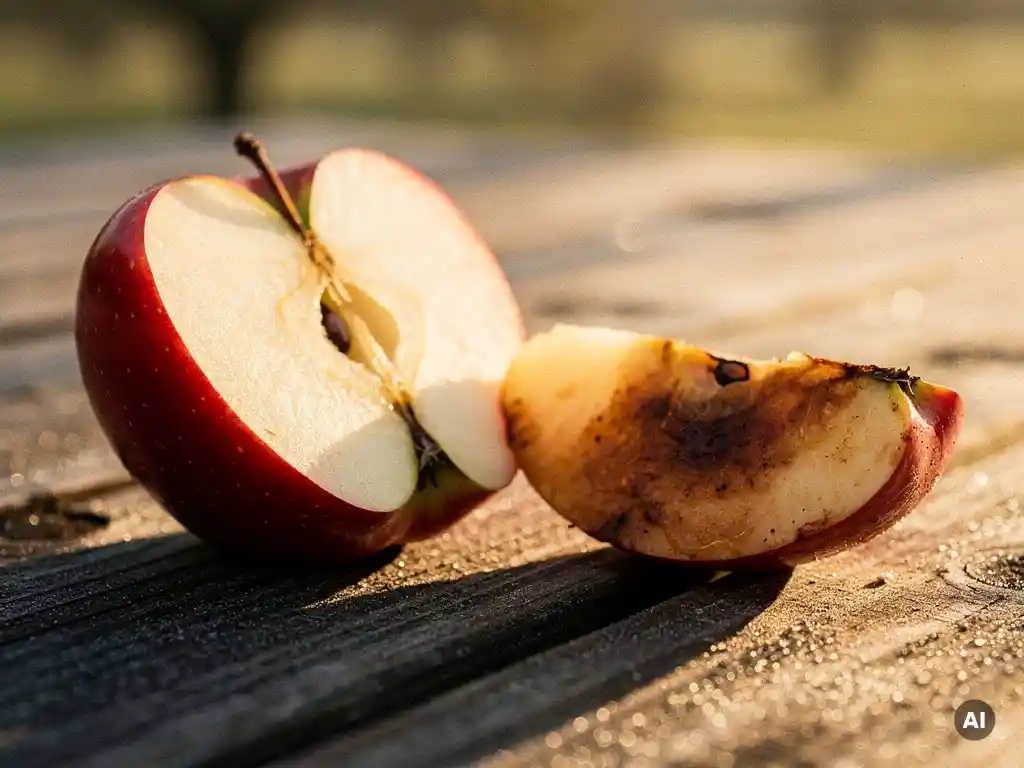
Some apple varieties go mealy faster than others because of differences in their cell wall structure and the enzymes that break it down after harvest. Varieties with weaker pectin bonds between cells lose their crisp, juicy texture more quickly, causing the flesh to soften into that unpleasant, dry, grainy quality known as mealiness. Genetics, harvest timing, and storage conditions all play a role, and the sections below unpack each of these factors in detail. If you have specific questions about apple texture and variety selection, feel free to get in touch with us and we will be happy to help.
What actually causes apples to become mealy?
Apples become mealy when the pectin that holds their cells together breaks down, causing cells to separate rather than rupture when you bite into them. In a crisp apple, biting through the flesh ruptures the cells and releases juice. In a mealy apple, the cells simply slide apart, releasing little moisture and producing that dry, floury sensation. The process is driven by naturally occurring enzymes, particularly polygalacturonase and pectin methylesterase, that degrade the cell wall over time.
This enzymatic activity accelerates as the fruit ripens and ages. Every apple variety has a different genetic blueprint for how quickly these enzymes become active and how robust its pectin network is to begin with. Varieties with a naturally dense, tightly bonded cell structure can resist this breakdown for longer, while others begin losing textural integrity within days of reaching peak ripeness. Temperature, ethylene exposure, and physical stress all speed up the process, but the underlying vulnerability is written into the variety’s genetics.
Which apple varieties go mealy the fastest?
Older, traditional apple varieties tend to go mealy the fastest, particularly those bred primarily for flavor rather than storage performance. Varieties like Golden Delicious, Cortland, and McIntosh are well known for developing a soft, mealy texture relatively quickly after harvest, especially if stored at inconsistent temperatures or left at room temperature for more than a few days.
These varieties have cell walls that respond quickly to ethylene, the natural ripening hormone apples produce, and their pectin structure is less resistant to enzymatic degradation. In contrast, modern club varieties developed with texture as a priority tend to hold their crispness far longer. The genetic traits that determine how a variety responds to its own ethylene production are a key reason why two apples sitting in the same bowl can have dramatically different textures after a week.
It is also worth noting that within a single variety, individual fruit quality varies. Apples from trees under stress, or fruit that suffered bruising during harvest and packing, will go mealy faster than undamaged fruit from the same orchard. So variety is the starting point, but growing and handling conditions shape the final result.
How does storage temperature affect apple mealiness?
Storage temperature is one of the most powerful factors controlling how quickly apple flesh breaks down. Apples stored at near-freezing temperatures, ideally between 0°C and 4°C, have significantly slower enzymatic activity, which preserves cell wall integrity and delays the onset of mealiness. Every degree above this range accelerates the degradation process, which is why apples left at room temperature go soft and mealy within days rather than weeks.
Controlled atmosphere storage, which combines low temperature with reduced oxygen and elevated carbon dioxide levels, slows ethylene production and enzymatic activity even further. This is why commercially stored apples can remain crisp for months when handled correctly. However, temperature fluctuations are particularly damaging: moving apples repeatedly between cold and warm environments stresses the fruit and speeds up cell wall breakdown faster than consistent storage at a slightly warmer temperature would.
For consumers, the practical takeaway is simple: keep apples in the coldest part of the refrigerator and avoid leaving them at room temperature for extended periods. For growers and packers, maintaining an unbroken cold chain from orchard to retailer is essential for preserving apple texture and fruit quality.
Does the ripeness at harvest change how quickly apples go mealy?
Yes, harvest timing has a direct and significant impact on how quickly apples develop a mealy texture. Apples picked too late, past their optimal harvest window, have already progressed further along the ripening curve, meaning their cell walls are already beginning to soften. This fruit has less textural resilience in storage and will go mealy much sooner than fruit harvested at the correct maturity index.
Harvesting too early creates a different set of problems, including poor flavor development and starchy, under-ripe flesh, but it does tend to extend the window before mealiness sets in. The ideal harvest point balances flavor maturity with structural integrity, capturing the moment when the apple has developed its full sugar and acid profile but still has robust cell walls capable of withstanding weeks or months of storage.
Growers use a combination of indicators to determine the right harvest window, including starch-iodine tests, firmness measurements, and sugar content readings. Getting this right is particularly important for varieties destined for long-term storage, where even a few days of over-ripening at harvest can mean the difference between a crisp apple in January and a mealy one.
Can apple breeding produce varieties that resist mealiness?
Apple breeding can absolutely produce varieties with strong resistance to mealiness, and this is an active area of focus in modern breeding programs. By selecting parent varieties with robust cell wall genetics and using molecular markers to identify offspring that inherit those traits, breeders can develop apples that maintain their crisp, juicy texture far longer than traditional varieties. This approach is more precise and efficient than conventional trial-and-error selection.
At Better3Fruit, texture is one of the core traits we evaluate across our breeding pipeline. With over 30,000 new varieties under evaluation at any given time, we use molecular marker technology to identify promising candidates early, long before a variety ever reaches commercial testing. This allows us to screen for the genetic signatures associated with strong pectin structure and slow cell wall degradation, giving us a meaningful head start in developing varieties built for lasting apple texture and fruit quality.
The commercial results of this approach are already visible in the market. Varieties like our Kanzi® and Morgana® have been recognized for their consistent texture and eating quality, which is not accidental: it reflects deliberate breeding decisions made years before those varieties reached consumers. As climate pressures and longer supply chains make storage performance increasingly important, breeding for mealiness resistance will only grow in relevance for the entire apple industry.
If you want to learn more about how we approach variety development or explore licensing opportunities for varieties bred with texture and quality at their core, contact us and we will be glad to connect.
This content was generated with the help of AI and it may contain mistakes