
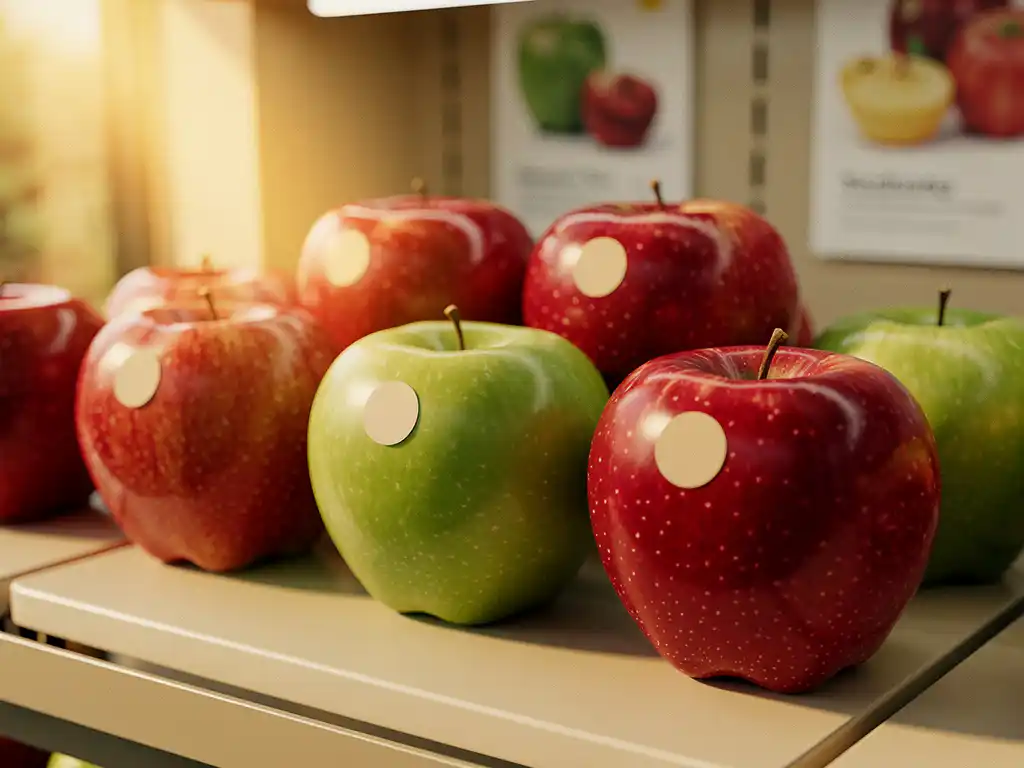
Getting a new apple variety off the ground takes more than great genetics. From the moment a variety leaves the breeding program and enters commercial production, it needs coordinated marketing, consistent quality, and a strong brand identity to succeed in a competitive global market. If you want to learn more about how we approach this or have a specific question, feel free to get in touch with us directly.
At Better3Fruit, we have built our licensing model around this exact challenge. Our breeding program evaluates thousands of new apple varieties every year, and the commercial varieties we release are backed by a structured support framework designed to help growers, packers, and marketers build lasting success in the fresh fruit sector.
What does marketing support for licensed apple varieties include?
Marketing support for licensed apple varieties typically includes coordinated brand development, quality control standards, supply management, and market-positioning guidance. The goal is to ensure that every apple sold under a variety brand meets consistent expectations, so consumers trust the product and retailers keep coming back for it.
In practice, this means working with a network of licensed partners to align packaging, messaging, and retail strategy. A variety like Kanzi® did not become one of the most successful club cultivars of the past decade by accident. It grew because the marketing effort behind it was structured, consistent, and focused on building consumer recognition over time. The same principle applies to newer releases such as Morgana® and Giga®, where brand building starts early and runs in parallel with supply development.
How does a club variety model support apple marketing?
A club variety model supports apple marketing by restricting production to a defined group of licensed growers, which enables supply control, consistent quality, and a premium market position. Because not every grower can produce the variety, scarcity and standards can be maintained in a way that open varieties simply cannot achieve.
This exclusivity benefits everyone in the chain. Growers receive better returns because the market is not flooded. Retailers can rely on consistent quality and presentation. Consumers associate the variety name with a reliable eating experience. The club model also makes it easier to invest in marketing because the partners who benefit from that investment are clearly defined and financially committed to the variety’s success.
What role does the breeder play in variety brand development?
The breeder plays a foundational role in variety brand development by defining the variety’s core identity, protecting it through intellectual property rights, and selecting the right commercial partners to carry it forward. Without this foundation, a variety’s brand can fragment across markets and lose the consistency that makes it valuable.
At Better3Fruit, we take an active role in shaping how our apple varieties are positioned commercially. We define the traits that make each variety distinctive, whether that is the sweet-sharp balance of Kanzi® or the specific texture profile of a newer release, and we work with partners to communicate those traits clearly and consistently to the market. The breeder’s involvement does not end at the nursery gate.
Who manages quality control for licensed apple varieties?
Quality control for licensed apple varieties is a shared responsibility among the breeder, the licensing partner, and the growers within the club. The breeder sets the standards, the licensing partner enforces them throughout the supply chain, and growers are accountable for meeting those standards at the point of production and packing.
This layered approach is essential. A single substandard shipment under a variety brand can undermine years of consumer trust. By building quality expectations into the licensing agreement from the start, and by selecting partners with the infrastructure to uphold those standards, the integrity of the brand is protected across all markets and seasons. Quality control is not an afterthought. It is built into the structure of how we license and manage each variety.
How are licensed apple variety marketing partnerships selected?
Licensed apple variety marketing partnerships are selected based on the partner’s ability to build critical mass, develop the market, and invest in the variety’s long-term brand. A good licensing partner brings commercial infrastructure, market access, and a genuine commitment to the variety’s success—not just short-term volume.
We approach this selection carefully. Each variety has different needs. Some require a partner with strong retail relationships in a specific region. Others need a partner with deep experience in export logistics or foodservice channels. The selection process is about finding the right fit, not simply the largest or most established operator. Strategic alignment matters as much as commercial scale because a partnership that lacks shared goals will struggle to build a coherent brand over time.
Can anyone obtain a license for a new apple variety?
Yes, anyone worldwide can obtain a license for a Better3Fruit variety. As a privately funded company with no preferred partners and no prior rights to our varieties, we are free to license to any qualified grower, packer, or marketer who meets the requirements for a given variety. There are no geographic restrictions built into our model by default.
This openness is a deliberate part of how we operate. Because we are funded by variety royalties rather than by a grower cooperative or retail group, we have no obligation to favor one region or partner over another. What we do look for is a partner’s capacity to respect quality standards, contribute to market development, and support the variety’s brand in their territory. The door is open. The question is whether a prospective partner is the right fit for the specific variety and market in question.
If you are interested in exploring a licensing opportunity or want to learn more about how our variety partnerships work, reach out to us today, and we will be happy to discuss the options available to you.
This content was generated with the help of AI and it may contain mistakes