
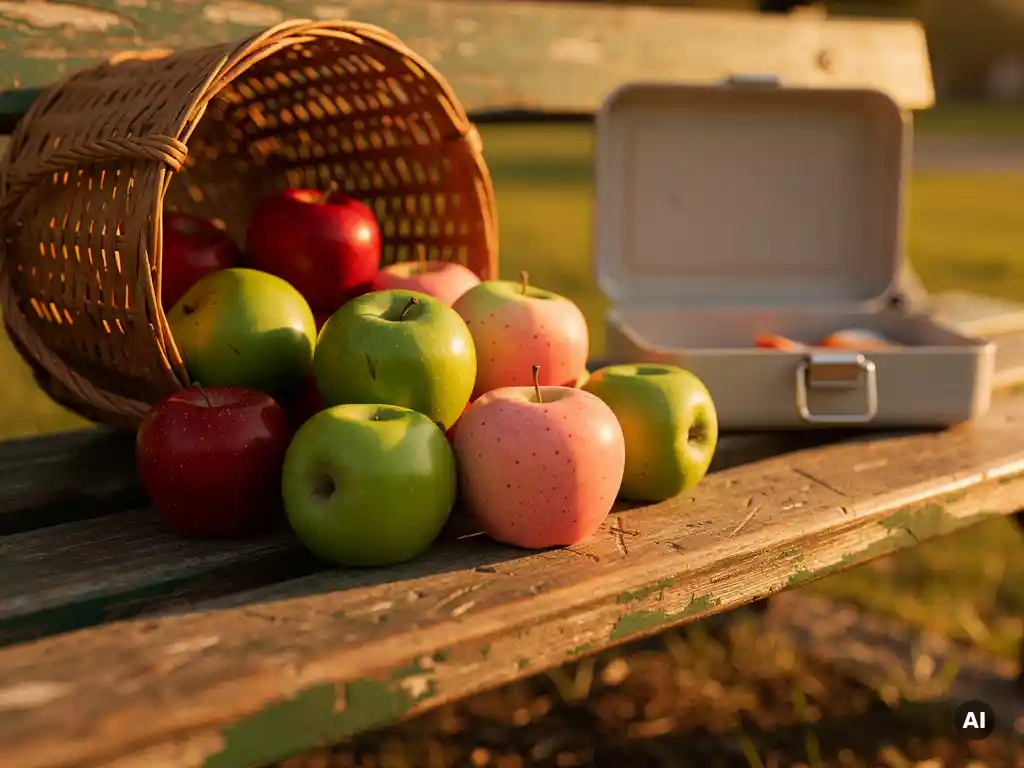
Several apple varieties are specifically positioned for the youth snack market, with the most prominent being small-sized, intensely sweet, visually appealing cultivars that children naturally gravitate toward. The defining traits are consistent sweetness, a satisfying crunch, and a size that fits comfortably in a child’s hand or a school lunchbox. Varieties like Kanzi® and Morgana® from our breeding portfolio illustrate how modern apple development increasingly targets young consumers as a distinct and growing market segment. Below, we unpack the key questions growers, retailers, and market developers ask about kid-friendly apple varieties. If you would like to discuss which variety might suit your market, feel free to get in touch with us directly.
What makes an apple variety appeal to children and young snackers?
Apple varieties appeal to children and young snackers primarily through sweetness, crunch, and manageable size. Kids consistently prefer fruit that delivers an immediate, rewarding flavour hit without any bitterness or acidity that might put them off. A firm, audible crunch adds a sensory dimension that makes snacking more engaging, while a smaller apple fits naturally into a child’s hand without requiring preparation.
Colour also plays a meaningful role. Bright reds and vivid bi-colour patterns catch a child’s eye on a school canteen shelf or in a lunchbox. Skin thickness matters too – a tough skin can be off-putting for younger children, so breeders pay close attention to skin tenderness as part of the overall eating experience.
Beyond taste and texture, practical factors shape appeal. An apple that does not brown quickly after being cut is far more likely to be eaten at school, where children often bring pre-sliced fruit. Juiciness without excessive drip, and a clean, fresh aroma, round out the profile of a variety genuinely suited to young snackers.
Which apple varieties are most popular in school and lunchbox markets?
In the school and lunchbox market, smaller-sized, sweet, and visually striking apple varieties consistently outperform standard table apples. Gala has historically dominated this segment due to its mild sweetness and compact size. More recently, club varieties with a stronger flavour identity and a reliable eating experience have gained significant ground in retail and foodservice channels targeting children.
Our own Kanzi® apple has built a strong following in this space precisely because it combines a bold, sweet-sharp flavour with a firm, juicy bite that holds up well in a packed lunch. Morgana® is emerging as a compelling option for younger consumers, offering an exceptionally sweet profile with an attractive appearance. Giga®, developed with both size and flavour in mind, is another variety gaining attention in markets where parents and school caterers look for a premium snacking apple that children will actually eat.
What unites the most successful snacking apples for schools is not just taste but reliability. A variety that delivers the same eating experience every time builds the kind of trust that drives repeat purchasing, whether by a parent at a supermarket or a school meal supplier placing a seasonal order.
How do apple breeders develop varieties specifically for young consumers?
Apple breeders develop varieties for young consumers by selecting parent combinations that are most likely to produce offspring with high sugar content, low acidity, firm texture, and attractive colour, and then using modern tools like molecular markers to accelerate the identification of promising seedlings long before the fruit is ever tasted.
At Better3Fruit, we run one of the world’s largest apple breeding programmes, with around 10,000 new seedlings of each crop entering the field every year and more than 30,000 varieties under evaluation at any given time. This scale allows us to cast a wide net and identify the rare combinations that truly stand out for specific market segments, including youth snacking.
Molecular markers and early selection
Molecular marker technology allows breeders to screen seedlings at the DNA level for traits like disease resistance, flesh firmness, and sugar metabolism before the plant ever bears fruit. This dramatically shortens the breeding cycle and makes it economically viable to pursue niche market targets, such as a variety optimised specifically for children’s palates, without waiting a decade to discover whether a seedling has the right characteristics.
Sensory testing and consumer panels
Alongside laboratory and field evaluation, leading breeding programmes incorporate consumer tasting panels that include children and families. Sensory data from these panels informs which candidates advance through the programme. A variety that scores highly among adult tasters but fails to engage children will not be positioned as a youth snack apple, regardless of its other qualities.
What role do club varieties play in the youth snack segment?
Club varieties play a central role in the youth snack segment because they allow breeders and marketing partners to build a consistent, recognisable brand around a specific apple, something that resonates strongly with children and their parents. Unlike open-market varieties, club apples are grown under licence by selected partners who commit to quality standards, ensuring that every piece of fruit carrying the brand name delivers the same eating experience.
For the youth market, this consistency is particularly valuable. A child who enjoys a Kanzi® apple at school and then sees the same brand in a supermarket is far more likely to ask a parent to buy it. That brand recognition loop is difficult to build with commodity apples, where quality can vary significantly between growers and seasons.
Club varieties also enable coordinated marketing – point-of-sale materials, school partnership programmes, and packaging designed with younger consumers in mind. We encourage strategic partnerships for exactly this reason: carefully selecting the right partner for each variety to build the critical mass needed to develop a market and sustain a brand over time.
How is disease resistance connected to youth snack apple positioning?
Disease resistance is directly connected to youth snack apple positioning because it underpins the consistent supply, reduced pesticide use, and sustainability credentials that parents, schools, and retailers increasingly demand. A variety that is naturally tolerant or resistant to common apple diseases like scab or mildew requires fewer chemical interventions, which is a meaningful selling point when the end consumer is a child.
From a grower’s perspective, disease-resistant varieties also deliver more predictable yields and lower production costs, which supports the price points and volume commitments that school and foodservice channels require. A variety that struggles with disease pressure will not sustain the reliable supply chain that a school canteen or a national retailer needs.
Our breeding strategy places disease and pest tolerance at the centre of variety development, alongside taste, texture, and grower yield. Climate resilience is a growing priority as well – a variety that can perform across a wider range of growing conditions is inherently better positioned for long-term market success. When a variety combines genuine disease resistance with the flavour and appearance traits children love, it becomes a compelling proposition for every stakeholder in the supply chain, from the grower to the parent packing a school lunch.
Positioning an apple variety for the youth snack market requires the right combination of flavour, consistency, branding, and sustainability, and getting that combination right starts in the breeding programme. If you are a grower, retailer, or market developer looking to explore which of our varieties best fits your target audience, contact us to plan a visit or start a conversation about licensing opportunities.
This content was generated with the help of AI and it may contain mistakes