
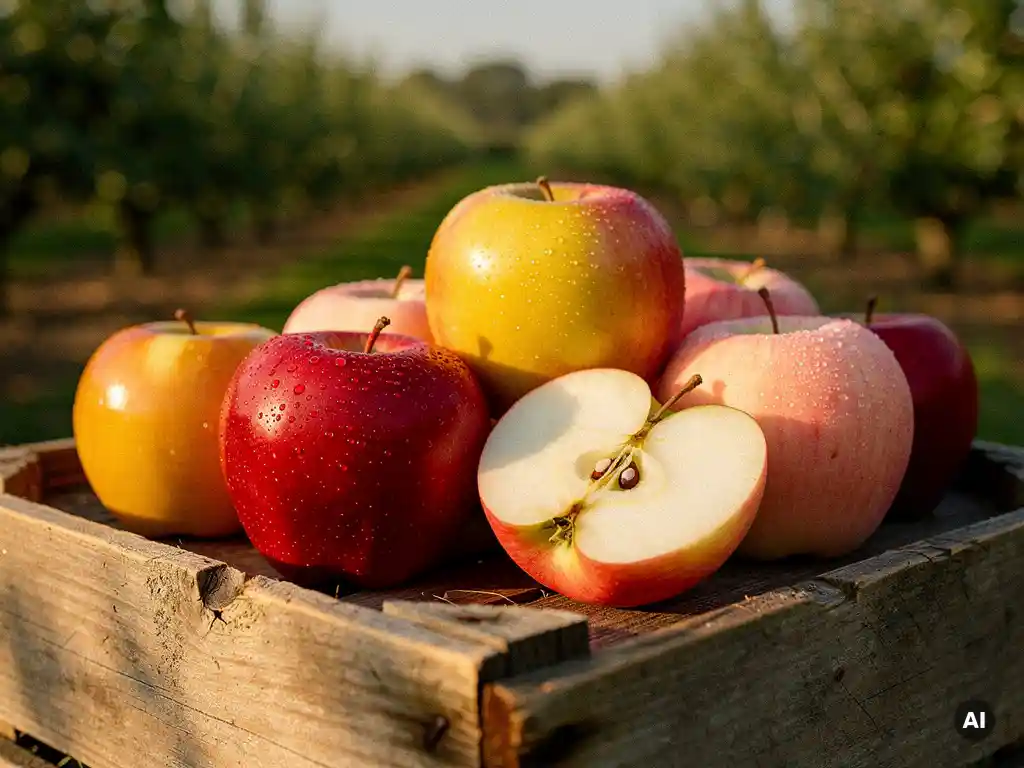
The best apple varieties for snacking are those that combine a satisfying crunch, a well-developed flavour profile, and a pleasant eating texture that works without any preparation. Apples bred specifically for fresh consumption tend to excel here, because their traits have been selected with the eating experience in mind rather than processing or long-term storage. Below, we answer the most common questions about snack apple varieties so you can make a more informed choice, whether you are a grower, retailer, or simply an apple lover. If you want to know more about any of the varieties we develop, feel free to get in touch with us at any time.
What makes an apple variety good for snacking?
A good snack apple variety combines crunch, juiciness, balanced flavour, and a skin that is not too tough. These qualities make the fruit enjoyable to eat out of hand, without preparation. The best eating apples also hold their texture well after harvest and do not brown too quickly once bitten, which matters for lunchboxes and on-the-go consumption.
Beyond those basics, a few additional traits set outstanding snack fruit apples apart from ordinary eating apples:
- Aroma: A distinct, pleasant scent enhances the overall eating experience and is a key driver of perceived quality.
- Sugar-acid balance: Neither purely sweet nor overly tart, the best snack apples sit in a range that most consumers find satisfying.
- Skin thickness: A thin but resilient skin contributes to a clean first bite without feeling tough or chewy.
- Flesh firmness: Apples that stay firm throughout the eating season are far more rewarding as a snack than those that soften quickly after picking.
Breeding programs that focus on fresh consumption, like ours at Better3Fruit, specifically select for these traits across thousands of seedlings before a variety ever reaches commercial evaluation.
Which apple varieties are the crunchiest for snacking?
The crunchiest apple varieties for snacking tend to be those with high cell turgor and dense flesh, characteristics that are partly genetic and partly influenced by growing conditions. Varieties like Kanzi® are well known for delivering an exceptionally firm, crisp bite that holds up long after harvest, making them a favourite among consumers who prioritise texture above all else.
Crunch in an apple comes from the structural integrity of the fruit’s cells. When cells are tightly packed and well hydrated, each bite produces that satisfying snap. Varieties that lose moisture quickly after harvest or that have naturally softer flesh will never match the crunch of a firm-fleshed cultivar, regardless of how they are stored.
Our Giga® variety is another example of a high-crunch snack apple, bred with a firm texture as a core trait. For growers and retailers seeking apple cultivars that consistently deliver on texture, varieties developed through targeted breeding programs offer a more reliable result than traditional open-pollinated selections, because crunch can be actively selected for across generations of breeding.
What’s the difference between sweet and balanced snack apples?
Sweet snack apples have a high sugar content with relatively low acidity, producing a mild, honeyed flavour. Balanced snack apples combine moderate to high sugar with enough acidity to create complexity and a refreshing finish. Most consumer research suggests that balanced apple cultivars appeal to a broader audience, while purely sweet varieties often attract younger consumers and those new to premium fruit.
The distinction matters because flavour preference is deeply personal, and different snack apple varieties serve different market segments. A very sweet apple may feel flat to an experienced fruit buyer, while a sharper, more acidic variety might put off a child. The most commercially successful snack apples tend to land in the balanced category, where sweetness provides immediate appeal and acidity adds depth that keeps the flavour interesting.
Kanzi®, for example, is celebrated precisely for this balance. Its high sugar content is lifted by a lively acidity that prevents it from tasting one-dimensional. Morgana® sits in a similar space, offering a rich, complex flavour that rewards repeated eating. When choosing between sweet and balanced apple varieties for snacking, consider your target consumer and the eating occasion, because both styles have a genuine place in the snack fruit category.
Are club apple varieties better snack fruit than supermarket staples?
Club apple varieties are generally better suited to premium snacking than standard supermarket staples, because they are bred and managed specifically for flavour, texture, and eating quality rather than yield or shelf uniformity alone. Club cultivars are released under controlled licensing arrangements that enforce consistent quality standards throughout the supply chain, from orchard to retail shelf.
Supermarket staples like Golden Delicious or Granny Smith have served consumers well for decades, but they were selected in an era when breeding priorities were different. Shelf life, appearance, and ease of growing were often weighted more heavily than the eating experience. Modern club apple varieties, by contrast, are designed from the ground up for fresh consumption, with taste panels and consumer testing forming part of the selection process.
This does not mean every club variety is superior to every traditional cultivar. What it does mean is that the club model creates an incentive structure that aligns grower, packer, and retailer around quality, because the variety’s commercial value depends on maintaining a consistent eating experience. You can explore the apple varieties we develop to see how this approach translates into the varieties we bring to market.
How does apple breeding improve snack fruit quality?
Apple breeding improves snack fruit quality by systematically selecting for the traits that make an apple enjoyable to eat fresh, including crunch, flavour complexity, juiciness, and aroma. Modern breeding programs use molecular markers to identify desirable traits early in a seedling’s development, which dramatically accelerates the process and allows breeders to combine multiple quality traits without compromising any single one.
At Better3Fruit, we evaluate more than 30,000 new varieties at any one time, with around 10,000 new seedlings of each crop entering the field every year. This scale means that genuinely exceptional snack apple cultivars can be identified and progressed, while the vast majority that do not meet the required standard are discarded. The result is a breeding pipeline that consistently produces varieties with real eating quality rather than average performance across many traits.
Breeding also addresses the durability of snack quality over time. A variety that tastes exceptional at harvest but deteriorates quickly is not a reliable snack apple at retail. Selecting for post-harvest firmness and flavour retention is therefore just as important as selecting for the initial eating experience, and it is an area where targeted breeding programs have made significant progress in recent decades.
When is the best time to eat a snack apple for peak flavour?
The best time to eat a snack apple for peak flavour is shortly after it has been conditioned from cold storage, typically within a few days of being brought to room temperature. Apples harvested at the right maturity and stored under controlled-atmosphere conditions can maintain excellent eating quality for months, but they taste best once they have had a short period to warm up and allow their aromatic compounds to fully express.
Harvest timing is equally important. An apple picked too early will lack the sugar development and flavour complexity that makes it a great snack. Picked too late, it may be soft and mealy. The optimal harvest window varies by variety and growing region, which is why growers who work with premium snack apple cultivars pay close attention to maturity indicators rather than relying on a fixed calendar date.
At home, the practical answer is straightforward: take your snack apples out of the refrigerator 30 to 60 minutes before eating. Cold suppresses aroma and flavour perception, and a slightly warmer apple will taste noticeably richer and more complex. This simple step makes a real difference with high-quality eating apple varieties, where the flavour investment made during breeding deserves to be fully appreciated at the point of consumption.
Choosing the right snack apple variety comes down to understanding what you value most in the eating experience, whether that is crunch, flavour complexity, sweetness, or consistent quality throughout the season. Modern apple cultivars developed through targeted breeding programs offer a level of eating quality that was simply not achievable in earlier generations of fruit. If you would like to learn more about our varieties or discuss licensing opportunities, contact us and we will be happy to help.
This content was generated with the help of AI and it may contain mistakes