
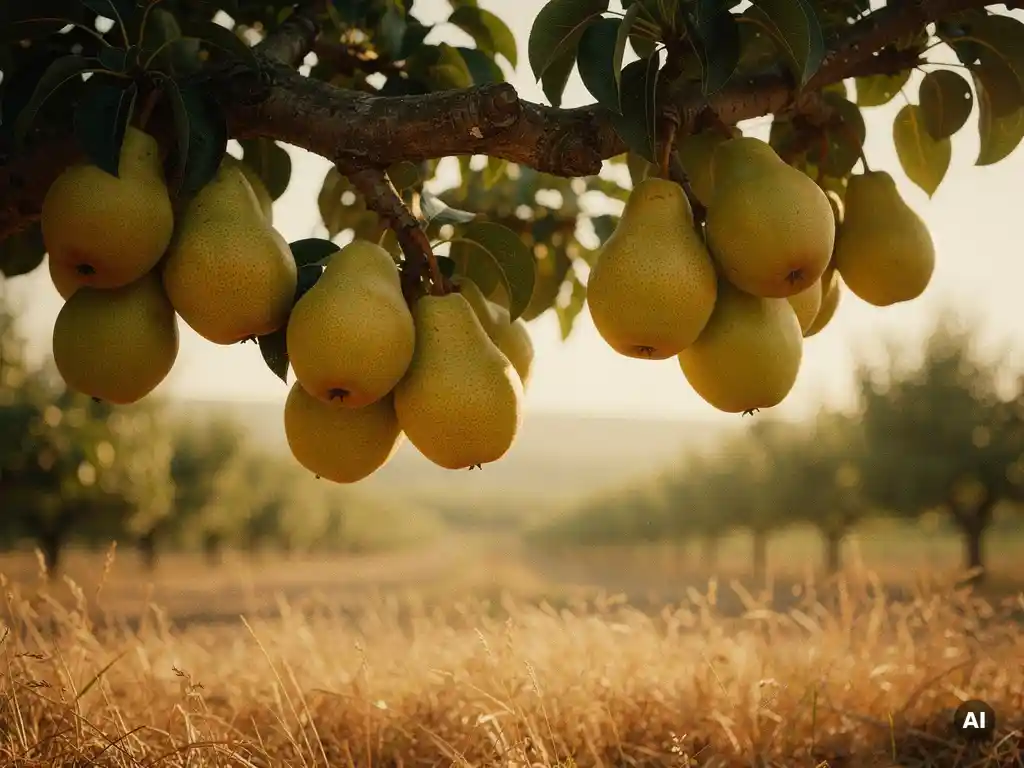
Several pear varieties show strong climate resilience, particularly those bred for heat tolerance, drought resistance, and adaptability to shifting seasonal patterns. Varieties that combine deep root vigor, late or staggered bloom timing, and natural disease resistance tend to perform most consistently as growing conditions become less predictable. Below, we unpack the key questions growers are asking about climate-resilient pear varieties in 2026, and if you want to discuss your specific situation, feel free to get in touch with us directly.
What traits make a pear variety climate resilient?
A climate-resilient pear variety is one that maintains consistent fruit quality, reliable yields, and tree health across a wider range of environmental conditions than conventional varieties. The most important traits include drought tolerance, heat endurance during fruit development, resistance to late spring frost, and the ability to cope with irregular rainfall without compromising fruit set or size.
Beyond those headline traits, resilience is rarely a single characteristic. It is a combination of factors that work together:
- Bloom timing flexibility: Varieties that bloom slightly later or over a broader window are less vulnerable to late frosts, which are becoming more frequent in many European and North American growing regions.
- Root system vigor: Strong, deep root systems allow trees to access subsoil moisture during dry spells, reducing dependence on irrigation.
- Disease resistance: Warmer, wetter winters and springs create conditions that favor fungal diseases like scab and fire blight. Varieties with built-in resistance require fewer inputs and remain productive even when conditions favor disease pressure.
- Fruit skin and cell structure: Heat-tolerant varieties tend to have fruit structures that resist sunburn, russeting, and premature softening during high-temperature periods.
When we develop new pear varieties, these traits are not treated as optional extras. Climate resilience and multi-level sustainability are primary long-term goals in our breeding strategy, alongside taste, texture, and grower yield.
Which pear varieties perform best in warmer, drier climates?
Pear varieties that perform best in warmer, drier climates are those with demonstrated drought tolerance, lower chilling hour requirements, and heat-stable fruit development. Traditional European varieties like Conference and Doyenné du Comice were bred for cooler, more temperate conditions and can struggle with heat stress, sunburn, and inconsistent fruit set in warmer regions.
Newer breeding selections are increasingly designed with these challenges in mind. Varieties with lower chill requirements can complete their dormancy cycle even in mild winters, which is critical in Mediterranean-type climates and increasingly relevant in central Europe. Heat-tolerant pear varieties also tend to have firmer flesh that holds up better during warm ripening periods, reducing postharvest losses.
Growers in warmer regions should look for varieties that combine these characteristics:
- Low to moderate chilling hour requirements (below 800 hours where possible)
- Good fruit set under warm spring conditions
- Resistance to sunburn and skin cracking
- Adaptability to reduced irrigation schedules without significant yield loss
Exploring the full range of available options is a useful starting point. You can browse our current pear variety portfolio to see which selections are suited to different growing environments.
How does climate change affect pear growing seasons?
Climate change affects pear growing seasons primarily by compressing or disrupting the chilling period in winter, advancing bloom dates in spring, and extending heat stress during summer fruit development. These shifts create a cascade of challenges: earlier bloom increases frost risk, reduced winter chilling leads to uneven bud break, and summer heat can accelerate ripening in ways that reduce fruit quality and storage life.
In practical terms, growers across Europe and other temperate pear-producing regions are already observing these changes. Springs arrive earlier but remain unpredictable, with late frost events occurring even as average temperatures rise. This combination is particularly damaging because it encourages early bloom while maintaining the risk of cold snaps that can destroy an entire season’s crop.
Summer heat accumulation is also reshaping harvest windows. Varieties that traditionally ripened in September may now approach harvest readiness in August in some regions, creating logistical pressure and affecting the flavor and texture development that consumers expect. Extended dry periods between rainfall events put additional stress on orchards that were designed around historical precipitation patterns.
The implication for growers is that relying on varieties selected for the climate of the past two or three decades carries increasing risk. Pear breeding for climate change is no longer a future consideration, it is a present-day necessity.
What role does pear breeding play in building climate resilience?
Pear breeding plays a central role in building climate resilience by developing varieties that are genetically equipped to handle the conditions growers face today and will face in the coming decades. Unlike short-term agronomic interventions such as irrigation adjustments or canopy management, breeding delivers durable, variety-level solutions that reduce input dependency and improve long-term orchard sustainability.
Modern breeding programs use tools like molecular markers to identify and select for specific traits far more efficiently than traditional crossing and observation alone. This means desirable characteristics, drought tolerance, disease resistance, heat-stable fruit development, can be combined deliberately rather than discovered by chance over many generations of trial and error.
At Better3Fruit, we run one of the largest apple and pear breeding programs in the world, with over 30,000 new varieties under evaluation at any time. Each year, 10,000 new pear selections enter the field. The scale of this pipeline means that when a trait combination proves genuinely valuable under stress conditions, we can identify it, protect it, and move it toward commercialization with the kind of speed that a smaller program simply cannot match.
Sustainable pear varieties emerging from this process are not just climate-adapted, they are designed to reduce the chemical and water inputs that make conventional production increasingly costly and environmentally burdensome.
Should growers switch pear varieties to adapt to climate change?
Growers should seriously evaluate switching pear varieties if their current selections show declining performance, increased disease pressure, or yield instability linked to changing weather patterns. Switching is not always the right answer immediately, but waiting too long to act carries real commercial risk as climate-related stress compounds over successive seasons.
The decision depends on several practical factors:
- Current variety performance: If established varieties are still producing consistent quality and yield, a gradual transition, introducing climate-adapted selections alongside existing plantings, is often more manageable than a full replant.
- Regional climate trajectory: Growers in regions experiencing rapid warming or increased drought frequency have stronger reasons to prioritize climate-resilient pear varieties sooner rather than later.
- Market and licensing access: Some of the most promising new varieties are managed under club or licensed arrangements, which affect availability. Understanding what is accessible in your region is an important early step.
- Orchard investment horizon: Pear trees are long-term investments. A tree planted today will be producing fruit for 20 or more years, so the climate of 2040 matters as much as the climate of 2026 when making variety decisions.
Switching varieties is not a one-size-fits-all decision, but delaying the conversation entirely is a risk that is becoming harder to justify. If you are ready to explore which climate-adapted pear varieties might suit your operation, contact us and we will help you find the right path forward.
This content was generated with the help of AI and it may contain mistakes