
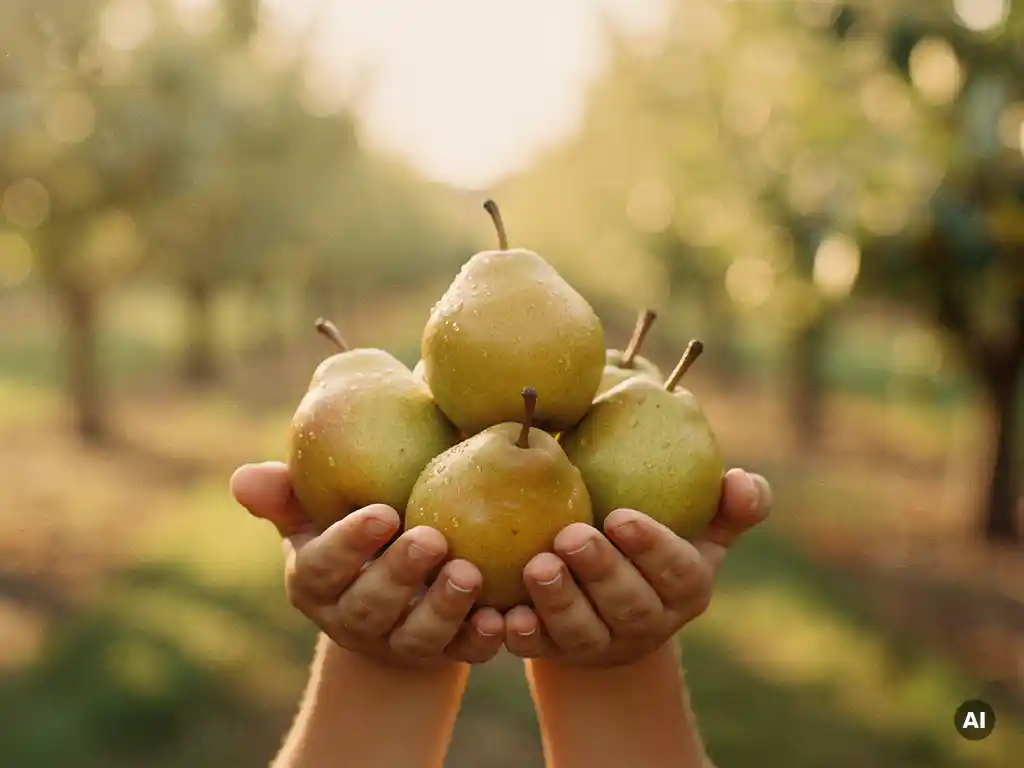
The best pear varieties for children and young people are those that are naturally sweet, low in acidity, and easy to eat, think varieties like Conference, Doyenné du Comice, and Williams (Bartlett). These pears tend to have a gentle flavour and soft texture that most kids find appealing without any preparation needed. Below, we answer the most common questions parents and caregivers ask when choosing pears for younger eaters. If you would like to learn more about specific varieties, feel free to get in touch with us directly.
What makes a pear variety good for children?
A pear variety is good for children when it combines natural sweetness, low acidity, and a pleasant texture that is easy to chew and enjoy. Young palates are sensitive to sharp or astringent flavours, so the best child-friendly pear varieties are those that taste mild and approachable straight from the hand, without needing added sugar or preparation.
Beyond taste, ease of eating matters enormously. A pear that is too firm can be difficult for younger children to bite into, while one that is overly grainy or gritty may be rejected by texture-sensitive kids. The ideal pear for young people strikes a balance: juicy enough to feel refreshing, soft enough to eat comfortably, and sweet enough to compete with other fruit options.
Skin thickness is also worth considering. Thinner-skinned varieties are generally more palatable for children who dislike peeling or are still developing their chewing confidence. Varieties with a smooth, thin skin are often eaten whole without complaint, making them a practical choice for lunchboxes and snack time.
Which pear varieties are the sweetest and least acidic?
The sweetest and least acidic pear varieties include Williams (also known as Bartlett), Doyenné du Comice, and Beurré Hardy. These sweet pear varieties have a high natural sugar content and a gentle, honeyed flavour with minimal sharpness, making them among the best pears for kids who prefer a mild, dessert-like eating experience.
Williams pears are widely available and well-loved for their aromatic, almost floral sweetness. Comice pears are exceptionally juicy and buttery, often described as the richest-tasting pear of all, a real treat for young people with a sweet tooth. Beurré Hardy offers a similarly smooth, sweet profile with a slight hint of vanilla.
Conference pears, while slightly more acidic than the above, become noticeably sweeter as they ripen fully and are one of the most commonly found varieties in European supermarkets. Allowing Conference pears to ripen at room temperature until the neck gives slightly under gentle pressure brings out their best flavour for younger eaters. You can explore a broader range of pear and apple varieties to find options suited to different tastes and growing regions.
Are soft or crunchy pears better for young children?
Soft pears are generally better for young children, particularly toddlers and early primary school-age kids. Soft pear varieties are easier to chew, less likely to cause choking concerns, and tend to be juicier and sweeter, all qualities that make them more enjoyable and safer for small mouths. Crunchy pears are better suited to older children and teenagers.
For very young children under three, a fully ripe, soft pear can even be mashed or pureed without cooking, preserving its natural nutrients while making it effortless to eat. As children grow and develop stronger teeth and chewing ability, introducing firmer varieties can be a positive step, the satisfying crunch of a crisper pear appeals to many school-age children in the same way an apple does.
Older children and teenagers often enjoy firmer, crisper pears as a snack because they feel more substantial and hold up well in lunchboxes without bruising quickly. So while soft pear varieties win for the youngest eaters, there is a natural progression toward firmer options as children grow.
What nutritional benefits do pears offer children?
Pears offer children a valuable combination of dietary fibre, vitamin C, potassium, and natural sugars that provide sustained energy. They are one of the few fruits that contain significant amounts of both soluble and insoluble fibre, which supports healthy digestion, a benefit that is especially useful for children who struggle with regularity.
The vitamin C in pears contributes to immune function and helps the body absorb iron from other foods, which is particularly relevant for growing children. Potassium supports healthy heart function and muscle activity, while the natural sugars in pears provide a quick, wholesome energy boost without the crash associated with processed snacks.
Pears are also hypoallergenic compared to many other fruits, meaning they are less likely to trigger allergic reactions. This makes them one of the first fruits recommended for babies starting solid foods. Their high water content, typically above 80 percent, also contributes to daily hydration, which is easy to overlook in children who do not drink enough fluids throughout the day.
How should pears be prepared to make them more appealing to kids?
The most effective ways to make pears more appealing to children are to serve them at peak ripeness, cut them into easy-to-handle shapes, and pair them with foods kids already enjoy. A perfectly ripe pear needs no embellishment, its natural sweetness and juiciness do the work. Presentation and portion size matter more than any recipe.
For younger children, slicing pears into thin wedges or bite-sized cubes removes the challenge of biting through the whole fruit and makes it easier to manage. Removing the core and seeds before serving is always a good idea for safety and convenience. Leaving the skin on is fine for most varieties, as it contains additional fibre and nutrients.
For children who are reluctant to eat fruit, a few simple approaches tend to work well:
- Pair pear slices with mild cheese or nut butter for a balanced snack that combines sweet and savoury
- Add diced pear to yoghurt or porridge to introduce the flavour in a familiar context
- Blend ripe pear into smoothies alongside banana and mild greens for a naturally sweet drink
- Lightly warm pear slices in a pan with a small amount of cinnamon for a comforting, pudding-like treat
- Let children choose and handle the fruit themselves, involvement often increases willingness to try new foods
The key is consistency and variety. Offering different pear varieties across the season helps children discover which textures and flavour profiles they prefer, building a genuine appreciation for the fruit rather than a reluctant tolerance of it.
Choosing the right pear variety for a child does not have to be complicated. Focus on sweetness, softness, and ripeness, and most young eaters will come around quickly. At Better3Fruit, we are passionate about developing pear and apple varieties that genuinely delight people of all ages, including the youngest and most discerning critics at the table. If you would like to find out more about our varieties or discuss potential partnerships, get in touch with us today.
This content was generated with the help of AI and it may contain mistakes