
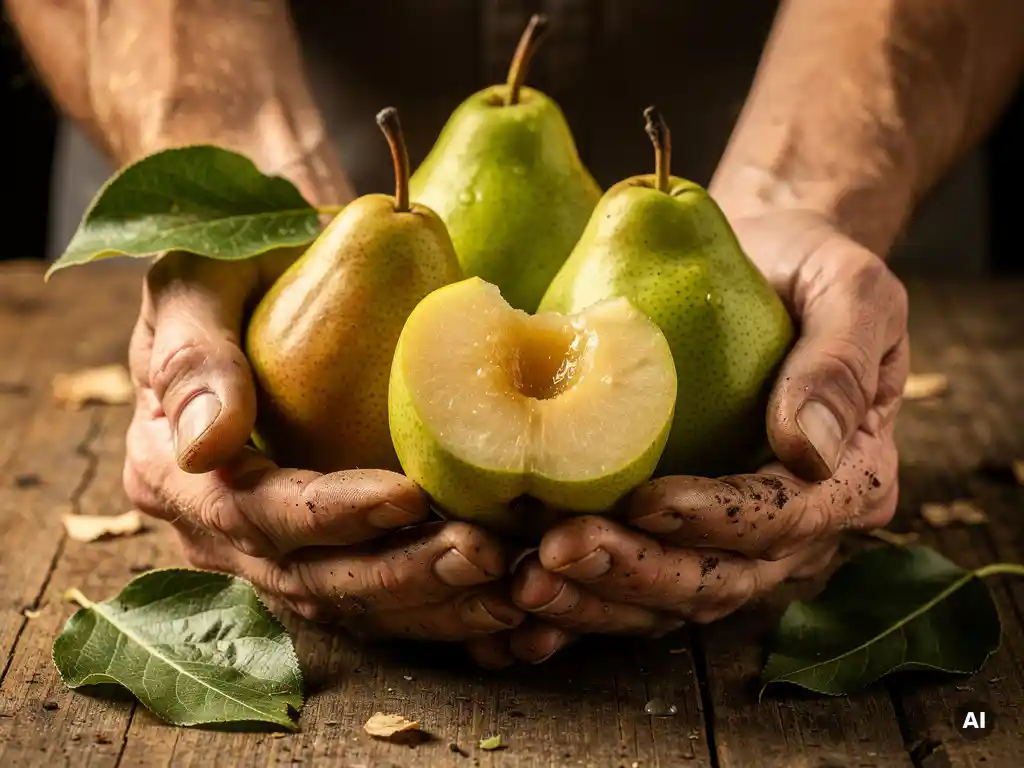
Several pear varieties are well suited for eating without peeling, including Bartlett (Williams), Comice, Forelle, and Concorde, all of which have naturally thin, tender skin that becomes pleasant to eat when the fruit is fully ripe. The key factor is ripeness: even thin-skinned varieties can feel tough or bitter when underripe. Below, we answer the most common questions about eating pears unpeeled, from choosing the right cultivar to knowing when your pear is ready. If you want to learn more about pear breeding and variety development, feel free to get in touch with us, we are happy to help.
Which pear varieties have the thinnest, most edible skin?
The pear varieties with the thinnest and most pleasant edible skin include Bartlett (Williams), Comice, Forelle, Concorde, and Starkrimson. These cultivars share naturally fine-textured skin that softens as the fruit ripens, making fresh pear consumption without peeling both comfortable and enjoyable. Asian pear varieties such as Hosui and Shinseiki also have relatively thin skin, though their texture differs from European types.
Among European pears, Comice is frequently praised for its almost imperceptible skin, it virtually disappears into the flesh when the fruit is at peak ripeness. Bartlett is the most widely available option and delivers a smooth, barely noticeable skin when fully yellow. Forelle, recognizable by its red freckles, has a delicate skin that holds up well to fresh eating. Concorde, a variety known for its elegant elongated shape, combines thin skin with a firm, sweet flesh that makes it one of the best pear varieties for eating out of hand. You can explore a wider range of pear cultivars to understand how breeding shapes these qualities.
What makes a pear skin pleasant or unpleasant to eat?
Pear skin is pleasant to eat when it is thin, smooth, and free of gritty stone cells called sclereids. It becomes unpleasant when it is thick, waxy, astringent, or loaded with those hard, grainy cells that create a rough texture in the mouth. Variety genetics and ripeness level are the two biggest drivers of whether the skin feels good or not.
Stone cells, or sclereids, are a natural feature of pear tissue. Some varieties produce far more of them in the skin than others, which is why certain pears feel papery or coarse even when ripe. Breeders at companies like ours actively work to reduce the presence of these cells in new cultivars, improving the overall eating experience without peeling.
Beyond texture, the skin’s flavor matters too. Tannins and phenolic compounds concentrated in the skin can make it taste bitter or astringent, particularly in underripe fruit. As a pear ripens, these compounds break down, the skin softens, and the bitterness fades. This is why the same variety can taste completely different depending on when you eat it.
How do you tell if a pear is ripe enough to eat unpeeled?
A pear is ripe enough to eat unpeeled when gentle thumb pressure near the stem end causes a slight give without the flesh feeling mushy. This is the most reliable test for fresh pear consumption because pears ripen from the inside out, waiting until the outside softens means the core is already overripe.
Color is a secondary indicator and varies by variety. Bartlett turns from green to yellow, while Starkrimson deepens to a rich red. Comice develops a subtle golden blush. For varieties that stay green, such as Concorde or some Asian types, color is less useful, making the thumb-pressure test even more important.
Aroma is another helpful signal. A ripe pear releases a sweet, floral fragrance near the stem. If you detect that scent, the fruit is almost certainly at the right stage. At this point, the skin of a thin-skinned variety will be at its most tender, making it genuinely enjoyable to eat without peeling.
Are Asian pears better than European pears for eating unpeeled?
Asian pears and European pears each have advantages for eating unpeeled, but neither is universally better, it depends on what you value in texture and flavor. Asian pears are crisp and apple-like with relatively thin skin, while European pears develop a buttery, melt-in-the-mouth texture when ripe, with the thinnest-skinned varieties being equally pleasant to eat whole.
Asian pears such as Hosui, Shinseiki, and Nijisseiki are ready to eat straight from the tree without a ripening period, and their skin tends to be mild in flavor. This makes them very accessible for unpeeled snacking. However, their skin can still feel slightly tougher than the finest European varieties at peak ripeness.
European pears require off-tree ripening and a bit more patience, but the payoff is exceptional. Varieties like Comice or Bartlett, when perfectly ripe, have skin so thin and tender that most people do not notice it at all. For everyday fresh eating, both types work well, the choice often comes down to personal preference for crisp versus soft texture.
Should you wash pear skin before eating it whole?
Yes, you should always wash pear skin thoroughly before eating a pear unpeeled. Even organically grown pears carry natural residues, dust, handling contamination, and environmental deposits on the surface. A thorough rinse under cool running water, combined with gentle rubbing, removes the vast majority of surface residues and makes the skin safer and more pleasant to eat.
For conventionally grown pears, washing is especially important since post-harvest treatments and storage waxes are sometimes applied to extend shelf life. These coatings are generally food-safe, but removing them before eating is a sensible habit. A soft produce brush can help clean the skin more effectively without damaging it.
Drying the pear after washing also improves the eating experience, a damp skin can feel slightly slippery or dilute the flavor. A quick pat with a clean cloth is all it takes. With that simple step done, a ripe, thin-skinned pear is ready to enjoy in full, skin and all.
Choosing the right pear variety and waiting for true ripeness are the two things that make eating pears unpeeled genuinely enjoyable rather than a compromise. At Better3Fruit, we breed pear cultivars with exactly these qualities in mind, skin that is thin, flavor that is balanced, and texture that rewards the patient consumer. If you want to discover what modern pear breeding can offer, contact us and we will be glad to walk you through our latest varieties.
This content was generated with the help of AI and it may contain mistakes