
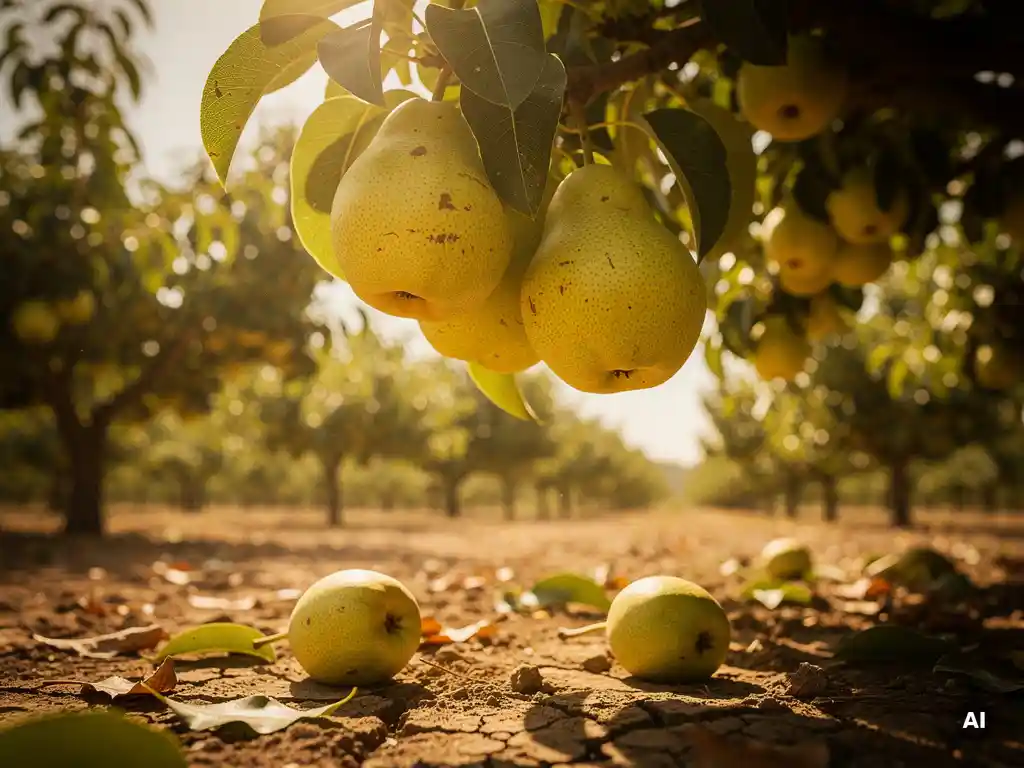
Several pear varieties grow well despite high temperatures, particularly those with strong heat tolerance, drought resilience, and the ability to maintain fruit quality under thermal stress. Varieties adapted to warm climates tend to have lower chilling requirements, robust skin protection against sunburn, and efficient water-use characteristics. The sections below explore which traits matter most, how heat affects pear production, and what modern breeding is doing to keep pace with a warming world, and if you want to talk through variety options for your specific situation, feel free to get in touch with us.
Which pear varieties are most resistant to heat stress?
Pear varieties with the strongest heat resistance include those originating from warmer growing regions, particularly selections with Asian pear genetics or Mediterranean heritage. Varieties with low chilling requirements, thick cuticles, and compact canopy architecture tend to cope best when temperatures rise. European pear types generally struggle more with heat than Asian types, though modern breeding is closing that gap.
Among commercially relevant options, varieties bred for warm-climate performance often share a set of common traits: they ripen earlier in the season before the most intense summer heat arrives, they show less susceptibility to russeting and sunburn under high solar radiation, and they maintain acceptable firmness even when temperatures spike during the final weeks before harvest. Growers in warm regions have historically leaned on varieties like Coscia, Spadona, and certain Asian-European crosses, though the commercial landscape is evolving quickly as breeding programs develop purpose-built heat-tolerant cultivars.
It is worth noting that heat resistance is rarely a single trait. A variety that performs well in one warm region may struggle in another if the humidity profile, soil type, or temperature pattern differs. Evaluating pear varieties for high temperatures always requires regional trialing alongside the broader agronomic picture.
How does high heat affect pear fruit quality and yield?
High temperatures during critical growth stages reduce pear fruit quality and yield in several interconnected ways. Heat accelerates ripening unevenly, softens flesh texture prematurely, reduces sugar-acid balance, and increases the risk of sunburn on exposed fruit surfaces. Yield losses occur when heat stress during flowering reduces pollination success or when water deficit compounds thermal stress during cell division.
The timing of heat events matters enormously. A warm spell during bloom can disrupt pollinator activity and reduce fruit set, directly cutting the number of fruits per tree. Heat during the cell division phase, roughly the first four to six weeks after fruit set, can permanently limit fruit size, since cells formed under stress are fewer and smaller. Later in the season, high temperatures accelerate the production of ethylene, the hormone that triggers ripening, which means fruit can become overripe and mealy before it reaches the optimal harvest window.
From a quality standpoint, the most visible effects are sunburn patches on fruit skin, which reduce packout rates significantly, and a loss of the firm, crisp texture that premium fresh-market pears depend on. Internal browning disorders can also increase under heat stress, particularly in varieties that are already predisposed to such conditions. For growers, this combination of quality and yield pressure makes selecting the right pear variety for a warm climate one of the most commercially consequential decisions they face.
What traits should heat-tolerant pear varieties have?
Heat-tolerant pear varieties should combine low chilling requirements, early or mid-season ripening, strong skin protection against sunburn, stable flesh firmness under warm conditions, and efficient water use. No single trait is sufficient on its own, the best-performing varieties in hot climates tend to score well across several of these characteristics simultaneously.
- Low chilling requirements: Varieties that need fewer winter cold hours are better suited to regions where mild winters accompany hot summers, ensuring reliable and uniform budbreak without gaps in the canopy.
- Early ripening: Varieties that mature before peak summer heat avoid the most damaging thermal windows, reducing the risk of premature softening and sunburn during the final ripening phase.
- Sunburn tolerance: Thicker cuticles, natural wax layers, and compact fruit shape all reduce the surface area exposed to direct radiation, limiting the skin damage that cuts packout rates.
- Flesh firmness stability: Varieties whose flesh remains firm even when ambient temperatures are elevated retain their eating quality and shelf life, which is critical for export markets.
- Drought and water-use efficiency: Heat and drought often arrive together. Varieties with efficient stomatal regulation and deeper rooting tendencies are better equipped to maintain growth and quality when irrigation is limited.
- Disease tolerance: Heat-stressed trees are more vulnerable to certain pathogens. Varieties with built-in resistance to fire blight and scab reduce the additional pressure that warm, humid conditions can create.
When evaluating pear varieties for warm weather cultivation, growers and licensing partners benefit from looking at multi-year trial data across multiple sites rather than single-season results, since the interaction between variety genetics and local climate is complex and variable.
How is climate resilience built into modern pear breeding?
Climate resilience in modern pear breeding is built through a combination of targeted trait selection, molecular marker technology, and large-scale field evaluation across diverse environments. Rather than selecting varieties reactively after climate damage has occurred, leading breeding programs now screen for heat tolerance, drought response, and disease resistance as primary goals from the earliest stages of variety development.
At Better3Fruit, we use molecular markers to identify genetic signatures associated with desirable traits, including climate-relevant ones, early in the breeding cycle. This means we can evaluate tens of thousands of seedlings at the genetic level before committing to the years of field trialing that full variety development requires. With over 10,000 new pear varieties entering our evaluation pipeline every year and more than 30,000 under assessment at any given time, this approach gives us the scale to find genuinely exceptional performers rather than settling for incremental improvements.
Climate resilience is also built through deliberate crosses between varieties from different climatic backgrounds. Introducing genetics from warm-region pear populations into European commercial breeding lines can transfer heat-adaptive traits while preserving the fruit quality characteristics that fresh and processed markets demand. The result is a new generation of varieties that do not force growers to choose between climate performance and commercial appeal, they can have both.
Sustainability sits at the core of our long-term breeding strategy. Varieties that require fewer chemical inputs because they carry disease resistance, and that maintain yield under heat and water stress, reduce the environmental footprint of pear cultivation in a meaningful and measurable way.
Which growing regions are seeing the biggest impact from rising temperatures?
The growing regions seeing the biggest impact from rising temperatures include traditional pear-producing areas in Southern Europe, parts of South Africa, Australia, and California, where heat events are becoming more frequent, more intense, and less predictable. In these regions, growers are already experiencing earlier harvest dates, increased sunburn incidence, and greater variability in yield from one season to the next.
In Southern Europe, particularly Spain, Italy, and Portugal, summer temperatures that once fell within manageable ranges are now regularly exceeding thresholds that cause physiological stress in standard commercial varieties. Growers in these regions are under pressure to adapt through a combination of agronomic measures such as shade netting and overhead cooling, and longer-term variety transitions toward more heat-tolerant cultivars.
South Africa and Australia, both significant pear exporters, face a dual challenge: warming growing seasons combined with increasing pressure on irrigation water availability. Varieties that perform well under heat but also use water efficiently are not just commercially attractive in these markets, they are becoming a production necessity.
Even in historically cooler pear regions such as Belgium, the Netherlands, and northern France, the frequency of summer heat waves has increased noticeably. While these areas are not yet facing the same severity of impact as warmer regions, the trend is clear enough that forward-thinking growers and breeding programs are already factoring climate trajectories into variety planning decisions. Exploring the full range of varieties we have developed is a good starting point for understanding which options are best suited to your region’s evolving conditions.
Rising temperatures are reshaping which pear varieties make commercial sense in every major growing region, and the window for proactive adaptation is narrowing. Whether you are a grower, a packer, or a licensing partner looking to future-proof your portfolio, choosing varieties with genuine climate resilience is one of the most impactful decisions you can make right now. Contact us to discuss which heat-tolerant pear varieties are the right fit for your growing conditions and commercial goals.
This content was generated with the help of AI and it may contain mistakes