
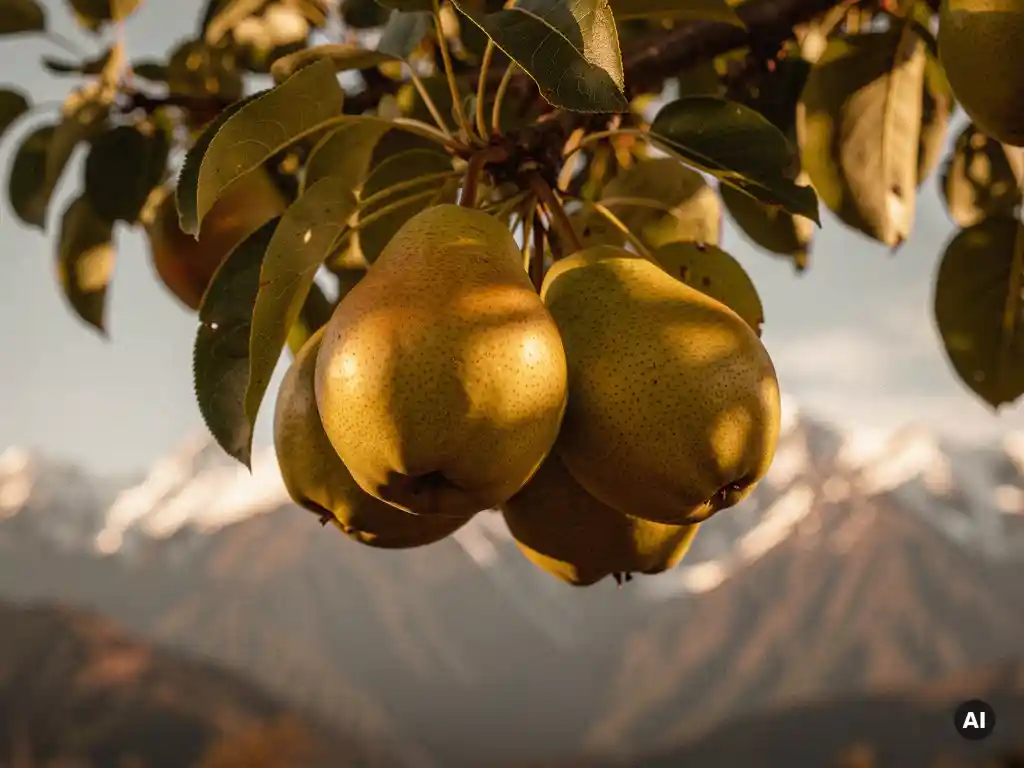
Chile and Argentina are two of the most capable pear-producing countries in the Southern Hemisphere, and several varieties perform particularly well there, including Williams/Bartlett, Packham’s Triumph, Beurré Bosc, and Abate Fetel. These cultivars have proven track records across the diverse growing zones of both countries, delivering the yield, quality, and storage life that commercial growers and export markets demand. Below, we explore the key questions every grower should ask before selecting a variety for South American conditions. If you want to discuss variety options with us directly, feel free to get in touch.
What growing conditions do Chile and Argentina offer for pear production?
Chile and Argentina offer some of the most favorable pear cultivation conditions in the world, combining well-defined seasons, low disease pressure in many zones, and access to both Pacific and Atlantic export routes. Chile’s Central Valley and Argentina’s Río Negro and Neuquén regions provide the cold winters and warm, dry summers that pear trees need to produce high-quality fruit at commercial scale.
Chile’s narrow geography creates a range of microclimates, but the core pear-producing belt runs through the O’Higgins and Maule regions. Here, growers benefit from reliable chilling hours, low humidity during the growing season, and excellent irrigation infrastructure fed by Andean snowmelt. These conditions reduce the need for intensive chemical inputs and support the development of fruit with strong color and firm texture.
Argentina’s production is concentrated in the Patagonian valleys, particularly around Alto Valle in Río Negro province. This region is characterized by a continental climate with hot, dry summers, cold winters, and very low rainfall. The arid conditions naturally suppress many fungal diseases, which gives growers a meaningful advantage when managing orchards at scale. Altitude also plays a role: higher-elevation sites produce fruit with better color development and firmer flesh, which is critical for long-distance export.
Both countries operate in the Southern Hemisphere growing season, meaning harvest runs from January through April. This counter-seasonal timing is a major commercial asset, allowing Chilean and Argentine growers to supply Northern Hemisphere markets during their off-season.
Which pear varieties are best suited to South American climates?
The pear varieties best suited to Chile and Argentina are those that combine reliable cropping under dry, continental or Mediterranean conditions with strong post-harvest performance for export. Williams/Bartlett, Packham’s Triumph, Beurré Bosc, and Abate Fetel are the backbone of commercial production in both countries, each filling a distinct market niche.
Williams/Bartlett
Williams is the dominant fresh-market variety across both countries and remains the benchmark for flavor and consumer recognition. It performs well in the dry conditions of Patagonia and Chile’s Central Valley, though its relatively short shelf life means it is better suited to nearby export markets or processing. Growers who target European fresh markets often prioritize other cultivars for long-haul shipping.
Packham’s Triumph and Beurré Bosc
Packham’s Triumph is a workhorse variety in Argentina, valued for its long storage potential and consistent yield. Beurré Bosc, with its distinctive russet skin and rich flavor, performs reliably in the cooler Andean foothill zones and commands strong prices in premium European and North American retail. Both varieties handle the temperature swings of Patagonian growing zones well and are well established in the region’s export supply chains.
Abate Fetel has grown in importance over recent years, particularly for the Italian and broader European market, where it is a preferred variety in premium retail. Its elongated shape and aromatic flavor profile give it strong shelf appeal, and it performs well in the warm, dry conditions typical of both countries’ main production zones.
For growers looking to diversify beyond these established cultivars, newer breeding programs are developing varieties with improved disease tolerance, better climate resilience, and enhanced eating quality. You can explore what is currently available through our variety portfolio.
How does disease pressure affect variety choice in these regions?
Disease pressure in Chile and Argentina is generally lower than in Europe or North America, thanks to the dry climates of the main production zones. However, fire blight, pear scab, and certain post-harvest pathogens remain relevant threats that should influence variety selection, particularly as climate patterns shift and new growing zones are explored.
Fire blight, caused by Erwinia amylovora, is the most serious bacterial disease affecting pear production in South America. Warm, wet spring conditions create the conditions for outbreaks, and while Argentina’s Patagonian valleys are relatively dry, episodes do occur. Varieties with known susceptibility to fire blight, such as Williams/Bartlett, require careful orchard management and monitoring during bloom. Selecting cultivars with greater tolerance to fire blight reduces both risk and the cost of protective sprays.
Pear scab, caused by Venturia pyrina, is less of a concern in arid zones but becomes more relevant in higher-humidity areas or wetter seasons. Growers expanding into new regions or facing changing rainfall patterns should prioritize varieties with demonstrated scab tolerance to keep spray programs lean and sustainable.
Post-harvest diseases, including Botrytis and Penicillium, affect fruit quality during cold storage and transit. Variety choice intersects with harvest timing and storage management here: cultivars with firmer skin and lower susceptibility to skin breaks tend to hold up better across long export journeys. This is an area where newer breeding work is making meaningful progress, developing cultivars that combine eating quality with improved post-harvest durability.
What market and export factors should growers consider when choosing a variety?
Growers in Chile and Argentina should choose pear varieties based on where the fruit will be sold, what quality standards those markets demand, and how well the variety holds up through cold storage and long-haul shipping. The counter-seasonal advantage of the Southern Hemisphere is only valuable if the variety can deliver consistent quality at the point of sale in the destination market.
Europe is the primary export destination for South American pears, with the United Kingdom, the Netherlands, Germany, and Italy among the most important markets. Each market has its own variety preferences: Italy favors Abate Fetel, while Northern European retail channels have strong demand for Packham’s Triumph and Conference-type pears. Growers targeting specific markets should align variety selection with those preferences from the outset rather than trying to adapt supply after the fact.
Retail consolidation and food safety standards have raised the bar for consistency and traceability. Supermarket buyers in Europe and North America increasingly require fruit that meets tight specifications for size, color, and sugar content, and they expect documentation of growing practices. Varieties that produce uniform, predictable fruit are easier to sell into these channels than those with high natural variability.
Club varieties and licensed cultivars offer an additional layer of market access. These varieties are managed through coordinated supply programs that align production with demand, support brand building, and often come with marketing investment from the variety owner. For growers with the scale and ambition to participate in a structured supply chain, a licensed cultivar can offer better returns than an open variety sold on the spot market.
Logistics and cold-chain performance matter as much as flavor. Varieties destined for export to Europe or Asia need to maintain quality across voyages of three to six weeks. Storage life, skin integrity, and the ability to ripen predictably after controlled-atmosphere storage are all factors that should be evaluated alongside taste and yield when selecting a cultivar for pear cultivation in South America.
Choosing the right pear variety for Chile or Argentina is a long-term decision that shapes your orchard’s commercial future for decades. We work with growers and partners worldwide to match the right cultivar to the right market and growing conditions. Contact us to start a conversation about which varieties could work best for your operation.
This content was generated with the help of AI and it may contain mistakes