
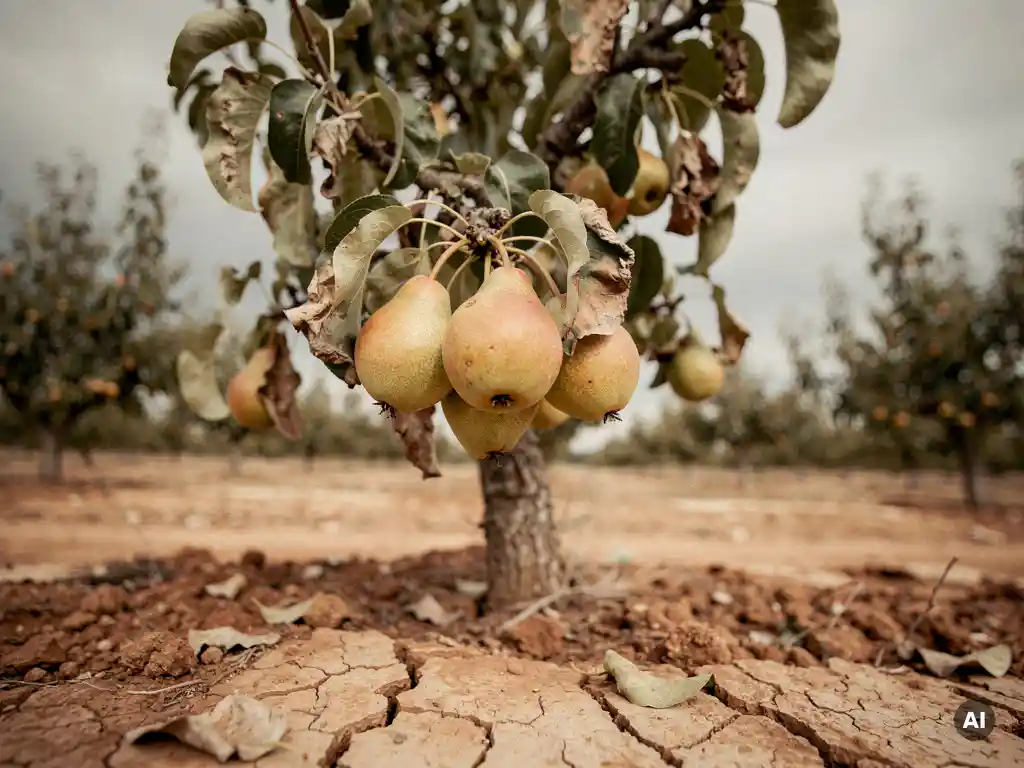
Climate change is already reshaping pear growing in meaningful ways, and the consequences for growers are both immediate and long-term. Shifting temperatures, unpredictable frost events, new pest pressures, and changing disease dynamics are forcing pear orchards to adapt faster than ever before. If you want to talk through what this means for your specific situation, feel free to get in touch with us directly. Below, we unpack the most pressing questions pear growers are asking right now.
How are rising temperatures changing pear growing seasons?
Rising temperatures are compressing and shifting the pear growing season, disrupting the precise timing that high-quality fruit production depends on. Warmer winters reduce the number of chilling hours that pear trees need to break dormancy properly, while earlier springs push flowering forward into periods that remain frost-prone. The result is a growing season that starts earlier but is not necessarily safer or more productive.
Pear trees require a specific number of cold hours during winter, typically between 0°C and 7°C, to complete dormancy and flower uniformly in spring. As average winter temperatures climb, many growing regions are no longer reliably meeting these chilling requirements. Incomplete chilling leads to irregular budbreak, poor fruit set, and reduced yields. Growers in traditionally mild climates are feeling this most acutely, but even cooler regions are beginning to see the effects.
At the other end of the season, warmer summers are accelerating fruit maturation. This sounds convenient, but it can actually reduce fruit quality. Pears that ripen too quickly in high heat often develop softer flesh, lower sugar-acid balance, and shorter shelf life. The commercial and logistical implications of a compressed harvest window are significant for both growers and supply chains.
What frost and weather risks are pear growers facing more often?
Pear growers are facing a paradox: warmer average temperatures are arriving alongside more frequent and damaging late spring frosts. As trees break dormancy earlier due to mild winters, they become vulnerable to frost damage during a period when cold snaps remain entirely possible. A single frost event during flowering can destroy an entire year’s crop in a matter of hours.
This pattern is not just anecdotal. Across Europe and other major pear-producing regions, growers report that late frost events are occurring after trees have already reached the most frost-sensitive stages of bud development. The financial exposure from a single bad frost year can be devastating, particularly for smaller operations without the resources for frost protection infrastructure such as wind machines or overhead irrigation.
Beyond frost, climate change is also intensifying other weather extremes. Prolonged summer droughts stress trees and reduce fruit size. Intense rainfall events can cause soil waterlogging, root damage, and increased disease pressure. Hailstorms, which can scar fruit and reduce marketability, are becoming more erratic and severe in some regions. Taken together, these compounding weather risks make pear orchard management considerably more complex and costly than it was a generation ago.
How does climate change affect pear diseases and pests?
Climate change is expanding the range and activity of pear diseases and pests, making disease management harder and more expensive for growers. Warmer, wetter springs create ideal conditions for diseases like fire blight and pear scab, while milder winters allow pest populations to survive and build up where they previously could not.
Fire blight, caused by the bacterium Erwinia amylovora, is one of the most destructive threats to pear production. It thrives during warm, humid flowering periods, which are becoming more common as climate patterns shift. An outbreak can kill entire branches or trees within a season, and there is no cure once infection takes hold. Growers who previously had little exposure to fire blight are now encountering it regularly.
On the pest side, warmer temperatures are allowing insects such as pear psylla and certain moth species to complete more reproductive cycles per season. This increases population pressure and makes timing of control measures more difficult. Meanwhile, invasive pest species that were once limited to warmer climates are gradually extending their range northward, introducing new threats to regions with no established management protocols for them.
Which pear varieties are most vulnerable to climate shifts?
Pear varieties with high chilling requirements and narrow temperature tolerances are most vulnerable to climate shifts. Traditional European varieties bred for cool, stable climates are struggling as growing conditions become warmer and more unpredictable, while varieties with low disease resistance are facing mounting pressure from shifting pest and pathogen dynamics.
Conference, one of the most widely grown pear varieties in Europe, has a relatively high chilling requirement and was developed for the temperate conditions of Northwestern Europe. As those conditions become less reliable, Conference orchards in warmer areas are already showing signs of chilling deficiency, including irregular flowering and reduced fruit set. Similar pressures affect other heritage varieties that formed the backbone of European pear production for decades.
Varieties that are susceptible to fire blight are also particularly exposed. Many older commercial varieties were selected before fire blight became a widespread concern in European orchards, and they carry little or no genetic resistance. As fire blight pressure increases with changing climate conditions, growers relying on these varieties face escalating management costs and crop losses.
Can breeding more resilient pear varieties solve these problems?
Breeding more resilient pear varieties is one of the most promising long-term solutions to the challenges climate change creates for growers. Modern breeding programs can develop varieties with lower chilling requirements, stronger disease and pest resistance, and better tolerance of temperature extremes, directly addressing the traits that make existing varieties vulnerable.
At Better3Fruit, we run one of the most advanced apple and pear breeding programs in the world, and climate resilience is a primary long-term goal in our breeding strategy. We use modern tools such as molecular markers to identify and combine the genetic traits that matter most, including disease tolerance, pest resistance, and adaptability to changing growing conditions, without compromising on taste, texture, or fruit quality. With over 30,000 new varieties under evaluation at any time, we are actively working to develop pear varieties that can perform reliably in the orchards of the future.
Breeding alone cannot solve every problem overnight. New varieties take years to move from selection to commercial release, and growers need solutions now as well as in the future. But investing in resilient genetics is the most durable answer available. Varieties built to tolerate lower chilling hours, resist fire blight, and maintain quality under heat stress will give growers a genuine foundation for long-term viability. You can explore our current pear variety portfolio to see what we are already bringing to market. If you want to discuss how our breeding work could benefit your operation, contact us, and we will be happy to help.
This content was generated with the help of AI and it may contain mistakes