
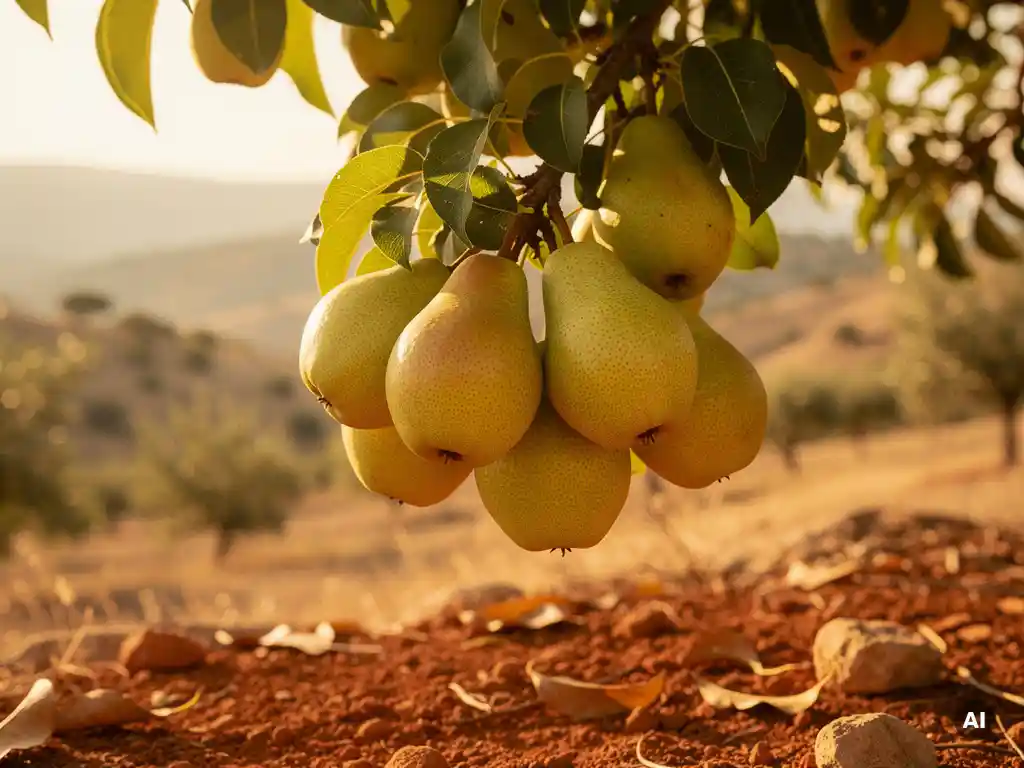
Among growers in warm climates, the most popular pear varieties include low-chill cultivars such as Flordahome, Hood, Pineapple, and Orient, all of which can produce reliably with fewer cold winter hours than traditional European varieties require. Asian pear varieties like Shinseiki and Hosui also perform well in warmer regions. The right choice depends on your specific climate, soil conditions, and target market, and if you want tailored advice, feel free to get in touch with us directly. Below, we unpack the key questions growers ask when selecting pear varieties for warm-weather cultivation.
What makes a pear variety suitable for warm climates?
A pear variety is suitable for warm climates when it has a low chill-hour requirement, strong heat tolerance during flowering and fruit development, and resistance to diseases that thrive in warm or humid conditions. Varieties that meet these criteria can complete their dormancy cycle without prolonged cold winters and still produce consistent, high-quality fruit.
Most traditional European pear varieties (Pyrus communis) were bred for temperate, cool-winter regions and struggle when winters are mild. In warm climates, they often fail to break dormancy properly, resulting in poor flowering, erratic fruit set, and reduced yields. Suitable warm-climate varieties sidestep this problem by requiring fewer accumulated chill hours, typically below 400, and sometimes as low as 150 to 200.
Beyond chill hours, heat tolerance during spring bloom matters enormously. Varieties that flower during periods of high temperature risk poor pollination and fruit drop. Growers in warm regions therefore favour varieties with a later or more flexible bloom window, or those with pollen that remains viable under heat stress. Drought tolerance and the ability to thrive in lighter, well-drained soils are additional traits that separate genuinely warm-climate-adapted varieties from those that merely survive.
Which pear varieties perform best in hot, dry climates?
In hot, dry climates, the pear varieties that consistently perform best are low-chill selections such as Hood, Flordahome, Orient, Pineapple, and the Asian pear varieties Shinseiki and Hosui. These cultivars combine reduced chill requirements with reasonable drought tolerance, making them practical choices for growers in Mediterranean, subtropical, and semi-arid regions.
Low-chill European-type varieties
Hood and Flordahome were specifically selected for warm, humid climates in the southeastern United States, but their adaptability has made them popular across subtropical zones worldwide. Orient is a hybrid with strong disease resistance and the ability to produce even when chill hours fall short of ideal. Pineapple pear is valued for its productivity and its tolerance of warm winters, though fruit quality is considered modest compared to premium commercial varieties.
Asian pear varieties for warm regions
Asian pears (Pyrus pyrifolia) as a group tend to be more heat-tolerant than European varieties. Shinseiki and Hosui are widely planted in warmer parts of Asia, Australia, and California. They produce crisp, juicy fruit and are relatively forgiving of inconsistent chill accumulation. Their earlier entry into production and their distinct texture also open up different market segments for growers looking to diversify.
How does chill-hour requirement affect pear variety selection?
Chill-hour requirement directly determines whether a pear variety can complete its dormancy and flower properly in a given climate. Varieties with high chill requirements, often 700 to 1,200 hours below 7°C, will not break dormancy reliably in warm winters, leading to weak, staggered flowering, low fruit set, and poor yields. Matching a variety’s chill requirement to your location’s average winter chill accumulation is the single most critical step in warm-climate variety selection.
Chill hours are typically counted as the number of hours between approximately 0°C and 7°C accumulated during the dormant season. Warm-climate growers in regions such as coastal California, the Middle East, South Africa, or subtropical Australia often accumulate fewer than 400 chill hours in a typical winter. In these areas, only low-chill varieties will perform consistently year to year.
Climate change is making this calculation more urgent. As winters warm globally, even regions that historically met the chill requirements of standard varieties are seeing declining accumulation. Growers who planted high-chill varieties a decade ago are now experiencing increasingly unreliable seasons. Selecting varieties with a chill requirement comfortably below your location’s average, with a buffer for warmer-than-average years, is a practical strategy to build resilience into an orchard from the outset.
What pear diseases are most problematic in warm, humid growing regions?
In warm, humid growing regions, the most problematic pear diseases are fire blight (Erwinia amylovora), pear scab (Venturia pirina), and various fungal fruit rots. Fire blight in particular is devastating in warm, wet spring conditions, and susceptible varieties can suffer severe shoot and branch dieback that threatens the entire tree.
Fire blight spreads rapidly when temperatures climb above 18°C during bloom and rainfall or high humidity is present, conditions that are common in warm, subtropical, and Mediterranean climates. Variety choice is the most durable line of defence. Some varieties carry meaningful levels of fire blight tolerance, which reduces the need for repeated copper or antibiotic sprays and lowers the risk of catastrophic losses in high-pressure years.
Fungal diseases, including brown rot and various leaf spots, also intensify under warm, humid conditions. Growers in these regions benefit from selecting varieties with tighter skin, better canopy airflow characteristics, and inherent resistance or tolerance to common fungal pathogens. Integrated disease management, combining resistant varieties with appropriate pruning, irrigation management, and targeted sprays, is the most effective approach, but variety resistance remains the foundation.
Are newly bred pear varieties better adapted to climate change?
Yes, newly bred pear varieties are increasingly designed with climate adaptation as a primary goal. Modern breeding programmes use molecular markers and genetic screening to identify and combine traits such as reduced chill requirements, heat tolerance during bloom, drought resilience, and disease resistance, all traits that become more valuable as growing conditions shift worldwide.
Traditional pear breeding relied on crossing and selecting over many generations, a slow process that often prioritised fruit quality above environmental adaptability. Contemporary programmes, including our own work at Better3Fruit, integrate tools such as marker-assisted selection to accelerate the identification of seedlings carrying the right combination of traits, including those relevant to warm and changing climates, far earlier in the breeding cycle.
The result is a new generation of varieties that are not simply adapted to today’s warm climates, but are designed with tomorrow’s conditions in mind. Traits like multi-level disease resistance reduce dependence on chemical inputs, while improved heat and drought tolerance means growers face fewer yield losses during extreme seasons. For growers in warm regions evaluating their long-term orchard strategy, exploring the latest pear variety portfolio from dedicated breeding programmes is a worthwhile step. New releases are increasingly purpose-built for the climatic realities that warm-region growers face right now and in the decades ahead.
If you are planning a new orchard or reconsidering your existing variety mix in light of changing conditions, we are happy to help you find the right fit. Contact us to discuss your growing region, your market goals, and which pear varieties are best positioned to perform for you.
This content was generated with the help of AI and it may contain mistakes