
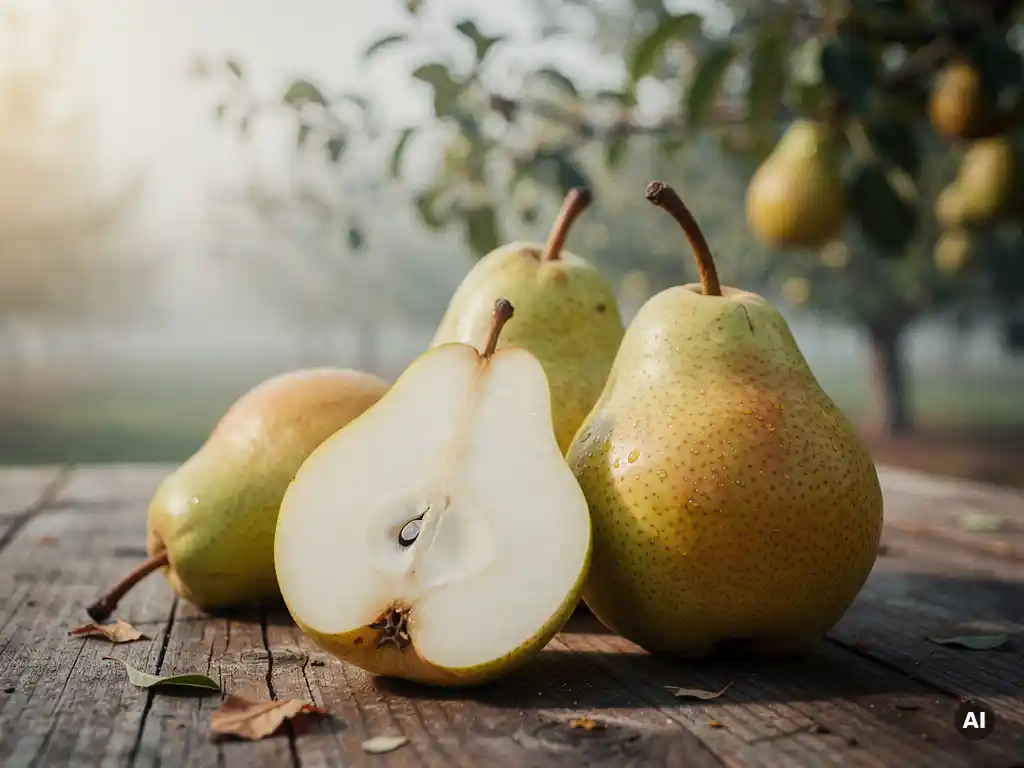
Some pear varieties are significantly less prone to becoming mealy than others. Varieties with firmer, denser cell structures, such as Conference, Bosc, and Asian pear types, tend to hold their texture far better than softer European varieties like Bartlett or Williams. The sections below explore the science behind mealiness, the varieties that resist it best, and how breeding and storage can make a real difference. If you have questions about pear quality or variety selection, feel free to get in touch with us directly.
What causes pears to become mealy in the first place?
Pears become mealy when the pectin that binds their cells together breaks down, causing the cells to separate rather than rupture when you bite into the fruit. Instead of a crisp, juicy texture, you get a dry, grainy sensation. This breakdown is driven by natural ripening enzymes, and it accelerates when fruit is stored incorrectly or harvested at the wrong maturity stage.
The process is closely tied to ethylene production, the natural ripening hormone that all pears produce. As ethylene levels rise, cell wall-degrading enzymes become more active. In varieties that are naturally high in these enzymes, the window between perfectly ripe and mealy is extremely narrow. Harvest timing plays a critical role: pears picked too late in the season already have elevated enzyme activity, which makes mealiness almost inevitable regardless of how carefully they are stored afterward.
Cell structure also matters. Varieties with large, loosely arranged cells are more vulnerable because there is less structural resistance to enzymatic breakdown. Varieties with smaller, more tightly packed cells degrade more slowly and maintain their texture over a longer period.
Which pear varieties are the least prone to mealiness?
The pear varieties least prone to mealiness are those with firm, dense flesh and slower enzymatic ripening, most notably Bosc, Conference, Concorde, Doyenné du Comice (when handled carefully), and virtually all Asian pear varieties. These types maintain acceptable texture over a wider ripening window and are more forgiving of minor storage fluctuations.
Among European pear varieties, Conference is widely regarded as one of the most reliable for texture consistency. Its relatively slow ripening rate gives growers and retailers more flexibility. Bosc is similarly valued for its dense, buttery flesh that resists the grainy breakdown common in softer varieties. Concorde, a cross between Conference and Doyenné du Comice, inherits good textural stability from its Conference parent.
On the softer end of the spectrum, varieties like Bartlett (Williams) and Clapp’s Favorite are notoriously prone to mealiness. Their high enzyme activity and rapid softening make precise harvest and cold-chain management absolutely essential. Even a short lapse in temperature control can push these varieties past their ideal texture window very quickly.
For anyone exploring the full range of commercially available pear varieties, our variety overview gives a useful starting point for understanding what is currently being developed and released.
What’s the difference between European and Asian pear texture?
The key difference between European and Asian pear texture is that European pears (Pyrus communis) ripen from the inside out and develop a soft, buttery texture, while Asian pears (Pyrus pyrifolia and related species) maintain a crisp, apple-like crunch even when fully ripe. This fundamental difference comes from distinct cell wall composition and enzyme behavior in each species group.
European pears are climacteric fruits with a pronounced ripening surge, meaning their texture changes dramatically over a short period. This is what makes them vulnerable to mealiness: the same enzymatic activity that creates their prized buttery quality can tip quickly into graininess if not managed precisely.
Asian pears, by contrast, have a much more stable cell wall structure. They contain a higher proportion of stone cells (sclerenchyma cells) distributed throughout the flesh, which contributes to their characteristic crunch. Their enzymatic ripening is slower and less dramatic, which means they hold their texture far longer after harvest. This makes Asian pear varieties inherently more resistant to mealiness as a category, though they do have their own quality challenges, particularly around core browning and surface russeting.
How does storage temperature affect pear mealiness?
Storage temperature is one of the most direct controllable factors in pear mealiness. Pears stored at temperatures that are too high ripen too quickly, accelerating the enzymatic breakdown that causes mealy texture. Cold storage at around 0°C to 1°C significantly slows this process and extends the window of acceptable texture quality.
However, temperature management is not simply a matter of keeping pears as cold as possible. Two important complications arise:
- Chilling injury: Some varieties are sensitive to prolonged exposure to near-freezing temperatures and can develop internal browning or a different kind of textural breakdown as a result.
- Conditioning requirements: Many European pear varieties need a period of cold conditioning before they will ripen properly. Without this step, they may never soften evenly and can develop a mealy, uneven texture even if they look ripe on the outside.
Controlled atmosphere (CA) storage, which reduces oxygen levels and increases carbon dioxide around the fruit, is widely used commercially to extend texture life even further. CA storage slows ethylene production and enzyme activity simultaneously, making it particularly effective for varieties that are naturally prone to rapid softening. For retailers and consumers, this means that pears purchased in good condition should be ripened at room temperature only when ready to eat, and returned to cold storage if they need to be kept longer.
Can pear breeding reduce the risk of mealiness?
Yes, pear breeding can directly target and reduce the risk of mealiness by selecting for varieties with slower-ripening genetics, stronger cell wall structure, and lower enzymatic activity. Modern breeding programs use molecular markers to identify the genetic traits linked to texture stability early in the breeding process, long before a variety reaches commercial evaluation.
This approach is far more efficient than traditional observation-based selection, where breeders would need to grow a variety to maturity, often taking many years, before assessing its texture characteristics. Marker-assisted selection allows programs to screen thousands of seedlings at an early stage and advance only those with the genetic profile most likely to produce firm, non-mealy fruit.
At Better3Fruit, we run one of the world’s largest apple and pear breeding programs, and texture quality, including resistance to mealiness, is a core selection criterion alongside disease tolerance, taste, and grower performance. With over 30,000 new varieties under evaluation at any one time, we have the scale to identify genuinely superior genetics and the tools to do so efficiently. The goal is not just to produce varieties that taste good at peak ripeness, but varieties that maintain quality across a realistic commercial supply chain, from harvest through storage, transport, and retail.
As consumer expectations for consistent pear quality continue to rise, breeding for texture stability will only become more important. The combination of genomic tools, large-scale field evaluation, and a clear focus on commercial performance gives modern breeding programs a real opportunity to make mealy pears a much less common experience. To find out more about our work or to discuss variety licensing, contact us and we will be happy to help.
This content was generated with the help of AI and it may contain mistakes