
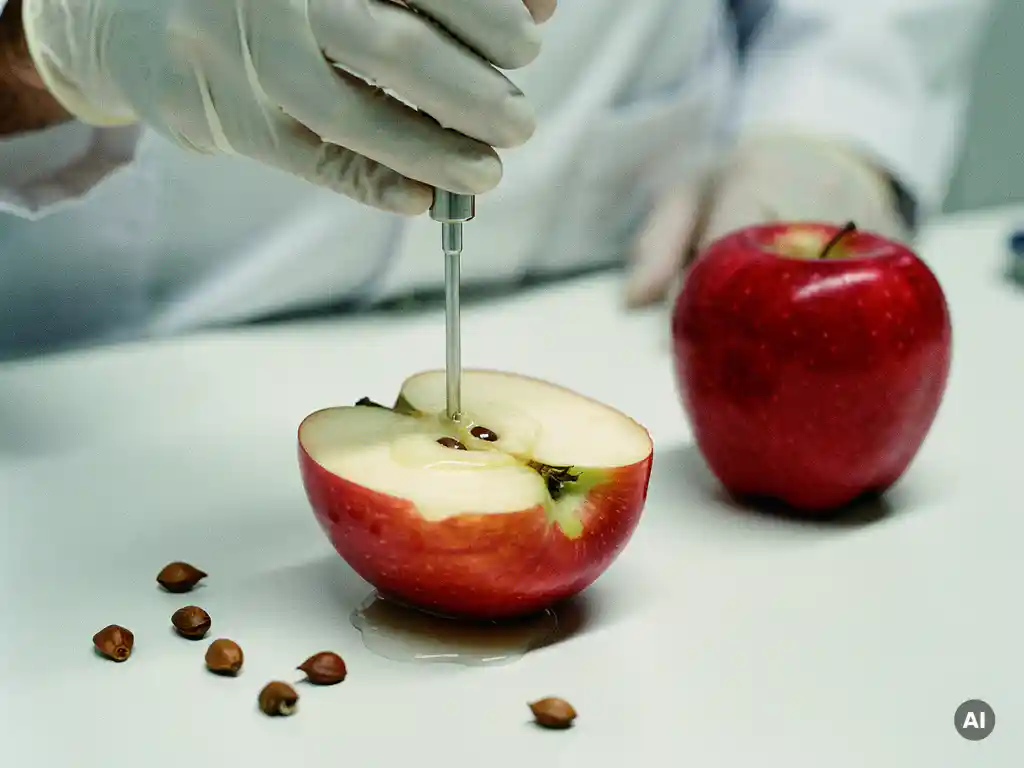
Fruit breeders measure texture quality using a combination of mechanical instruments and sensory evaluation. The most widely used tool is the penetrometer, which measures the force required to push a probe into the flesh of a fruit, giving a numerical reading of firmness. Alongside instrumental methods, trained tasting panels assess crispness, juiciness, and mouthfeel. At Better3Fruit, we use both approaches across thousands of new seedlings every season – if you want to know more about how we work, feel free to get in touch with us directly. The sections below unpack each part of the texture measurement process in more detail.
What methods do breeders use to measure fruit texture?
Breeders measure fruit texture primarily through penetrometer testing, texture analyser profiling, and trained sensory panels. A penetrometer records flesh firmness in kilograms or newtons, while a texture analyser can simulate a full bite cycle to capture crispness, brittleness, and cohesion. Sensory panels provide the human dimension that instruments alone cannot capture, rating attributes like graininess, juiciness, and chew.
In practice, these methods work best in combination. Penetrometer readings are fast and objective, making them ideal for screening large numbers of seedlings early in the breeding cycle. A texture analyser goes further by generating a detailed force-displacement curve, revealing how a fruit behaves as it is compressed, how it fractures, and how quickly it recovers. This data is particularly useful when comparing varieties that score similarly on a simple firmness test but feel completely different in the mouth.
Sensory evaluation fills the gap that instruments leave. A panel of trained assessors can distinguish between a fruit that is firm but dry and one that is firm and juicy, or between a crisp snap and a tough, rubbery resistance. Because consumers ultimately judge quality through eating experience, sensory scores remain an essential part of any rigorous fruit quality assessment programme.
What texture traits matter most in apple and pear breeding?
The texture traits that matter most in apple and pear breeding are flesh firmness, crispness, juiciness, and cell structure. Firmness determines both eating pleasure and shelf life. Crispness, which relates to how cleanly the flesh fractures when bitten, is one of the strongest drivers of consumer preference in modern apple markets. Juiciness and the absence of graininess or mealiness round out the traits that separate a premium eating experience from a mediocre one.
For apples, crispness has become especially important as the market has shifted toward club varieties with a distinctive, high-impact eating quality. Varieties like Kanzi® built their reputation partly on a satisfying crunch that holds up well through the supply chain. For pears, the challenge is different: the ideal texture is typically smooth, buttery, and melting rather than crisp, which means breeders are selecting for a completely different set of cellular characteristics.
Cell turgor, cell wall composition, and the way cells bond to one another all influence how a fruit feels in the mouth. Breeders look for seedlings with dense, tightly bonded cell structures that resist mealiness as the fruit ripens and ages. Mealiness, caused by a breakdown of the middle lamella that holds cells together, is one of the most common texture defects and one of the most important traits to breed out of a variety.
How does molecular marker technology improve texture selection?
Molecular marker technology improves texture selection by allowing breeders to identify seedlings with favourable texture genes at the DNA level, before any fruit is ever produced. Rather than waiting four to ten years for a seedling to reach bearing age and then measuring its fruit, breeders can screen thousands of young plants in a laboratory and discard those that carry unfavourable genetic profiles early in the process.
At Better3Fruit, molecular markers are a core part of how we manage our breeding programme. With over 10,000 new seedlings of each crop entering the field every year and more than 30,000 varieties under evaluation at any time, the ability to pre-select based on genetic markers dramatically increases the efficiency of the programme. Markers linked to firmness, crispness, and cell wall characteristics allow us to concentrate field evaluation resources on the seedlings most likely to deliver outstanding texture quality.
This approach also makes it possible to combine multiple desirable traits in a single variety without the guesswork that traditional crossing involves. A breeder can target texture alongside disease tolerance, colour, and yield simultaneously, knowing which parent combinations are most likely to produce offspring that carry all of the target traits. The result is a faster, more precise path from initial cross to commercial release.
Why is texture so difficult to breed for consistently?
Texture is difficult to breed for consistently because it is controlled by many genes acting together, is heavily influenced by growing conditions, and changes as fruit ripens and ages. Unlike a single-gene trait such as skin colour, texture emerges from the interaction of dozens of genetic factors governing cell wall structure, turgor pressure, enzyme activity, and starch conversion. This polygenic nature means that even two seedlings from the same cross can have very different texture profiles.
Environmental factors compound the challenge. The same variety grown in different climates, soils, or at different altitudes can produce fruit with noticeably different firmness and crispness. Irrigation levels, temperature during fruit development, and harvest timing all shift the texture outcome. A variety that performs beautifully in one growing region may disappoint in another, which is why regional trials are an essential part of any serious fruit breeding and licensing programme.
There is also the question of texture stability over time. A fruit that is crisp and firm at harvest may soften rapidly in storage, or conversely, may need weeks of cold storage to reach its ideal eating texture. Breeding for a texture that is both excellent at the point of sale and consistent across a range of growing environments is one of the most technically demanding goals in apple and pear breeding today.
How does texture hold up after long-term storage?
How well fruit texture holds up after long-term storage depends on the variety’s genetic makeup, the storage technology used, and the maturity at which fruit is harvested. Under controlled atmosphere storage, which reduces oxygen and raises carbon dioxide levels, well-bred apple varieties can maintain acceptable firmness for six months or more. However, varieties differ significantly in how quickly their cell walls break down and how prone they are to mealiness after extended storage.
Post-harvest texture loss is driven largely by enzyme activity. As fruit ages, enzymes break down the pectin in cell walls, causing cells to separate and the flesh to lose its cohesion. Varieties with naturally lower enzyme activity, or with cell wall structures that are more resistant to enzymatic degradation, tend to hold their texture far longer in storage. Identifying these characteristics in seedlings is one of the reasons post-harvest evaluation is built into the assessment process alongside fresh-harvest measurements.
For commercial varieties, storage performance is not optional. Retailers and supply chains expect consistent quality from the first fruit of the season through to the last box sold months later. A variety that softens quickly or develops off-textures in storage will struggle to maintain its market position regardless of how well it performs at harvest. This is why texture measurement at multiple points across the storage period is standard practice in any thorough fruit quality assessment programme, and why we factor long-term storage behaviour into our variety evaluations from the very beginning. You can explore our current commercial apple and pear varieties to see how these principles translate into real-world results. If you would like to discuss how we assess and develop texture quality in our breeding work, get in touch with our team to start the conversation.
This content was generated with the help of AI and it may contain mistakes