
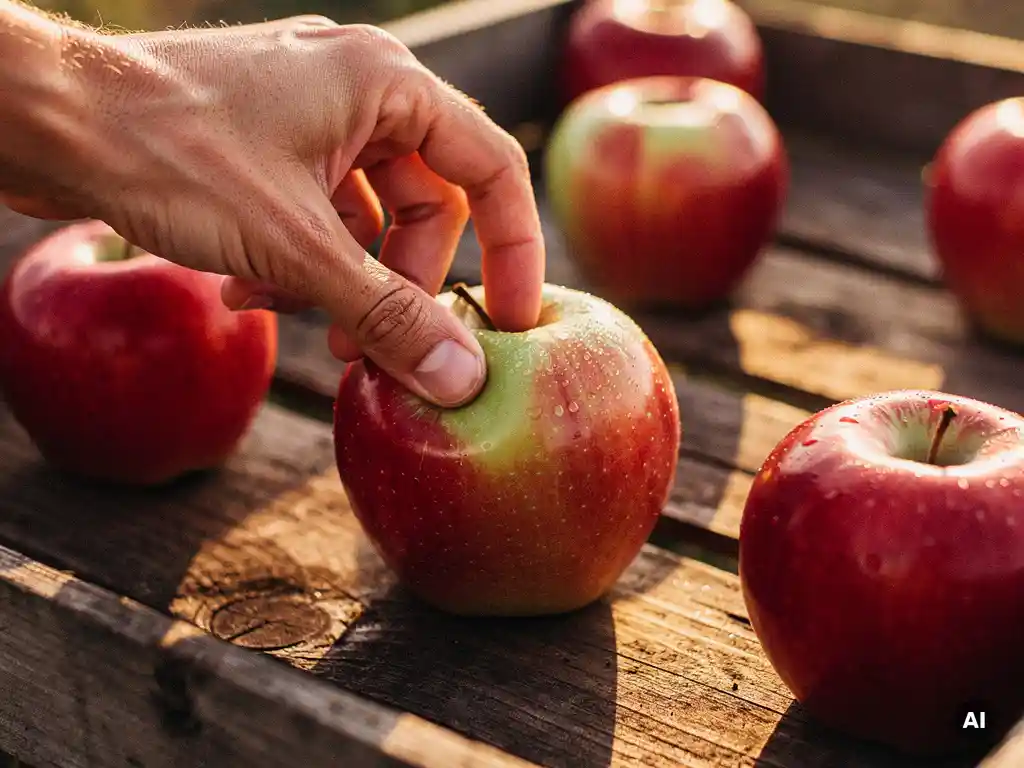
Fruit texture is one of the most powerful selling points a grower can have because it directly shapes whether a consumer buys the same variety again. Unlike colour or size, which attract attention at the point of sale, texture determines satisfaction the moment a shopper takes their first bite, and repeat purchase behaviour follows from that experience. The sections below unpack how texture works as a quality trait, what breeders prioritise, and how growers can translate it into a pricing advantage. If you would like to talk through any of this with us directly, feel free to get in touch.
How does fruit texture influence a consumer’s buying decision?
Fruit texture influences buying decisions because it determines eating satisfaction, and eating satisfaction drives repeat purchases. A consumer who bites into a crisp, firm apple or pear remembers that experience positively and returns to the same variety. A consumer who encounters mealiness or a soft, watery bite rarely comes back, regardless of how attractive the fruit looked on the shelf.
Texture communicates freshness and quality in a way that is immediate and visceral. Even before flavour registers fully, the crunch of an apple or the juicy resistance of a pear sends a signal to the brain about whether the fruit is worth eating. Retailers and category managers understand this dynamic well, which is why mouthfeel and crispness in apples consistently appear among the top drivers of consumer preference in sensory evaluations. When a variety delivers a consistently satisfying bite, it builds brand loyalty not just for the grower but for the entire supply chain behind it.
What makes texture different from taste as a quality trait?
Texture is a structural quality trait determined by cell wall composition and cell turgor, while taste is a chemical quality trait driven by sugar and acid concentrations. This distinction matters enormously for breeders and growers because the two traits respond differently to growing conditions, storage, and time after harvest.
Taste can fluctuate season to season depending on sunshine hours, temperature, and irrigation. A warm, dry summer tends to concentrate sugars; a cool, wet one can dilute them. Texture, by contrast, is more deeply rooted in the genetic architecture of the variety itself. A variety with strong cell wall integrity will generally hold its crunch across a wider range of growing conditions, making it a more reliable and predictable quality signal for growers to market around.
This also means that texture is harder to fake or compensate for at the retail level. A fruit that lacks sweetness can sometimes be positioned as a cooking variety or blended into a product. A fruit that is mealy or soft has very few alternative uses in the fresh market. For growers focused on premium fresh sales, fruit texture is therefore the more critical quality pillar to protect.
Which texture traits do apple and pear breeders prioritise?
Apple and pear breeders prioritise crispness, firmness, juiciness, and fine-grained cell structure as the core texture traits. Together, these attributes define the eating experience that consumers associate with a high-quality fresh fruit, and they are the traits that distinguish a premium variety from a commodity one.
Crispness and firmness
Crispness refers to the audible, tactile snap a fruit produces when bitten, while firmness refers to the resistance the flesh offers before it breaks. Both are linked to cell wall strength and the pressure within individual cells. Breeders use molecular markers to identify parents that reliably pass these traits to their offspring, shortening the time it takes to bring a new variety with strong apple texture to market. At Better3Fruit, this marker-assisted approach is central to how we develop varieties that perform consistently across different climates and growing systems.
Juiciness and cell structure
Juiciness adds to the perception of freshness and amplifies flavour delivery. A dry, fibrous bite, even from a firm apple, can feel disappointing, while a juicy, crisp bite reinforces the sense that the fruit is at its peak. Fine-grained cell structure underpins both juiciness and crispness, as smaller, more uniform cells tend to hold water more effectively and break cleanly rather than tearing when bitten. Breeders evaluate these traits through sensory panels and instrumental measurement to ensure that what works in the field also works in the mouth.
Why does texture retention matter more after harvest than at picking?
Texture retention after harvest matters more than texture at picking because the vast majority of consumers eat fruit weeks or months after it leaves the orchard. A variety that is crisp at harvest but softens rapidly in cold storage or on the retail shelf delivers a poor eating experience at the moment that actually counts.
Postharvest softening is driven by enzymes that break down cell wall components over time, and different varieties degrade at very different rates. Varieties with strong postharvest texture retention hold their crispness and firmness through controlled atmosphere storage and the extended supply chain from grower to retailer to kitchen. This is why fruit quality assessments in serious breeding programmes always include storage trials, not just harvest evaluations.
For growers, a variety with poor texture retention creates a narrow and stressful marketing window. A variety with strong retention gives flexibility, reduces waste, and supports consistent quality messaging across a longer season. When a consumer buys the same variety in November that they first tried in September and finds it equally satisfying, that is the foundation of lasting brand value.
How can growers use texture as a premium pricing argument?
Growers can use texture as a premium pricing argument by selecting varieties with documented, consistent texture performance and communicating that performance clearly through their retail and wholesale partners. Texture is one of the few quality traits that consumers can verify for themselves at the moment of consumption, which means it builds trust in a way that marketing claims alone cannot.
The practical steps are straightforward. First, choose a variety with a strong texture profile and reliable postharvest retention, so the quality promise holds throughout the season. Second, work with supply chain partners who share a commitment to quality control, because a premium variety sold outside its optimal storage window will undermine the argument rather than support it. Third, use sensory language in point-of-sale materials that primes consumers to notice and value the texture they are about to experience. Words like crisp, juicy, and satisfying set an expectation that a well-chosen variety will then fulfil.
Club varieties built around a distinctive eating experience, including texture as a defining characteristic, have demonstrated that consumers will pay more when the promise is consistently delivered. Our apple and pear varieties are developed with exactly this commercial reality in mind, combining strong texture traits with the postharvest stability that makes a premium price defensible. If you are ready to explore which variety fits your operation and market, contact us and we will be happy to help.
This content was generated with the help of AI and it may contain mistakes