
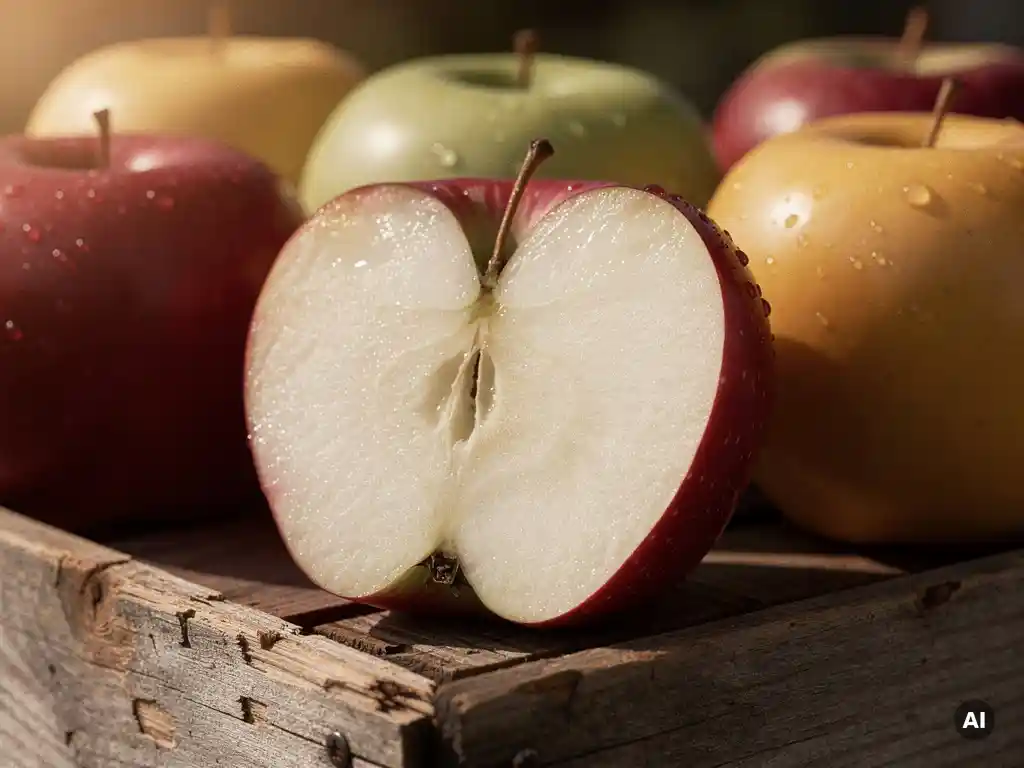
The apple varieties that stay crunchy the longest include Kanzi®, Honeycrisp, Fuji, and Cosmic Crisp, all known for maintaining firm, satisfying texture weeks or even months after harvest when stored correctly. Crunch longevity is determined by a combination of cell structure, moisture retention, and starch-to-sugar conversion rates that vary significantly between varieties. If you want to learn more about what drives these differences or explore variety options, feel free to get in touch with us directly. Below, we unpack the science and breeding behind apple crunchiness in more detail.
What makes an apple stay crunchy over time?
An apple stays crunchy over time thanks to the density and integrity of its cell walls, combined with high turgor pressure, the internal water pressure that keeps cells firm and taut. Varieties with thick-walled cells and tightly packed flesh resist softening far longer than those with looser cell structures, even under the same storage conditions.
When an apple softens, what is really happening is a breakdown of pectin, the structural compound that holds cell walls together. Enzymes naturally present in the fruit gradually degrade pectin after harvest, causing cells to separate and the flesh to lose its snap. Varieties with naturally lower levels of these cell-wall-degrading enzymes, or with pectin structures that are more resistant to enzymatic breakdown, hold their crunch significantly longer.
Starch content also plays a role. Apples convert starch to sugar as they ripen, and this process is tied to textural softening. Varieties that convert starch more slowly tend to remain firmer for longer. This is why a freshly picked apple often feels crisper than one that has been sitting at room temperature for several days, even if it is the same variety.
Which apple varieties are known for the longest-lasting crunch?
The apple varieties best known for long-lasting crunch include Fuji, Honeycrisp, Cosmic Crisp, Pink Lady, and Kanzi®. These varieties share a combination of dense cell structure, high moisture retention, and relatively slow post-harvest softening rates, making them reliable choices for consumers who prioritize texture longevity.
Fuji apples are particularly well regarded for their ability to stay firm for months under proper cold storage, a trait inherited partly from their Ralls Janet parentage. Honeycrisp was specifically bred with texture in mind, and its unusually large cells create a characteristic explosive crunch that holds up well in storage. Cosmic Crisp, a more recent Washington State University release, was designed from the ground up for long shelf life and has demonstrated impressive crunch retention in commercial trials.
Kanzi®, developed through our breeding program at Better3Fruit, is another strong performer in this area. Its dense, juicy flesh and balanced sugar-acid profile contribute to a firm bite that holds up well both in cold storage and at retail. You can explore our full variety portfolio to see how different cultivars compare on texture and other key traits.
Varieties like McIntosh or Cortland, by contrast, tend to soften much faster after harvest due to their higher enzyme activity and looser cell structure, making them better suited for immediate eating or cooking rather than extended storage.
How does storage affect apple crunchiness over time?
Storage conditions have a direct and significant impact on how long an apple retains its crunch. Cold storage at temperatures close to 0°C (32°F) slows the enzymatic activity responsible for cell wall breakdown, effectively pausing the softening process and preserving texture for weeks or months beyond what room temperature allows.
Controlled atmosphere (CA) storage takes this further by reducing oxygen levels and increasing carbon dioxide concentration in the storage environment. This dramatically slows respiration and ethylene production, ethylene being the natural ripening hormone that accelerates softening. Many commercial apple varieties, including Fuji and Kanzi®, are routinely stored in CA conditions for months without significant loss of crunch.
Humidity also matters. Apples lose moisture through their skin continuously after harvest, and as moisture drops, so does turgor pressure, the internal cell pressure that gives a crunchy apple its characteristic snap. Maintaining high relative humidity in storage (typically 90 to 95 percent) slows this moisture loss and helps preserve firmness. At home, keeping apples in the crisper drawer of a refrigerator, rather than on a countertop, makes a noticeable difference in how long they stay firm and satisfying to eat.
What’s the difference between a crunchy apple and a crisp apple?
A crunchy apple and a crisp apple are often used interchangeably, but they describe subtly different textural experiences. Crunchiness refers to the force and sound produced when biting through the flesh, a loud, firm snap driven by dense cell walls and high internal pressure. Crispness refers more to the clean, fracture-like break of the flesh, which is associated with cell structure and moisture content rather than just hardness.
In practice, the best apples deliver both qualities simultaneously. A crunchy apple that is not crisp might feel hard but mealy: it resists the bite but does not break cleanly. A crisp apple that lacks crunch might shatter easily but feel light or airy rather than satisfyingly firm. The most desirable eating apples, including Honeycrisp and Kanzi®, combine high crunch force with a clean, crisp fracture and a juicy release of flavor.
From a breeding perspective, these two qualities are related but not identical, which means they can be selected for independently. A breeder might identify seedlings with excellent crispness but moderate crunch, or vice versa, and use molecular tools to understand which parent traits are contributing to each dimension of texture.
How do apple breeders develop varieties with better crunch?
Apple breeders develop varieties with better crunch by selecting parent varieties with known textural strengths, then using tools like molecular markers to identify offspring that carry the genetic traits linked to firm cell walls, high turgor pressure, and slow post-harvest softening, without having to wait years for each seedling to reach fruiting age.
Traditional apple breeding involves crossing two parent varieties and evaluating the resulting seedlings over many years. Because apple trees take time to mature and produce fruit, a single breeding cycle can span a decade or more. This is why modern programs like ours at Better3Fruit rely heavily on molecular marker technology: it allows us to screen seedlings at the DNA level in the early stages, identifying those most likely to carry desirable texture traits before they ever produce a single fruit.
Texture-related traits we actively select for include:
- Cell wall density – thicker, more robust cell walls resist enzymatic breakdown longer
- Pectin composition – varieties with more stable pectin structures soften more slowly after harvest
- Enzyme activity levels – lower expression of cell-wall-degrading enzymes extends post-harvest firmness
- Moisture retention – skin characteristics that slow water loss help maintain turgor pressure over time
At Better3Fruit, we evaluate over 30,000 new varieties at any given time, with 10,000 new seedlings of each crop entering the field every year. This scale means we can apply rigorous selection pressure across a huge genetic pool, identifying the rare combinations where outstanding crunch, great flavor, and strong agronomic performance all come together in a single cultivar. The result is varieties designed not just to taste great at harvest, but to deliver a consistently satisfying eating experience throughout the entire commercial supply chain, from orchard to consumer. Contact us to find out more about our breeding approach or to discuss variety licensing opportunities.
This content was generated with the help of AI and it may contain mistakes