
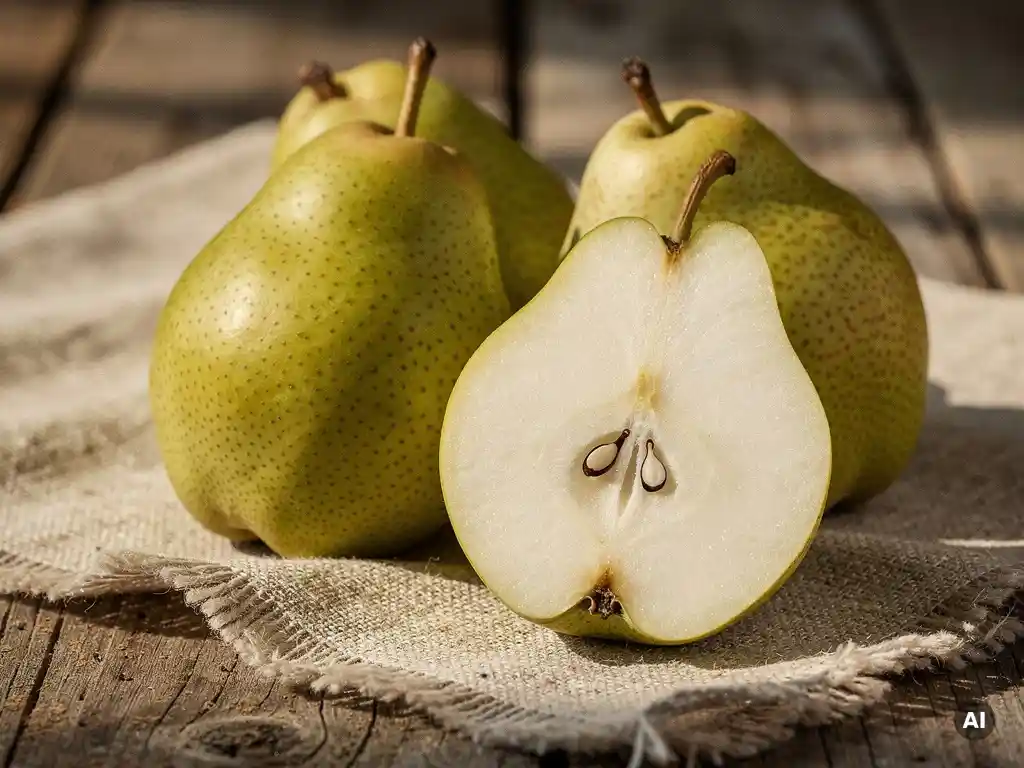
Several pear varieties have been specifically developed for a firmer, crunchier bite, with breeding programs selecting for cell structure, stone cell distribution, and flesh density rather than the soft, buttery texture traditionally associated with European pears. Varieties such as Giga® from our breeding program at Better3Fruit represent a new generation of crisp pear cultivars designed to meet modern consumer expectations. This article explores the science behind pear texture, how breeders develop crunchier cultivars, and why this trait is gaining so much attention in the fresh fruit market. If you have questions about our varieties or licensing opportunities, feel free to get in touch with us.
What makes a pear variety crunchy instead of soft?
A pear variety is crunchy rather than soft because of its cell wall composition, the density of its flesh, and the distribution of stone cells (also called sclereids) throughout the fruit. Varieties with thicker, more rigid cell walls and a higher proportion of tightly packed cells resist compression when bitten, producing that characteristic snap and resistance associated with crisp pear texture.
In soft, buttery pear varieties, enzymes break down pectin in the cell walls as the fruit ripens, causing cells to separate easily and the flesh to feel yielding. Crunchy varieties are genetically predisposed to maintain firmer cell walls even at full ripeness. This means the fruit does not need to be eaten in a narrow ripening window and can remain pleasantly firm for longer after harvest, which is a significant commercial advantage.
Stone cells also play a role. In moderate concentrations, they contribute to a satisfying, slightly gritty crunch rather than a mushy or grainy texture. Breeders working on pear texture carefully balance stone cell density so that crunch is pleasant rather than coarse.
Which pear varieties are known for a firm, crunchy texture?
The pear varieties most commonly associated with a firm, crunchy texture include Asian pear types such as Nashi, as well as newer European-style cultivars bred specifically for crispness. Our Giga® variety is one of the most notable examples of a purpose-bred crisp pear cultivar developed through a dedicated apple and pear breeding program. You can explore our full range of available pear varieties to see what is currently in development or available for licensing.
Traditional European varieties such as Conference and Doyenné du Comice are typically soft and buttery when ripe, which is why they have long dominated European markets. However, consumer preferences have shifted, and breeders have responded by developing new pear varieties that combine the flavor complexity of European types with the firm, snappy bite of Asian pears.
What distinguishes modern crisp pear varieties from their predecessors is that crunchiness is no longer a byproduct of being underripe. Purpose-bred cultivars are genuinely crunchy at full maturity, with full sugar development and aromatic expression, rather than simply being hard because they have not yet ripened.
How do breeders select pears for a crunchier bite?
Breeders select pears for a crunchier bite by evaluating flesh firmness at full ripeness, using both sensory assessment and instruments such as penetrometers that measure the force required to puncture the fruit. Molecular markers are increasingly used to identify genetic traits linked to firm cell wall structure early in a seedling’s development, long before the tree produces fruit.
At Better3Fruit, we work with tens of thousands of new seedlings every year. With 10,000 new varieties of each crop entering field trials annually and over 30,000 under evaluation at any given time, identifying texture traits efficiently is essential. Molecular marker technology allows us to screen seedlings for desirable characteristics without waiting years for the tree to mature and fruit, dramatically accelerating the breeding cycle.
Selection for pear texture does not stop at firmness alone. Breeders assess how well the fruit holds its texture during storage and in the supply chain, since a variety that is crunchy at harvest but softens rapidly within days has limited commercial value. The goal is a cultivar that maintains its crisp bite from orchard to consumer.
Does a crunchier pear sacrifice sweetness or flavor?
A crunchier pear does not inherently sacrifice sweetness or flavor. Modern crisp pear varieties are specifically bred to combine firm texture with full sugar development and rich aromatic profiles. The misconception that crunchy means underripe comes from eating traditional soft-variety pears before they have properly matured, which does produce a hard, astringent, and flavorless experience.
In purpose-bred crisp pear cultivars, the genetic traits governing cell wall firmness are separate from those controlling sugar accumulation and flavor compound development. This means breeders can select for both simultaneously, producing fruit that is genuinely crunchy and genuinely sweet at the same time.
In fact, a firmer texture can enhance the perception of flavor in some consumers, because the mechanical resistance of the flesh prolongs the chewing process and extends the release of aromatic compounds. This is part of why crunchy apple varieties have long been commercially dominant, and why pear breeders are now applying similar logic to new pear varieties.
Why are consumers increasingly drawn to crunchy pear varieties?
Consumers are increasingly drawn to crunchy pear varieties because firm texture signals freshness, makes the fruit more convenient to eat on the go, and aligns with eating habits shaped by decades of popularity for crisp apple varieties. A pear that holds its shape when sliced, does not bruise easily in a lunchbox, and delivers a satisfying bite is simply more practical for modern lifestyles.
There is also a sensory preference dimension. Research in food science consistently shows that texture is one of the primary drivers of fruit enjoyment, often influencing perceived quality as much as sweetness or aroma. Consumers who grew up eating crunchy apples frequently find the soft, yielding texture of traditional pear varieties unfamiliar or even off-putting, which has historically limited pear consumption in some markets.
Crunchier pear varieties also benefit retailers and growers. Firm fruit is easier to handle, has a longer shelf life, and generates less waste through bruising and premature softening. These practical advantages, combined with genuine consumer demand, are driving significant investment in pear cultivar development focused on texture. The result is a new generation of crisp pear varieties that is expanding the pear category in fresh produce markets worldwide.
If you are a grower, retailer, or marketing organisation interested in working with the next generation of crunchy pear cultivars, we would love to hear from you. Contact us to learn more about our varieties and how to obtain a license.
This content was generated with the help of AI and it may contain mistakes