
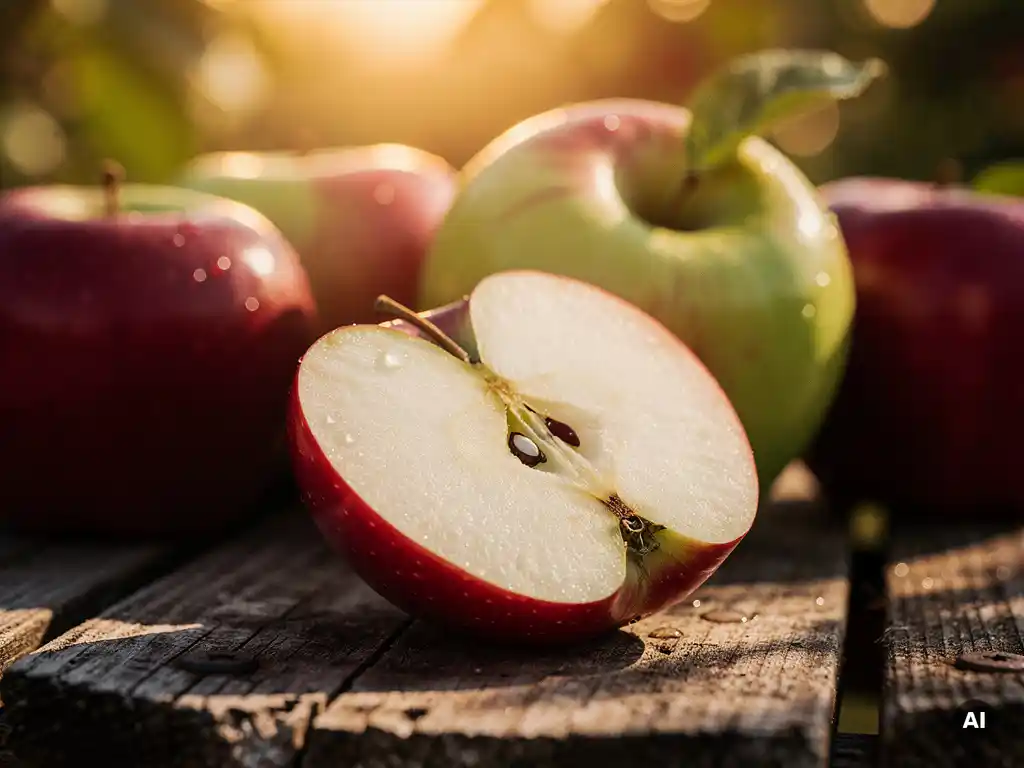
Good apple texture is defined by a combination of firmness, crunchiness, and juiciness that delivers a satisfying bite and pleasant mouthfeel. These qualities are largely determined by cell structure, water content, and the density of the flesh. Variety genetics play the biggest role, though growing conditions and post-harvest handling also matter. Below, we unpack the key questions around apple texture, from what causes variation between varieties to how breeders like us select for superior eating quality. If you’d like to get in touch directly, feel free to visit us or reach out at any time.
Why does apple texture vary so much between varieties?
Apple texture varies between varieties primarily because of genetics. Each variety has a unique cellular architecture: differences in cell size, cell wall thickness, and the way cells are bonded together all influence how an apple feels when you bite into it. These structural differences are encoded in the variety’s DNA and cannot be replicated by growing conditions alone.
Beyond genetics, environmental factors such as soil type, climate, and altitude can amplify or dampen a variety’s natural texture profile. A variety grown in a high-altitude, cool climate will often develop firmer flesh than the same variety grown in a warmer region, because cooler temperatures slow down cell expansion and preserve cell wall integrity. However, the ceiling of what is possible is always set by the variety itself. This is precisely why apple variety selection is so critical for growers and retailers who want consistent, high-quality apple flesh quality year after year.
What makes an apple taste crunchy versus mealy?
Apple crunchiness comes from tightly packed, firm cells with strong walls that fracture cleanly when bitten. A mealy apple, by contrast, has cells that have separated from one another: instead of breaking with a snap, they slide apart, producing a soft, grainy sensation. The difference lies in the strength and adhesion of the middle lamella, the layer of pectin that bonds cells together.
As an apple ripens, naturally occurring enzymes begin to break down pectin. When this process runs its course correctly, the apple softens pleasantly. When it accelerates too quickly, due to overripeness, heat stress, or poor storage, the cells lose cohesion entirely, resulting in that unpleasant mealy texture. Varieties with a genetic tendency to produce more stable pectin structures are far less likely to become mealy, which is one reason apple mouthfeel is such an important trait in modern breeding programs.
What are the main characteristics of good apple texture?
The main characteristics of good apple texture are firmness, crunchiness, juiciness, and a fine-grained, smooth flesh. A high-quality eating apple should offer clear resistance on the first bite, fracture cleanly rather than compress, release juice as it is chewed, and leave no stringy or gritty residue. Together, these qualities define what consumers and industry professionals call superior apple eating quality.
- Firmness: The flesh should offer measurable resistance to pressure. Apple firmness is often measured in Newtons or pounds-force using a penetrometer, and premium dessert apples typically maintain high firmness scores throughout their commercial life.
- Crunchiness: A clean, audible snap on the first bite signals healthy, turgid cells. This is one of the most immediate sensory signals consumers use to judge freshness and quality.
- Juiciness: High water content within the cells contributes to the sensation of juiciness. Varieties with large, water-rich cells tend to feel more succulent, though this must be balanced with firmness to avoid a soft, watery texture.
- Fine-grained flesh: The smaller and more uniform the cells, the smoother the eating experience. Coarse-grained flesh can feel rough or starchy, even when firm.
- Absence of mealiness or grittiness: Good apple texture is defined as much by what is absent as by what is present. Stone cells, excessive starch, and cell separation are all texture defects that reduce eating quality.
How does apple texture change during storage?
Apple texture gradually softens during storage as enzymatic activity continues to break down cell wall components, particularly pectin. The rate of softening depends on the storage environment, the variety’s natural ripening speed, and whether controlled atmosphere (CA) storage is used. Under optimal CA conditions, low oxygen, elevated carbon dioxide, and near-freezing temperatures, texture loss can be slowed significantly, preserving apple firmness for months.
Not all varieties respond equally well to storage. Some varieties are bred specifically for their ability to maintain crunchiness and firmness over extended periods, making them far better suited to long supply chains and late-season retail windows. Varieties that soften quickly may still be excellent fresh from the tree but are poorly suited to commercial distribution. This is why storage performance is evaluated alongside fresh-eating quality in any serious apple breeding program: a variety that loses its texture within weeks has limited commercial value regardless of how good it tastes at harvest.
Which apple varieties are known for the best texture?
Apple varieties known for the best texture are typically those that combine high firmness with strong crunchiness and good juice content. Among well-established commercial varieties, Kanzi® is widely recognized for its exceptionally firm, dense flesh and satisfying crunch, qualities that have contributed to its success as one of the most popular club apple varieties globally. Newer varieties entering the market are increasingly bred to match or exceed this standard.
Our own commercial portfolio reflects this focus on texture as a core quality pillar. Varieties like Morgana® and Giga® have been developed with eating quality at the forefront, targeting the kind of firm, crunchy, juicy mouthfeel that modern consumers expect. Explore our full range on the varieties page to see how texture performance is built into each release. Beyond our own releases, varieties such as Cosmic Crisp and SweeTango have also built strong reputations on texture, demonstrating that consumer demand for crunchiness is a global, not regional, trend.
How do apple breeders select for superior texture traits?
Apple breeders select for superior texture traits by combining sensory evaluation, physical measurement, and molecular marker analysis. In the early stages of a breeding program, thousands of seedlings are tasted and assessed by trained evaluators who score firmness, crunchiness, juiciness, and mouthfeel. Those that pass this initial screen move on to more detailed physical testing, including penetrometer measurements of apple firmness and texture profiling under controlled conditions.
At a more advanced level, molecular markers allow breeders to identify genetic regions associated with desirable texture traits before a seedling ever produces fruit at commercial scale. This dramatically accelerates the selection process: instead of waiting years for a tree to mature and bear fruit, breeders can screen seedlings in the laboratory and focus field resources on the most promising candidates. At Better3Fruit, we use these modern tools as a core part of our breeding methodology, allowing us to bring together firmness, crunchiness, disease tolerance, and climate resilience without compromising on the eating quality that makes a variety commercially successful.
Texture is never evaluated in isolation. Storage behavior, skin finish, flavor, and yield all factor into the final selection decision, because a variety must perform across the entire value chain, from orchard to retail shelf to the consumer’s hand. This integrated approach is what separates a truly great eating apple from one that merely looks the part. If you want to learn more about our breeding approach or discuss variety licensing, get in touch with us, we would be glad to help.
This content was generated with the help of AI and it may contain mistakes