
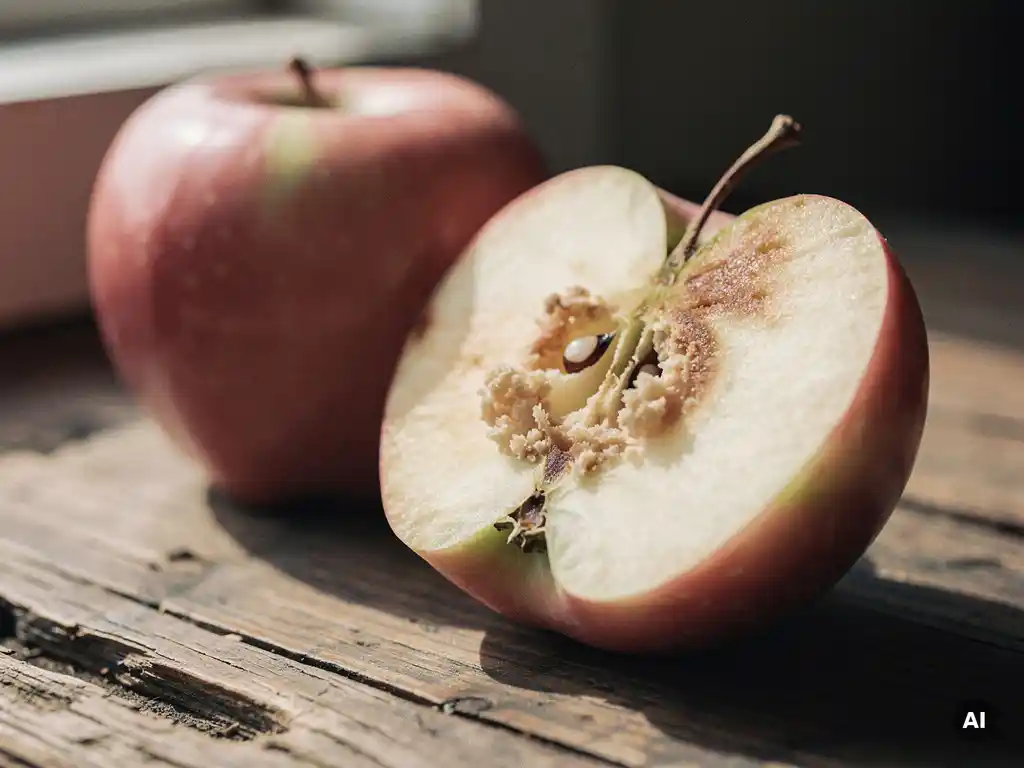
Mealiness in fruit is caused by the breakdown of the cell wall structure inside the flesh, which causes individual cells to separate from each other rather than rupture cleanly when you bite in. Instead of a crisp, juicy snap, the cells slide apart and release little to no juice, producing that dry, gritty, cotton-like sensation. This breakdown is driven by a combination of over-ripening, enzyme activity, and improper storage conditions. The sections below unpack each of the key factors behind mealy texture in apples and other fruit, from biology to storage temperature to variety genetics. If you have a specific question about fruit quality or our breeding work, feel free to get in touch and we will be happy to help.
What actually happens inside fruit when it goes mealy?
Mealy texture in fruit occurs when the middle lamella, the pectin-rich layer that binds adjacent cells together, breaks down to the point where cells separate rather than burst. When you bite into a mealy apple, the cells pull apart intact, trapping their juice inside. The result is a dry, powdery, or floury mouthfeel with little to no juiciness, even though the fruit is not actually dehydrated.
In a firm, well-textured apple, biting through the flesh ruptures individual cells and releases their contents onto your palate. That burst of juice is what we perceive as crispness and juiciness. In a mealy apple, the degradation of the cell walls and the pectin matrix means the cells can no longer hold together under pressure. They simply slide apart, and the liquid stays locked inside each cell rather than flooding your mouth.
The enzymes responsible for this process include polygalacturonase and pectin methylesterase, which break down the pectin polymers holding cells together. As these enzymes become more active, the structural integrity of the flesh collapses progressively. The process is natural and inevitable to some degree, but its speed and severity depend heavily on genetics, ripeness at harvest, and how the fruit is stored afterward.
Why do some apple varieties go mealy faster than others?
Some apple varieties go mealy faster because of genetic differences in cell wall composition, pectin content, and the activity levels of cell-wall-degrading enzymes. Varieties with thinner cell walls, lower pectin concentrations, or a genetic tendency toward rapid softening will develop a mealy or floury texture much sooner than varieties bred for firmness and long shelf life.
This is one of the core reasons variety development matters so much in commercial apple production. Not every variety is created equal when it comes to texture stability. Some older or heritage varieties, while flavorful, carry genetic profiles that make them prone to rapid softening and mealiness, especially after prolonged storage or temperature fluctuation.
At Better3Fruit, we actively select for texture traits during our breeding process, using molecular markers to identify varieties with superior cell wall integrity and resistance to post-harvest softening. Our goal is to develop apples that hold their crunch and juiciness across realistic storage and retail conditions, not just at the moment of harvest. If you are curious about which varieties we have developed with texture quality as a priority, you can explore our apple and pear varieties to see what is available.
How does temperature affect mealy texture in fruit?
Temperature is one of the most critical factors controlling whether fruit develops a mealy texture. Storing apples at temperatures that are too warm accelerates the enzyme activity that breaks down cell walls, speeding up mealiness. Equally, exposing cold-stored apples to repeated temperature fluctuations or warming them too quickly can trigger a condition known as chilling injury, which also produces a mealy or woolly texture.
Warm storage and accelerated softening
When apples are held at temperatures above their optimal storage range, typically above 4 degrees Celsius for most commercial varieties, the metabolic processes inside the fruit continue at a faster rate. Cell-wall-degrading enzymes remain highly active, pectin breaks down more quickly, and the fruit moves through its ripening stages at an accelerated pace. The result is a shorter window before mealiness sets in.
Chilling injury and woolly texture
At the other extreme, storing certain apple varieties at temperatures that are too cold, or for too long without controlled atmosphere management, can cause chilling injury. This form of cold damage disrupts the normal membrane structure inside fruit cells, leading to a breakdown in texture that manifests as a mealy, woolly, or dry mouthfeel. The fruit may still look fine from the outside while the internal texture has already deteriorated significantly.
What role does ripening play in mealy fruit?
Ripening is the primary biological driver of mealiness in fruit. As an apple ripens, ethylene production increases and triggers a cascade of enzymatic reactions that soften the flesh. When fruit is harvested too late, or when post-harvest ripening is not properly managed, these processes continue unchecked, and the fruit crosses from pleasantly soft into mealy territory.
The relationship between ripening and mealiness is essentially one of timing. Every apple has a window during which its texture is at its best, firm enough to be crisp but ripe enough to be flavorful. Before that window, the fruit may be hard and starchy. After it, the cell walls have degraded too far, and the mealy structure becomes the dominant sensation.
Ethylene management in cold storage is one of the key tools used commercially to slow this process. By removing ethylene from the storage atmosphere and holding fruit at optimal temperatures with controlled oxygen and carbon dioxide levels, the ripening clock can be slowed considerably, extending the period during which the fruit maintains good texture. This is why controlled atmosphere storage has become standard practice for premium apple varieties destined for long supply chains.
Can mealy texture in fruit be prevented?
Mealy texture in fruit can be significantly delayed or reduced, though not entirely prevented, through a combination of good variety selection, timely harvesting, and proper post-harvest storage management. No apple will hold a perfect texture indefinitely, but the right practices can extend the quality window substantially.
The most effective strategies for preventing mealiness include:
- Harvesting at the correct maturity index: Picking fruit at the right stage, before it has over-ripened on the tree, is the single most impactful step. Starch pattern testing, firmness measurement, and refractometer readings are all used to determine the optimal harvest window.
- Rapid pre-cooling after harvest: Getting fruit down to its optimal storage temperature as quickly as possible after picking slows enzyme activity and preserves cell wall integrity.
- Controlled atmosphere storage: Reducing oxygen and increasing carbon dioxide in storage rooms suppresses ethylene production and significantly slows the ripening process, keeping fruit firmer for longer.
- Consistent temperature management: Avoiding temperature fluctuations during storage and transport prevents chilling injury and reduces the risk of accelerated softening.
- Choosing varieties with strong texture genetics: Some apple varieties are inherently more resistant to developing a mealy or floury texture. Selecting varieties bred for post-harvest firmness retention makes a real difference across the entire supply chain.
Variety genetics remain the foundation of long-term texture quality. Growers and supply chain partners who consistently deal with apple texture problems often find that switching to varieties specifically bred for texture stability delivers the most lasting improvement. We have invested heavily in selecting for this trait across our breeding program, and we welcome conversations with growers, packers, and retailers who want to understand how variety choice can address fruit quality challenges. Get in touch with us to discuss what might work best for your situation.
This content was generated with the help of AI and it may contain mistakes