
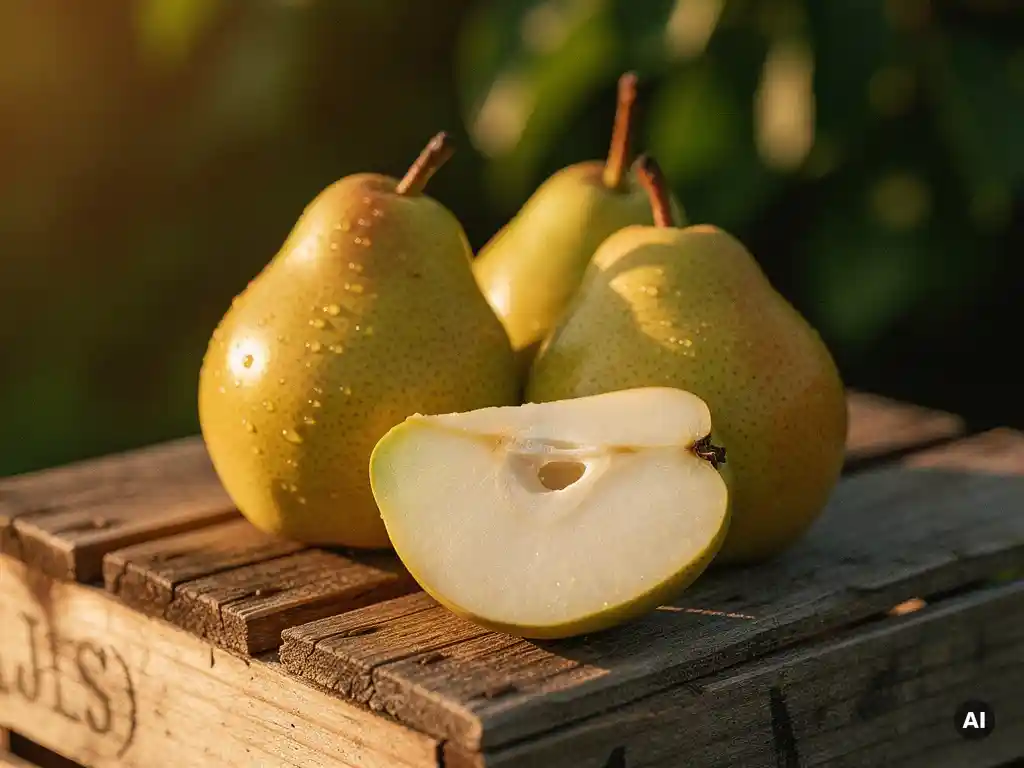
The pear varieties that best combine juiciness with firmness include Conference, Bosc, and Concorde, among others. These cultivars hold their structure when bitten while still delivering a satisfying burst of juice. The secret lies in cell wall composition and sugar content, both of which are increasingly shaped by modern pear breeding. Below, we unpack the science behind pear texture, explore standout varieties, and explain how ripeness and variety type influence the eating experience. If you have questions about specific varieties or licensing opportunities, feel free to get in touch with us directly.
What makes a pear both juicy and firm at the same time?
A pear achieves the combination of juiciness and firmness through the structure and water content of its flesh cells. Firmness comes from rigid cell walls and tightly packed parenchyma tissue, while juiciness results from high water and sugar content stored inside those cells. When both traits are present in the right balance, biting into the fruit ruptures the cells and releases juice without the flesh collapsing entirely.
The key structural element is pectin, a naturally occurring polysaccharide that holds cell walls together. In firmer pear varieties, pectin degrades more slowly during ripening, maintaining cell integrity longer. Meanwhile, cultivars with high soluble solid content, essentially dissolved sugars, tend to produce more juice when the flesh is compressed. Breeders and growers have long understood that selecting for both traits simultaneously is challenging, because the genetic pathways influencing cell wall strength and sugar accumulation do not always align. This is precisely why not every pear variety manages to deliver on both counts.
Stone cells, or sclereids, also play a role. These gritty clusters of hardened cells are common in many European pear varieties and contribute to perceived firmness, though they can also make the texture feel coarse. Breeding programs increasingly aim to reduce stone cell content while preserving structural integrity, which is one of the more nuanced challenges in developing a pear that feels both firm and pleasantly juicy.
Which pear varieties are known for combining juiciness and firmness?
Several pear varieties stand out for delivering both juiciness and firmness. Conference is widely regarded as one of the best examples, offering a dense, juicy flesh with enough structure to hold up well in both fresh eating and cooking. Bosc (also known as Kaiser) is another strong performer, prized for its spiced, aromatic flavour and firm, buttery flesh. Concorde and Doyenné du Comice round out the classic shortlist.
Among newer and emerging cultivars, the picture is evolving. Breeding programs around the world, including our own work here at Better3Fruit, are developing pear varieties that push the balance further, targeting superior texture profiles alongside disease tolerance and climate resilience. You can explore the range of varieties currently available through our variety portfolio to see how modern breeding is expanding what is possible in pear cultivation.
When evaluating a variety for juiciness and firmness, it helps to consider:
- Flesh density: Tighter cell packing correlates with a firmer bite
- Soluble solids content (Brix): Higher Brix typically means more perceived juiciness
- Stone cell content: Fewer stone cells generally means a smoother, more refined texture
- Post-harvest behaviour: Some varieties maintain firmness longer in storage, which affects eating quality at the consumer end
How does pear breeding produce firmer, juicier fruit?
Pear breeding produces firmer, juicier fruit by selecting parent varieties that carry favourable genetic traits for cell wall structure and sugar accumulation, then crossing them to combine those traits in offspring. Modern programs use molecular markers to identify which seedlings carry the right genetic signatures early, long before the fruit itself can be evaluated. This dramatically speeds up the selection process.
Traditional pear breeding relied on planting thousands of seedlings and waiting years to taste the results. Contemporary programs, including ours at Better3Fruit, use marker-assisted selection to screen for target traits at the DNA level. With over 10,000 new pear varieties entering evaluation every year, this approach allows us to identify promising candidates far more efficiently and move the best ones towards commercial development.
Specific breeding targets for texture and juiciness include:
- Reduced stone cell formation in the flesh
- Controlled pectin degradation during ripening to extend the window of optimal firmness
- Elevated sugar-to-acid ratios for a richer, juicier flavour profile
- Improved post-harvest firmness retention, which is critical for supply chain performance
Breeding for texture does not happen in isolation. Grower yield, disease resistance, and climate adaptability are evaluated alongside eating quality, because a variety that tastes exceptional but performs poorly in the field will never reach consumers at scale.
Does a pear’s ripeness stage affect its juiciness and firmness?
Yes, ripeness stage has a profound effect on both juiciness and firmness in pears. As a pear ripens, enzymes break down pectin in the cell walls, softening the flesh. At the same time, starch converts to sugar, increasing sweetness and the perception of juiciness. The challenge is that this window of peak balance, firm enough to hold together, juicy enough to satisfy, is often narrow.
Most European pear varieties are harvested before full ripeness and then conditioned either at room temperature or in controlled-atmosphere storage. This post-harvest ripening process is where texture develops most critically. A pear picked at the right maturity index and ripened correctly will achieve that ideal juicy-yet-firm profile. One picked too early may never soften properly; one left too long becomes mealy and loses structural integrity entirely.
Consumers often struggle with pears precisely because the ripeness window is easy to miss. Checking softness near the stem end is a reliable indicator: when that area yields gently to pressure, the pear is typically at its best. Variety choice also matters here: some cultivars, like Bosc, hold their texture longer and give consumers a wider eating window than more delicate varieties.
What’s the difference between European and Asian pear varieties in texture?
The key difference between European and Asian pear varieties in texture is that European pears (Pyrus communis) soften as they ripen, developing a buttery, melting flesh, while Asian pears (Pyrus pyrifolia and related species) remain crisp and crunchy even when fully ripe. Both types can be juicy, but they deliver that juiciness through very different textural experiences.
European pear texture
European varieties like Conference, Comice, and Williams go through a softening process driven by cell wall breakdown. At peak ripeness, the flesh becomes smooth and almost creamy, releasing juice as it melts in the mouth. This is the classic pear eating experience most consumers in Western markets associate with the fruit. Firmness in European pears is therefore a function of ripeness stage rather than a permanent structural trait.
Asian pear texture
Asian pears, by contrast, maintain a rigid, apple-like crunch throughout their edible life. Their cell walls are more resistant to enzymatic breakdown, and their high water content means they are exceptionally juicy despite feeling hard. This makes them a different proposition entirely: firm and juicy simultaneously, but without the softening transformation that European pears undergo. Varieties like Nashi and Hosui are well-known examples.
For breeders, this distinction opens interesting possibilities. Crossing European and Asian pear genetics can introduce novel texture profiles, combining the flavour complexity of European cultivars with the extended firmness of Asian types. This is an active area of exploration in advanced pear breeding programs.
Finding the right pear variety, whether for fresh eating, retail, or large-scale cultivation, comes down to understanding how texture, flavour, and agronomic performance interact. At Better3Fruit, we work with growers and partners worldwide to develop and license varieties that meet those demands. If you want to learn more about our current pear breeding work or explore licensing opportunities, contact us and we will be happy to help.
This content was generated with the help of AI and it may contain mistakes