
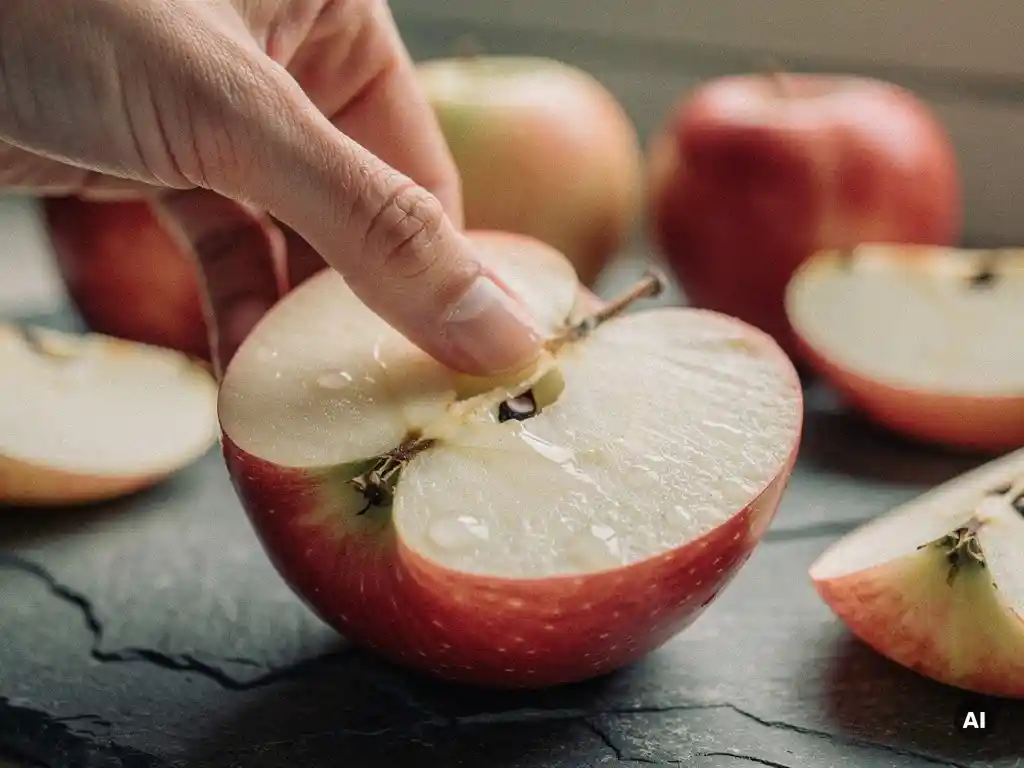
Texture is one of the most important factors in the brand experience of an apple variety. It shapes how consumers perceive quality, drives repeat purchase behaviour, and ultimately determines whether a variety builds a loyal following or fades from the produce aisle. While flavour often gets the spotlight in variety marketing, it is the sensation in the mouth, the snap, the crunch, the juiciness, that consumers remember and return for. The sections below unpack exactly why texture matters so much, and how it is bred, defined, and protected in a commercial variety. If you want to talk through any of this with us directly, feel free to get in touch.
How does texture shape the way consumers experience an apple?
Texture shapes apple eating quality by creating the physical sensations that define whether a piece of fruit feels satisfying, fresh, and worth buying again. Before flavour compounds even reach the taste receptors, the crunch of the first bite signals ripeness, freshness, and quality. Apple mouthfeel, the resistance, juiciness, and breakdown of the flesh, communicates quality in a way that colour or aroma alone cannot.
From a consumer psychology standpoint, texture is a multi-stage experience. The initial resistance of the skin, the sound and force of the first bite, the way the flesh releases juice, and the rate at which it breaks down in the mouth all combine into a single impression. A variety that delivers a satisfying sequence across all these stages is one that consumers describe as “good” without necessarily being able to articulate why. This is precisely why texture is so commercially powerful: it works below the level of conscious reasoning.
For growers and marketers, this means that a variety’s textural profile is not just a quality metric. It is a brand asset. Varieties that deliver a consistent, distinctive mouthfeel give consumers something to recognise and trust across purchases, seasons, and markets.
What specific texture traits define a premium apple variety?
A premium apple variety is defined by a combination of high firmness, pronounced crispness, fine-grained flesh, and sustained juiciness. These traits work together to create a mouthfeel that feels fresh and rewarding rather than soft, mealy, or dry. The most commercially successful varieties consistently score well across all four dimensions rather than excelling in just one.
Breaking these traits down:
- Firmness: The measurable resistance of the flesh to pressure. High firmness signals freshness and is strongly linked to consumer perceptions of quality.
- Crispness: The audible, tactile snap when biting through the flesh. This is distinct from firmness and relates to the cellular structure of the fruit.
- Flesh texture: Whether the flesh is coarse or fine-grained affects how it breaks down in the mouth. Fine-grained flesh tends to feel cleaner and more refined.
- Juiciness: The release of juice during chewing contributes significantly to overall satisfaction and is closely tied to the perception of flavour intensity.
Varieties that hold these traits well through storage and shelf life have a significant commercial advantage, because the eating quality consumers experience at home reflects the quality promise made at point of sale.
Why do consumers remember texture more than taste in apples?
Consumers remember apple texture more than taste because tactile sensations are processed faster and more instinctively than flavour. The physical feedback from biting into an apple, the resistance, the crack, the juiciness, is immediate and visceral. Flavour, by contrast, is more complex and variable, influenced by sugar content, acidity, and individual sensitivity. Texture delivers a clearer, more consistent signal.
Research in sensory science consistently shows that mouthfeel and texture are primary drivers of food satisfaction and repurchase intent across many fresh produce categories. In apples specifically, a mealy or soft texture is one of the most commonly cited reasons consumers stop buying a variety, even when they cannot name exactly what disappointed them. The negative texture experience is remembered more vividly than a positive flavour one.
This asymmetry has real implications for variety selection and marketing. A variety with outstanding flavour but inconsistent or poor texture will struggle to build a loyal consumer base. A variety with reliably excellent texture, even with a more subtle flavour profile, can build strong repeat purchase habits. Texture is the foundation on which flavour perception is built.
How does texture consistency affect a variety’s commercial brand?
Texture consistency is essential to building a trustworthy commercial apple brand because consumers form expectations based on previous experience. When a variety delivers the same mouthfeel across different purchase occasions, different stores, different seasons, different growing regions, it builds the kind of reliability that supports premium positioning and long-term brand equity.
Inconsistency, on the other hand, erodes trust quickly. If a consumer buys a variety expecting a crisp, juicy bite and receives something soft and mealy, the disappointment is attributed to the variety itself, not to storage conditions or the retailer. This is why variety owners, marketers, and supply chain partners invest heavily in post-harvest protocols, cold chain management, and quality standards, all in service of protecting the textural promise the brand has made.
For club varieties in particular, texture consistency is a contractual and reputational priority. The entire commercial model of a club variety rests on the ability to deliver a differentiated, recognisable eating experience. You can explore the varieties we have developed to see how this principle is built into our commercial portfolio from the start.
How is texture bred into a new apple variety?
Texture is bred into a new apple variety by selecting parent varieties that carry the genetic traits associated with desirable mouthfeel, then using molecular markers to identify offspring that have inherited those traits before they ever reach the field. This approach, known as marker-assisted selection, allows breeders to screen thousands of seedlings for texture-related characteristics at the DNA level, dramatically increasing the efficiency of the breeding process.
At Better3Fruit, we combine traditional cross-breeding with modern molecular tools to bring together the full range of traits a successful variety needs, including firmness, crispness, and juiciness, without sacrificing disease resistance, yield, or flavour. With over 10,000 new varieties of each crop entering our field trials every year and more than 30,000 varieties under evaluation at any one time, we can apply rigorous selection pressure at every stage of development.
Texture traits are evaluated repeatedly across multiple growing seasons and locations, because a variety’s mouthfeel must be stable across different environments and post-harvest conditions. Only varieties that demonstrate consistent, high-scoring texture profiles across these evaluations progress towards commercial release.
What’s the difference between firmness and crispness in apple varieties?
Firmness and crispness are related but distinct texture traits in apple varieties. Firmness refers to the resistance of the flesh to compression: it is a measure of how much force is needed to bite through or press into the fruit. Crispness refers to the way the flesh fractures under that force, whether it snaps cleanly and audibly or bends and deforms without breaking. An apple can be firm without being crisp, and this distinction matters enormously to consumer experience.
Firmness: a structural measure
Firmness is largely determined by cell wall integrity and water content. It is measurable with standard instruments used throughout the industry and is a key quality parameter in post-harvest assessment. High firmness is associated with freshness and is a reliable indicator that a fruit has been well handled through the supply chain. However, a firm apple that lacks crispness can still feel dense or rubbery rather than satisfying to eat.
Crispness: a sensory experience
Crispness is driven by the cellular structure of the flesh, specifically, how tightly packed the cells are and how they fracture under bite force. A crisp apple breaks apart in clean, defined pieces with an audible crack. This sensory quality is what consumers most often describe when they say an apple “tastes fresh,” even though crispness is a texture rather than a flavour characteristic. Breeding for crispness requires selecting for specific cell structure traits that are genetically distinct from those governing firmness.
Understanding the difference between these two traits is important for anyone involved in apple variety selection, grower contracts, or quality benchmarking. A variety brief that specifies only “firm” flesh may miss the crispness dimension entirely, and it is often crispness that consumers are actually responding to when they describe their favourite eating apple.
Texture sits at the heart of what makes an apple variety commercially successful and genuinely enjoyable to eat. From the genetics of cell structure to the consistency of the eating experience on the supermarket shelf, every link in the chain either protects or undermines the textural promise a variety makes. If you want to learn more about how we approach texture in our breeding programme or explore a potential partnership, get in touch with us: we would be glad to talk.
This content was generated with the help of AI and it may contain mistakes