
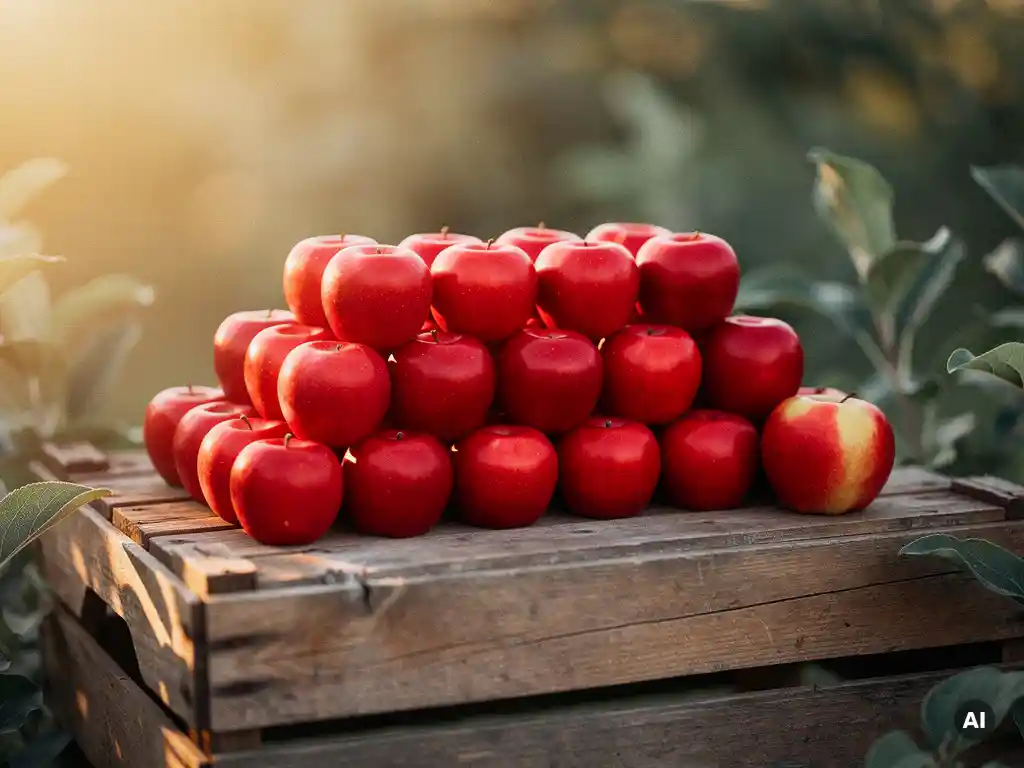
Uniformity in fruit breeding means that individual fruits within a variety consistently share the same key characteristics, size, shape, colour, flavour, and ripening time, across different harvests, orchards, and growing conditions. It is one of the most commercially important traits a new variety can have, because retailers, packers, and consumers all depend on predictable, repeatable quality. The sections below unpack why uniformity is so hard to achieve, what it actually covers, and why it matters so much for a variety’s long-term success. If you have specific questions about variety development, feel free to get in touch with us directly.
Why is uniformity so difficult to achieve in apple and pear breeding?
Uniformity is difficult to achieve in apple and pear breeding because these crops are genetically complex, highly heterozygous organisms. That means every seedling produced from a cross between two parent varieties carries a unique and largely unpredictable combination of genes. Selecting for a single desirable trait is already challenging, selecting for multiple traits that all behave consistently together is far harder.
Apple and pear trees are also perennial crops, which adds another layer of difficulty. A breeder cannot simply run a quick generation cycle to test and refine a trait. Evaluating a new seedling for uniformity takes years of observation across multiple growing seasons, because environmental variation, temperature swings, rainfall patterns, soil differences, can mask or exaggerate underlying genetic tendencies. A variety that looks uniform in one season may show surprising variation in the next.
At Better3Fruit, we work with over 30,000 new varieties under evaluation at any given time, with 10,000 new seedlings of each crop entering the field every year. This scale is necessary precisely because the odds of any single cross producing a variety that meets all the required traits, including genuine uniformity, are low. Breeding for uniformity is a numbers game as much as it is a science.
What traits does uniformity cover in a fruit variety?
Uniformity in a fruit variety covers the full range of visible and measurable characteristics that determine how consistent a fruit looks, feels, and tastes. These traits span appearance, texture, flavour, and timing, and all of them need to behave predictably both within a single harvest and across multiple seasons.
The most commercially visible uniformity traits include:
- Size and weight: Fruits should fall within a predictable size range so that packing lines and retail grading systems can handle them efficiently.
- Shape: Consistent shape reduces waste during sorting and meets the visual expectations of buyers and consumers.
- Colour and blush development: Colour is often the first thing a consumer notices. Uniform colour development across fruits in the same batch signals consistent ripeness and quality.
- Flavour and sugar-acid balance: Taste uniformity ensures that every fruit in a pack delivers the same eating experience, critical for building consumer loyalty to a variety.
- Ripening time: Fruits that ripen at different rates within the same tree or orchard create harvesting and storage complications that increase costs and reduce shelf life.
- Texture and firmness: Consistent crunch or tenderness is a key part of the eating experience and affects how well a variety holds up during transport and storage.
Achieving uniformity across all these traits simultaneously is what makes breeding such a long and demanding process. A variety might show excellent colour consistency but variable sugar levels, or uniform size but uneven ripening. Every trait is linked to multiple genes, and those genes interact with each other and with the environment in ways that are not always straightforward to predict.
How do molecular markers help breeders select for uniform traits?
Molecular markers help breeders select for uniform traits by identifying specific sections of a plant’s DNA that are reliably linked to desirable characteristics. Instead of waiting years for a seedling to mature and then measuring its fruit, breeders can screen young plants at the DNA level and eliminate those unlikely to carry the right genetic combination, dramatically speeding up the selection process.
In practice, this means we can test thousands of seedlings early in their development and focus resources only on those showing genetic markers associated with the traits we are targeting. For uniformity specifically, markers help identify whether a seedling carries the genetic profile likely to produce consistent fruit size, colour development, or flavour, before a single fruit has been harvested.
Molecular markers do not replace field evaluation, but they make it far more efficient. Rather than growing every seedling to maturity, we can narrow the field substantially in the early stages, then invest long-term observation and resources in the candidates most likely to succeed. This approach is central to how we run one of the world’s largest apple and pear breeding programs while still maintaining rigorous quality standards for every variety we develop. You can explore the varieties that have emerged from this process on our varieties page.
What’s the difference between uniformity and consistency across growing regions?
Uniformity refers to how consistent a variety’s traits are within a single location or growing environment, while consistency across growing regions refers to how reliably those same traits are expressed when the variety is grown in different climates, soil types, and latitudes. Both matter commercially, but they measure different things and are influenced by different factors.
A variety can be highly uniform within one orchard, every fruit the same size, colour, and flavour, but behave quite differently when grown in a warmer climate, a higher altitude, or a region with different soil chemistry. This cross-regional consistency is sometimes called genotype-environment stability, and it is one of the more demanding qualities to breed for because it requires testing across multiple environments over multiple years.
For a variety to succeed as a global club variety or licensed cultivar, both qualities are essential. Retailers sourcing from multiple growing regions expect the same eating experience regardless of origin. If a variety looks and tastes different depending on where it was grown, it becomes very difficult to build a coherent consumer brand around it. This is why our evaluation process involves testing new varieties across a range of growing environments before any commercial release, and why strategic partnerships with growers in different regions are a key part of how we bring a variety to market.
How does uniformity affect a fruit variety’s commercial success?
Uniformity directly determines whether a fruit variety can succeed at commercial scale. Retailers, supermarket chains, and export markets all operate on strict grading and quality standards. A variety that produces inconsistent fruit, variable size, uneven colour, unpredictable flavour, creates problems at every stage of the supply chain, from packing to shelf life to consumer satisfaction.
The commercial impact of uniformity plays out across several dimensions:
- Retail acceptance: Supermarkets and buyers set precise specifications for size, colour, and appearance. Varieties that consistently meet those specifications command better placement and pricing.
- Packing efficiency: Uniform fruit moves through packing and grading lines faster and with less waste, reducing costs for growers and packers.
- Consumer trust: When every purchase of a named variety delivers the same eating experience, consumers return to it. Inconsistency erodes that trust quickly.
- Brand building: Club varieties and licensed cultivars are built on the promise of a specific, repeatable quality. Without uniformity, that promise cannot be kept, and the brand loses value.
- Export potential: International markets require predictable quality across shipments. Varieties with poor uniformity struggle to meet the standards required for premium export channels.
The success of varieties like Kanzi® demonstrates what strong uniformity can achieve when combined with outstanding flavour and a well-managed licensing structure. Building that kind of commercial momentum requires years of careful breeding and selection, but uniformity is the foundation everything else rests on. If you would like to learn more about how we approach variety development, contact us and we would be happy to talk you through it.
This content was generated with the help of AI and it may contain mistakes