
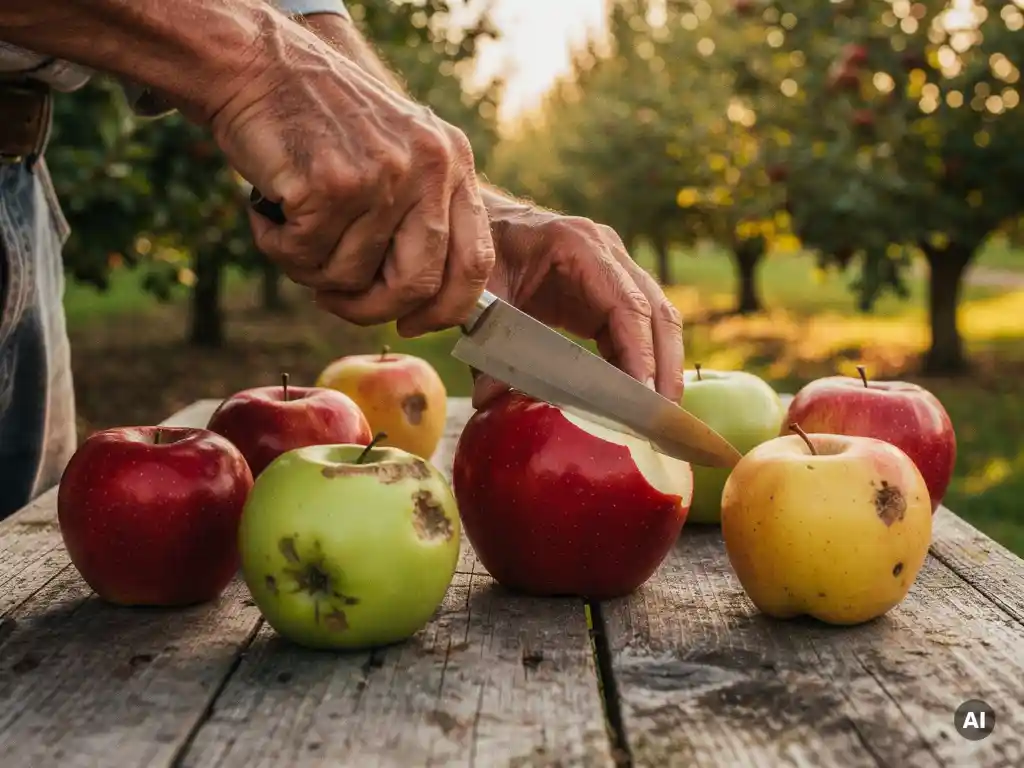
Fruit breeders develop varieties for easy consumption by selecting and combining traits that reduce friction for the eater: thin edible skin, crisp bite-through texture, low acidity balanced with natural sweetness, minimal seeds, and a size that fits comfortably in one hand. These traits do not appear by chance. They are deliberately targeted from the earliest stages of a breeding program, guided by consumer research, sensory panels, and modern tools such as molecular markers that allow breeders to identify promising seedlings years before a fruit ever reaches a supermarket shelf. The sections below unpack each major dimension of this process, from trait selection to variety licensing. If you have questions about a specific breeding goal or variety, feel free to get in touch with us directly.
What traits make a fruit variety easy to consume?
A fruit variety is considered easy to consume when it combines thin, tender skin, a crisp and juicy texture, a balanced sweet-to-acid ratio, low-fibre stringiness, and a compact size that requires no cutting or preparation. Each of these traits lowers the effort a consumer needs to invest before and during eating, which is the defining characteristic of convenience fruit.
In apple breeding, texture is often the first filter. A fruit that bruises easily, turns mealy quickly, or requires significant chewing effort will struggle in the snack apple category regardless of its flavour. Skin thickness matters for the same reason: a tough skin that feels waxy or leathery discourages eating out of hand, while a thin skin that breaks cleanly with each bite signals freshness and quality.
Flavour balance is equally critical. Consumers associate easy eating with a flavour profile that does not demand adjustment, meaning the fruit should taste good without added salt, sugar, or preparation. This is why modern consumer-friendly fruit varieties tend to sit in a sweet-forward zone with just enough acidity to keep the flavour lively and prevent the palate from becoming fatigued.
How do breeders identify and select convenience traits?
Breeders identify and select convenience traits through a combination of molecular marker screening, controlled sensory evaluation, and multi-year field observation. Molecular markers allow breeders to scan seedlings at the genetic level and flag individuals that carry the genes associated with desirable texture, flavour, and skin characteristics before the plant has produced a single fruit.
This early screening is transformative for efficiency. In a program like ours at Better3Fruit, where 10,000 new varieties of each crop enter the field every year, it would be impossible to taste-test every seedling to maturity. Molecular tools allow the team to eliminate the majority of candidates in the first years of evaluation, concentrating resources on the small fraction that genuinely shows promise across multiple convenience traits simultaneously.
Once candidates pass the molecular filter, they move into sensory panels and consumer trials. Trained tasters assess texture, juiciness, flavour balance, and skin bite. Consumer panels add a real-world layer, testing whether ordinary shoppers actually reach for the fruit again after the first bite. Only varieties that perform consistently across both expert and consumer evaluation advance towards commercial development.
What role do size and shape play in snack-ready fruit?
Size and shape are decisive factors in whether a fruit qualifies as snack-ready. A snack apple or pear needs to fit comfortably in a hand, a lunchbox, or a bag without requiring a knife. Industry experience consistently shows that consumers prefer a fruit they can eat in three to five bites, making medium-sized, rounded varieties the most practical format for on-the-go consumption.
Shape also influences perception of quality. A symmetrical, well-formed fruit signals consistent ripeness and careful cultivation. Irregular shapes or pronounced ribs can make a fruit harder to bite into cleanly, which reduces the enjoyment of eating it without utensils. For fresh-cut fruit applications, uniform shape and predictable size are even more important because they directly affect processing efficiency and portion consistency.
In our apple breeding program, size and shape are evaluated alongside flavour and texture rather than as secondary considerations. A variety that tastes exceptional but grows to an unwieldy diameter, or that develops an asymmetric shape prone to bruising, will face significant barriers in the fresh and convenience market regardless of its other qualities.
How does disease resistance affect fruit quality for consumers?
Disease resistance in a fruit variety directly improves the eating quality consumers experience by reducing the need for chemical interventions during growing, supporting more consistent skin appearance, and enabling the fruit to be harvested at optimal ripeness without disease pressure forcing an early pick. Healthier trees produce fruit that develops its full flavour and texture potential.
From a consumer perspective, the connection between disease resistance and fruit quality is not always visible, but it is real. A variety susceptible to scab, for example, may require repeated fungicide applications that can affect the development of the fruit’s natural aroma compounds. A resistant variety grown under lower spray pressure often develops a cleaner flavour profile and a more attractive skin finish.
At Better3Fruit, disease and pest tolerance and resistance sit at the core of our breeding strategy alongside taste and texture. This is not only an environmental priority. It is a quality priority. Growers who can reduce input costs through resistance can also invest more in orchard management practices that directly benefit fruit quality at harvest, including careful thinning, optimal nutrition, and precise harvest timing.
How long does it take to breed a new easy-eating apple variety?
Breeding a new easy-eating apple variety takes between 15 and 25 years from the initial cross to commercial release. This timeline reflects the time required for seedlings to mature, be evaluated across multiple growing seasons, pass sensory and consumer trials, complete regulatory processes, and build the nursery stock needed to supply commercial orchards at scale.
Modern tools such as molecular markers have compressed the early stages of this timeline significantly. Where earlier programs might spend a decade simply growing seedlings to the point where their fruit could be tasted, marker-assisted selection now allows breeders to screen for key traits in the first years of a seedling’s life. This means more of the 15 to 25-year window is spent on genuine evaluation and market development rather than waiting for unsuitable candidates to reveal themselves.
The commercial development phase at the end of the timeline is often underestimated. Once a variety is selected and protected by intellectual property rights, it takes several more years to propagate enough trees, establish orchards, build supply, and develop the brand recognition that allows a new variety to compete on supermarket shelves. Our variety Kanzi®, for example, became one of the most successful club cultivars of the past decade, but that success was built over many years of coordinated effort between breeders, growers, and marketers.
What’s the difference between club varieties and standard varieties for consumers?
Club varieties are fruit varieties managed under a controlled licensing system that limits who can grow them, how much can be produced, and where they are sold. Standard varieties are open for any grower to plant without restriction. For consumers, the practical difference is that club varieties tend to deliver more consistent quality, flavour, and appearance because the supply chain is actively managed from orchard to shelf.
What club varieties offer consumers
Because club varieties are grown by a selected network of licensed producers, quality standards can be enforced at every stage. Fruit that does not meet the variety’s defined specifications does not reach the consumer under the club brand. This means shoppers who buy a club variety apple repeatedly can expect a reliable eating experience rather than the variability that often characterises open-market varieties where growing conditions and post-harvest handling are inconsistent.
What standard varieties offer consumers
Standard varieties offer broader availability and often lower price points because the competitive market among growers drives efficiency. For consumers who prioritise accessibility and value over guaranteed consistency, standard varieties remain the backbone of the fresh fruit market. The trade-off is that the same variety name on two different supermarket shelves may represent meaningfully different eating experiences depending on origin, season, and handling.
At Better3Fruit, we encourage strategic partnerships around our varieties to achieve coordinated marketing, quality control, and supply in line with demand. This approach is what allows a variety like Kanzi® or the fast-emerging Morgana® to build genuine brand recognition in the market. If you are interested in learning more about our varieties or exploring a licensing partnership, contact us to start the conversation.
This content was generated with the help of AI and it may contain mistakes