
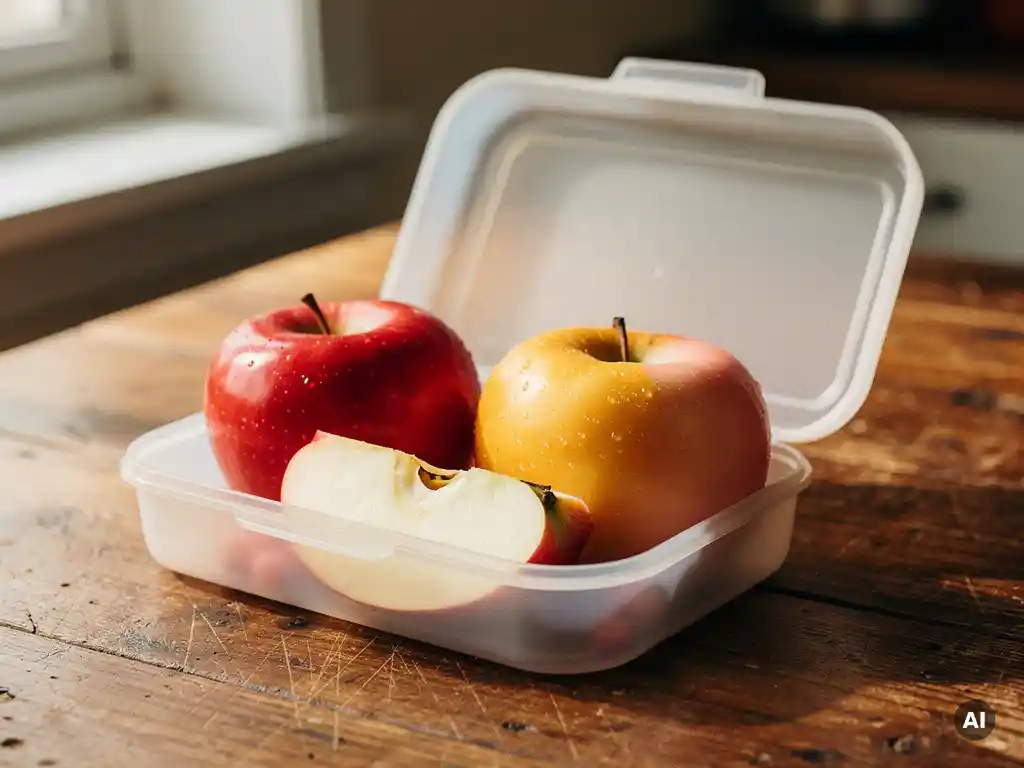
The best apple varieties for lunchboxes are those that combine great flavour, a firm texture that resists browning after cutting, and a manageable size that fits comfortably alongside a sandwich and a snack. Crisp, sweet-tasting cultivars with a naturally slow oxidation rate make packing school lunches far less stressful. Below, we answer the most common questions about choosing, cutting, and storing lunchbox apples, and if you’d like to learn more about specific varieties, feel free to get in touch with us directly.
What makes an apple variety good for lunchboxes?
A good lunchbox apple variety combines firm flesh that holds up after cutting, a balanced or sweet flavour that appeals to a wide range of palates, and a slow browning rate once sliced. Size matters too: a fruit that is neither too large nor too small fits neatly into a standard lunchbox without taking up the entire space.
Beyond those basics, the eating experience plays a big role. A crisp, juicy bite is far more appealing to a child or adult at lunchtime than a mealy or floury texture. Skin toughness is another practical factor: a slightly thicker skin helps the apple travel without bruising during the journey from home to school or office. Varieties bred for high sugar content alongside a pleasant acidity tend to be the most universally enjoyed, making them reliable choices for packed lunches day after day.
Disease tolerance and consistent fruit quality across the season are also worth considering from a practical standpoint. A variety that delivers the same crunch and flavour from September through to spring means fewer disappointing lunchboxes during the school year.
Which apple varieties stay fresh longest after cutting?
Apple varieties with dense, firm flesh and relatively low polyphenol oxidase activity stay fresh longest after cutting. In practical terms, cultivars such as Kanzi®, Honeycrisp, and Pink Lady tend to brown more slowly than softer, starchier varieties, making them strong candidates for pre-sliced lunchbox apples.
Browning after cutting is caused by a natural enzymatic reaction when the apple’s flesh is exposed to oxygen. Varieties with higher acidity naturally slow this process because the acidic environment inhibits the enzymes responsible. This is also why a brief dip in lightly salted water or diluted lemon juice is a popular trick for keeping pre-cut slices looking fresh for hours.
Kanzi®, one of the flagship varieties we have developed at Better3Fruit, is particularly well regarded for its dense, juicy flesh and its ability to hold its texture and colour after slicing, a quality that makes it a practical favourite for lunchbox preparation the night before.
Are sweet or tart apples better for kids’ lunchboxes?
Sweet apple varieties are generally better for children’s lunchboxes because most kids prefer a lower level of acidity. Cultivars with a naturally high sugar content and mild tartness are more likely to be eaten rather than left at the bottom of the bag. That said, a hint of acidity helps balance the flavour and keeps the apple tasting fresh rather than cloying.
Very tart varieties such as Granny Smith can be an acquired taste for younger children, though some kids enjoy the sharp contrast. A good middle ground is a variety that leans sweet but retains enough brightness to avoid tasting flat. Morgana®, part of our growing commercial portfolio, offers exactly this kind of balanced profile: a pleasantly sweet flavour with just enough character to keep it interesting.
Ultimately, the best approach is to let children try a few different varieties and identify their preference. Involving kids in choosing their lunchbox apple increases the likelihood they will actually eat it, which is the most important outcome of all.
What apple size is ideal for a lunchbox?
The ideal lunchbox apple is a medium-sized fruit, roughly 70 to 80 millimetres in diameter. This size is large enough to provide a satisfying portion but small enough to fit alongside other lunchbox items without crowding them. For younger children, a slightly smaller fruit in the 65 to 70 millimetre range is often more manageable to hold and eat.
Very large apples can be impractical in two ways: they take up too much space, and a child may struggle to finish one in a short lunch break, leading to waste. Pre-slicing a larger apple and packing the slices is a practical workaround, but it requires a little extra preparation and a good anti-browning strategy.
Many modern club varieties are bred with consistent sizing in mind, which is one of the advantages of choosing a commercially managed cultivar. Consistent sizing means fewer surprises when you are packing lunches in a hurry, and it also makes portion planning more predictable across the school week. You can explore the full range of our varieties to see which cultivars are available in your region.
How should you store lunchbox apples to keep them crisp?
To keep lunchbox apples crisp, store whole fruit in the refrigerator rather than at room temperature. Apples stay firm far longer at cold temperatures because the low temperature slows the natural ripening process. If you are pre-slicing apples the night before, store the slices in an airtight container with a small squeeze of lemon juice to prevent browning and maintain texture.
A few practical storage tips make a real difference:
- Keep apples away from other fruits and vegetables in the fridge, as they release ethylene gas that can accelerate ripening in nearby produce.
- Use a sealed container or zip-lock bag for sliced apples to limit oxygen exposure.
- Add a brief soak in lightly salted or lemon-infused water before packing slices; rinse and dry them before placing them in the lunchbox.
- Pack the apple in an insulated lunchbox with a small ice pack to keep it cool until lunchtime, especially during warmer months.
- Avoid washing apples too far in advance, as excess moisture on the skin can speed up surface deterioration.
Choosing a naturally firm, slow-ripening variety in the first place is the single most effective step you can take. A high-quality cultivar with dense flesh will still taste crisp and juicy hours after it leaves the fridge, even without any additional preparation. If you want personalised advice on which apple varieties suit your needs best, contact us and we will be happy to help.
This content was generated with the help of AI and it may contain mistakes