
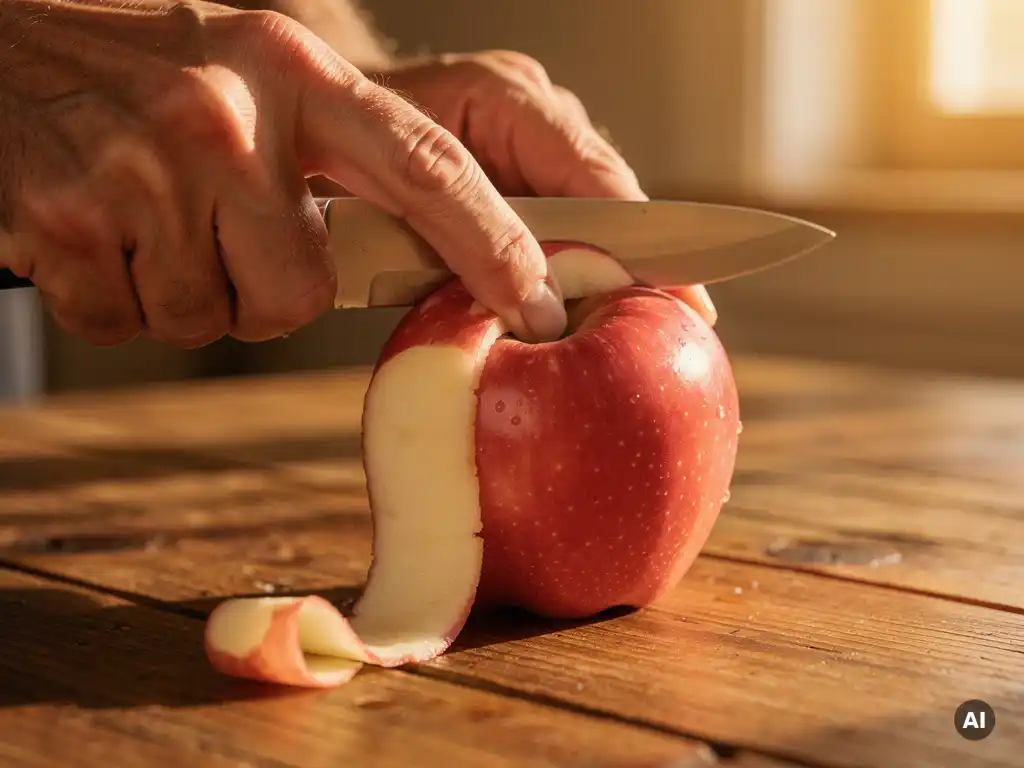
Ease of consumption is one of the most powerful drivers of consumer brand choice in the fresh fruit category. When shoppers reach for an apple or pear, they are not just choosing a flavour, they are choosing a promise of convenience, comfort, and a snacking experience that fits their lifestyle. Brands and varieties that deliver on that promise consistently earn repeat purchases and long-term loyalty. If you want to learn more about how we approach this at Better3Fruit, feel free to get in touch with us. The sections below unpack exactly how convenience shapes purchasing decisions, why club varieties often have an edge, and how modern apple breeding is responding to the snacking revolution.
What fruit traits do consumers associate with ease of consumption?
Consumers associate ease of consumption with a cluster of physical and sensory traits: manageable size, thin and edible skin, low juiciness that does not drip, firm yet yielding texture, and a flavour that is immediately rewarding without preparation. A fruit that checks these boxes feels ready to eat straight from the hand, which is exactly what busy shoppers are looking for.
Beyond the obvious traits, crunch plays a surprisingly strong role. A satisfying snap on the first bite signals freshness and quality instantly, reducing the mental hesitation a shopper might feel at the shelf. Similarly, a balanced sweet-to-acid ratio means the fruit does not need salt, sugar, or any accompaniment to taste complete. Skin thickness matters too, a skin that is too tough or waxy feels like an obstacle, while a thinner, smoother skin invites consumption without the urge to peel.
Size and shape also communicate convenience before the fruit is even tasted. A compact, evenly shaped apple that fits comfortably in one hand signals portability. Irregular shapes or very large sizes, by contrast, create a subtle friction that nudges shoppers toward varieties they perceive as easier to manage. These traits are not accidental, they are the result of deliberate breeding decisions that place the consumer’s daily experience at the centre of variety development.
How does convenience influence which apple or pear brand a shopper picks?
Convenience directly influences brand choice by reducing the perceived effort associated with eating fruit. When two varieties offer comparable taste, the one that is easier to eat, carry, and store will consistently win at the point of purchase. Shoppers make this judgment in seconds, often without conscious reasoning, based on visual cues and prior experience with the brand.
In practical terms, this means packaging matters as much as the fruit inside it. A resealable bag of bite-sized apples, a single-serve pouch, or a clearly labelled variety with a known flavour profile all reduce decision fatigue. Shoppers who recognise a brand name or variety name on the label already have an expectation of the eating experience, and that expectation is itself a form of convenience. It removes uncertainty.
Consumer preferences have also shifted toward fruit that requires zero preparation. The rise of lunchbox culture, desk snacking, and on-the-go eating means that any variety requiring washing beyond a quick rinse, peeling, or cutting is already at a disadvantage in competitive retail environments. Brands that communicate effortless readiness, through variety selection, packaging, and messaging, capture a disproportionate share of the convenience-driven purchase decision.
Why do club varieties often win on convenience perception?
Club varieties win on convenience perception because they offer consistency. A shopper who buys a Kanzi® apple today knows what size, texture, flavour, and crunch to expect next week and next season. That predictability is itself a form of convenience, it eliminates the guesswork that comes with commodity fruit bins where quality varies widely from one purchase to the next.
Club varieties are also managed with coordinated quality control across their entire supply chain. Growers, packers, and retailers operate under shared standards, which means the fruit reaching the consumer has been selected and handled to deliver a reliable eating experience. This behind-the-scenes consistency translates directly into consumer trust, and consumer trust is the foundation of brand loyalty in the fresh produce aisle.
Marketing investment compounds this advantage. Club varieties typically benefit from sustained brand-building campaigns that reinforce specific eating occasions, snacking, lunchboxes, healthy treats, which further embeds the variety in consumers’ minds as a convenient, ready-to-eat choice. Over time, the variety name becomes a shortcut for a specific, desirable experience, making the purchase decision faster and easier for the shopper. You can explore the full range of our varieties to see how this principle is applied across our portfolio.
What role does apple breeding play in improving ease of consumption?
Apple breeding plays a foundational role in improving ease of consumption by selecting for the physical and sensory traits that make eating effortless. Through targeted breeding programmes, breeders can combine traits such as optimal fruit size, thin skin, high crunch, low-drip juiciness, and long shelf life into a single variety, traits that would be difficult or impossible to engineer through growing practices alone.
Modern breeding tools, including molecular markers, allow breeders to identify which seedlings carry desirable traits at a very early stage, long before the fruit is produced. This dramatically accelerates the development cycle and means that consumer-relevant traits, not just yield or disease resistance, can be prioritised from the very beginning of the selection process. At Better3Fruit, we evaluate tens of thousands of new seedlings every year, with consumer experience embedded in our selection criteria alongside agronomic performance.
Disease and pest tolerance is also a convenience trait, though it is less visible to the shopper. Varieties that require fewer chemical inputs are easier for growers to produce sustainably and consistently, which supports the supply chain reliability that underpins brand consistency. Climate resilience adds another layer: varieties that perform well across a wider range of growing conditions are less prone to the quality fluctuations that erode consumer trust in a brand over time.
How is snacking culture reshaping demand for new fruit varieties?
Snacking culture is reshaping demand by elevating convenience, portion control, and immediate sensory satisfaction to the top of consumers’ fruit selection criteria. Shoppers in 2026 increasingly reach for fruit as a direct substitute for processed snacks, which means apples and pears must compete not just with other fruit but with confectionery, crisps, and energy bars on the dimensions of ease, pleasure, and portability.
This shift has concrete implications for variety development. Smaller, snack-sized fruit formats are growing in appeal. Varieties with a strong, immediate flavour hit, intense sweetness balanced with just enough acidity, perform better in snacking contexts than milder, more subtle profiles that reward slow eating. Texture that delivers a satisfying crunch without excessive juice makes fruit easier to eat at a desk, in a car, or between meetings without mess or fuss.
The ready-to-eat fruit category is also driving demand for longer shelf life at the consumer level. A snacking apple that stays crisp and appealing for a full week in a home refrigerator fits naturally into the weekly grocery shop, while a variety that softens or browns quickly creates friction and disappointment. Breeders who anticipate these snacking habits and build them into variety development from the outset are best positioned to meet the market where it is heading, and to give retail partners the confidence to invest in building a brand around a new variety.
Understanding how ease of consumption shapes consumer brand choice is essential for anyone developing, growing, or marketing fresh fruit varieties. At Better3Fruit, we build these consumer insights into our breeding strategy from day one, so that every variety we develop is designed to fit naturally into the way people actually eat. If you would like to discuss how our approach could work for your market, contact us to plan a conversation.
This content was generated with the help of AI and it may contain mistakes