
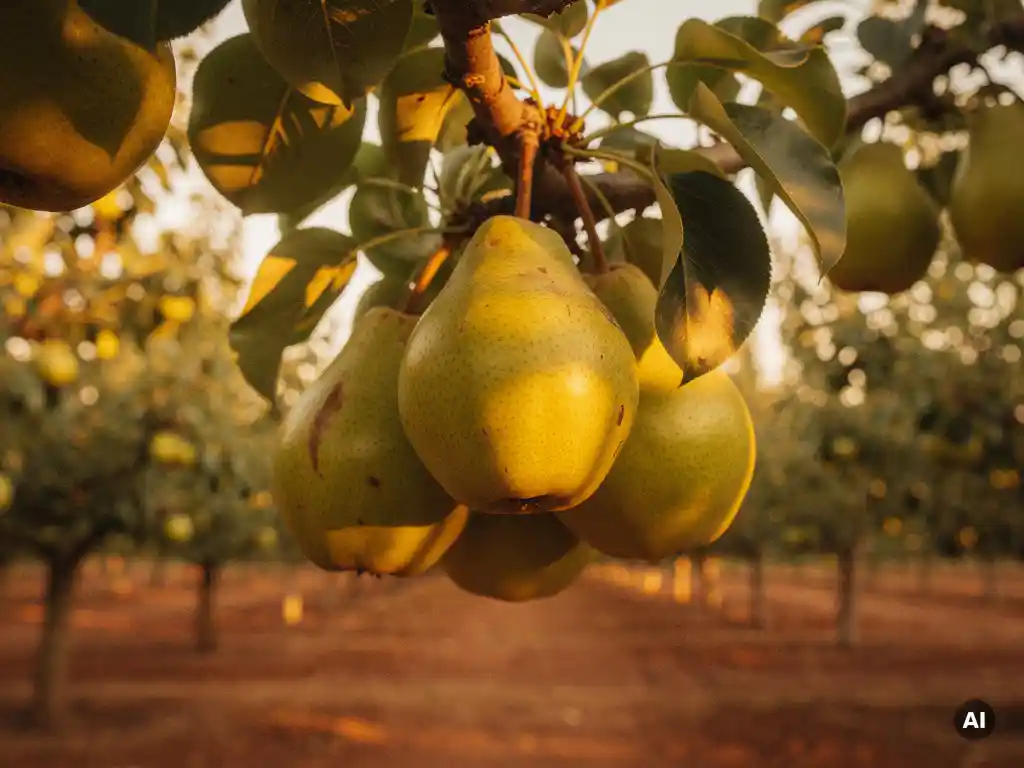
Several new pear varieties have been developed specifically for warm regions, including low-chill cultivars that require fewer cold hours to break dormancy and heat-tolerant types that maintain fruit quality under high summer temperatures. These varieties are emerging from breeding programs that prioritize climate adaptability alongside taste, texture, and commercial viability. If you want to explore what we are working on in this space, feel free to get in touch with us directly.
Why is breeding pears for warm climates so challenging?
Breeding pears for warm climates is challenging because most traditional pear varieties require a significant period of winter cold, known as chilling hours, to break dormancy and produce fruit reliably. In warm regions where winters are mild, this chilling requirement is often not met, leading to poor flowering, irregular cropping, and reduced fruit quality. This biological constraint makes warm-climate pear breeding fundamentally different from standard apple or pear improvement programs.
Beyond chilling requirements, pears grown in hot climates face additional pressures. High summer temperatures can cause sunburn on fruit skin, accelerate ripening to the point where texture suffers, and increase susceptibility to certain fungal diseases that thrive in warm, humid conditions. Breeders must therefore work across multiple traits simultaneously, selecting for low chilling needs while not sacrificing the crispness, flavor, and shelf life that consumers and retailers expect.
The genetic pool for low-chill pear breeding is also narrower than for other fruit crops. Many heat-tolerant pear relatives exist in nature, but crossing them with high-quality commercial varieties while retaining desirable eating traits is a long, complex process. This is where modern breeding tools make a real difference, allowing breeders to identify promising seedlings earlier and avoid decades of trial and error in the field.
What traits do warm-climate pear varieties need to succeed?
Warm-climate pear varieties need to combine low chilling requirements, heat tolerance during fruit development, disease resistance suited to warmer conditions, and strong eating quality. No single trait is sufficient on its own. A variety that flowers reliably in a mild winter but produces bland, mealy fruit will not find commercial success, regardless of its climate adaptability.
The most critical trait is a genuinely low chilling requirement, typically measured in hours below a threshold temperature. Varieties suited to warm regions generally need fewer than 400 to 500 chilling hours, compared to 800 or more for many European pear types. Alongside this, the variety must be able to set and develop fruit under warm spring and summer conditions without the fruit cracking, softening prematurely, or losing its visual appeal.
Disease and pest tolerance are equally important in warm, humid growing areas where fire blight, a bacterial disease devastating to pears, can spread rapidly. Varieties with natural resistance or tolerance to fire blight reduce the need for chemical intervention, improving both sustainability and grower profitability. Skin finish, storage life, and compatibility with existing packhouse infrastructure are additional commercial traits that determine whether a new variety can actually be grown and sold at scale.
Which pear varieties are best suited to warm growing regions?
Pear varieties best suited to warm growing regions are typically low-chill cultivars derived from Asian pear species or from crosses between European and Asian types. These include selections from breeding programs in Australia, South Africa, California, and parts of southern Europe, where warm winters have driven demand for varieties that perform reliably without relying on consistent cold. The specific best choice depends on the local climate, market requirements, and available rootstocks.
Asian pear varieties, such as those derived from Pyrus pyrifolia, naturally tolerate warmer conditions and have lower chilling requirements than European types like Williams or Conference. Hybrid varieties that combine Asian heat tolerance with the texture and flavor profile of European pears represent the most promising commercial direction. Several such varieties have been released in recent years and are gaining traction in markets where European varieties have historically underperformed.
It is worth noting that “warm region” covers a wide spectrum, from Mediterranean climates with dry summers to subtropical zones with high humidity year-round. A variety that excels in South Africa may not perform equally well in parts of South America or Southeast Asia. Growers evaluating new pear varieties for hot climates should always consult local trial data before committing to large-scale planting.
How do modern breeding techniques improve warm-climate pear development?
Modern breeding techniques improve warm-climate pear development by dramatically reducing the time needed to identify promising seedlings and by allowing breeders to select for multiple traits at once. Molecular marker technology, in particular, enables breeders to screen thousands of young plants for specific genetic characteristics linked to low chilling requirements or disease resistance before those plants ever produce fruit. This accelerates the breeding cycle significantly.
At Better3Fruit, we use molecular markers as a core part of our breeding strategy. Rather than waiting years for a seedling to mature and then evaluating its performance in the field, we can identify which young plants carry the genetic profile most likely to deliver the traits we are targeting. This means we can focus field resources on the candidates with the highest potential, making the entire program faster and more efficient.
Genomic selection and advanced data analysis are also playing a growing role. By building detailed genetic maps of pear populations and linking them to observed performance data across different climates, breeders can make increasingly accurate predictions about how a new cross will perform in warm conditions. Combined with large-scale field evaluations across diverse environments, these tools are bringing genuinely better heat-tolerant pear varieties to market faster than traditional breeding methods alone could achieve.
Where in the world are warm-climate pear varieties being grown?
Warm-climate pear varieties are being grown across a broad range of regions, including South Africa, Australia, parts of South America such as Chile and Argentina, California in the United States, and Mediterranean countries including Spain, Italy, and parts of the Middle East. These regions have developed significant pear industries by selecting varieties adapted to their specific conditions and, in some cases, by managing chilling accumulation through altitude or microclimate selection.
South Africa is one of the most active markets for warm-climate pear cultivation, with a strong export-oriented industry that has invested heavily in variety development suited to its Western Cape growing conditions. Australia has similarly developed a range of low-chill selections suited to its warmer production zones. In both regions, growers are actively looking for new varieties that can extend the season, improve eating quality, and meet increasingly stringent retailer specifications.
Emerging markets in parts of Asia and North Africa are also showing growing interest in pear cultivation in warmer zones, driven by rising consumer demand and improving cold chain infrastructure. As climate patterns shift globally, the relevance of heat-tolerant pear varieties is expanding beyond traditional warm-region markets. Breeding programs that have invested early in this area are well positioned to meet that growing demand with varieties that are already proven in the field. You can explore our current pear variety portfolio to see what we have available for different growing environments.
Developing the right pear variety for a warm region is a long-term commitment, and finding the right breeding partner makes all the difference. If you are a grower, licensor, or industry partner looking to explore opportunities in heat-tolerant pear varieties, we would love to hear from you. Contact us to start the conversation.
This content was generated with the help of AI and it may contain mistakes