
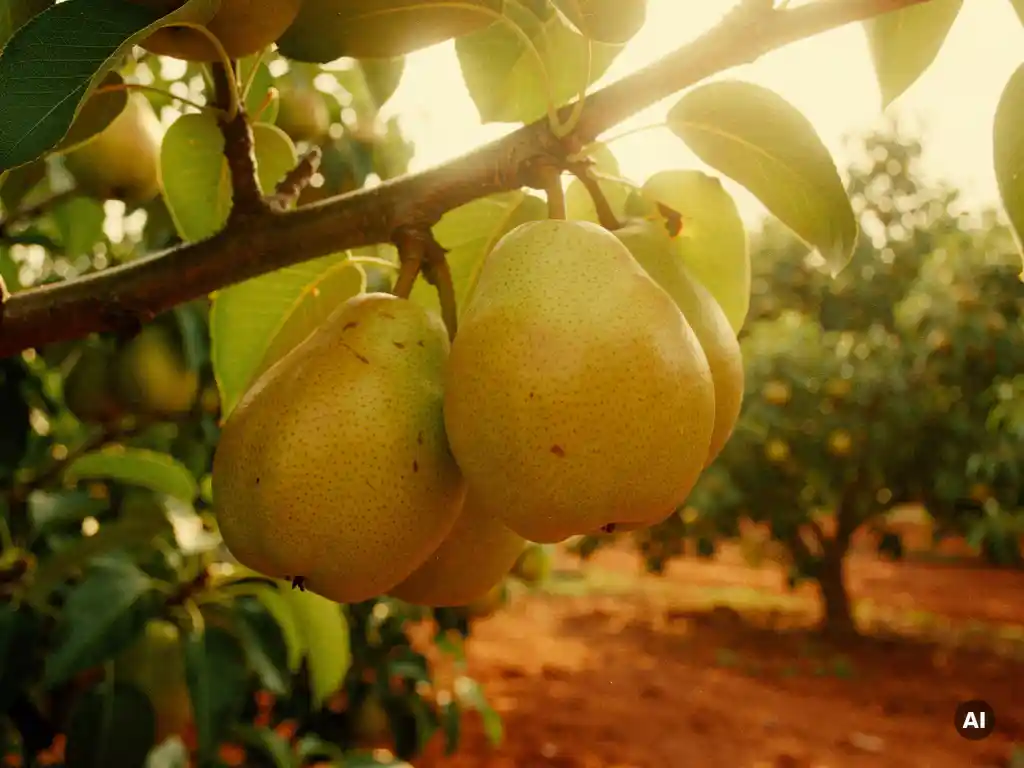
For a subtropical climate, the best pear varieties are low-chill cultivars that require fewer than 400 hours of temperatures below 7°C (45°F) to break dormancy and produce fruit reliably. Varieties such as ‘Flordahome’, ‘Hood’, and Asian pear types tend to perform well in warm regions, though the ideal choice depends on your specific location, soil, and market goals. If you want tailored advice for your situation, feel free to get in touch with us directly. The sections below walk through the key questions growers ask when selecting a pear variety for subtropical conditions.
What climate conditions do pear trees actually need to thrive?
Pear trees need a defined period of winter cold, known as chilling hours, to complete dormancy and flower properly in spring. Standard European pear varieties typically require between 600 and 1,500 chilling hours per year. In subtropical regions, where winters are mild and chilling hours are limited, most conventional varieties fail to break dormancy evenly, resulting in poor flowering, irregular fruit set, and low yields.
Beyond chilling requirements, pear trees also need well-drained soil, adequate moisture during fruit development, and protection from extreme heat during bloom. In subtropical climates, the challenge is not warmth itself but the absence of sufficient cold. Growers in these regions need to work with varieties specifically bred or selected to perform under low-chill conditions, rather than trying to force standard varieties into an unsuitable environment.
What are low-chill pear varieties, and how do they differ from standard ones?
Low-chill pear varieties are cultivars bred or selected to complete dormancy with fewer than 400 chilling hours, making them suited to subtropical and warm-temperate growing regions. Unlike standard varieties that need prolonged cold to flower uniformly, low-chill types break dormancy reliably even after mild winters, producing consistent crops in climates where conventional pears would struggle.
The difference goes beyond just chilling requirements. Low-chill varieties often have different fruit characteristics, ripening windows, and disease tolerance profiles compared to their temperate counterparts. Some sacrifice storage life or texture in exchange for heat tolerance, while others have been specifically developed to maintain eating quality in warmer conditions. When evaluating pear varieties for a subtropical setting, chilling requirement is the first filter, but it should never be the only one.
Which pear traits matter most in a subtropical growing environment?
In a subtropical growing environment, the most important pear traits are low chilling requirement, heat tolerance during bloom and fruit development, disease resistance, and fruit quality under warm conditions. Growers should prioritize varieties that combine these traits rather than optimizing for just one.
Here is a practical breakdown of the traits to evaluate:
- Chilling requirement: The single most critical factor. Varieties needing fewer than 400 hours are most reliable in subtropical zones.
- Disease resistance: Warm, humid climates favor diseases such as fire blight and scab. Varieties with built-in resistance reduce chemical input and crop losses.
- Heat tolerance at bloom: High temperatures during flowering reduce pollination success. Varieties with a wider bloom window or heat-stable pollen perform more consistently.
- Fruit texture and flavor under heat: Some varieties develop poor texture or lose sweetness when ripening in high temperatures. Field trials in your specific region are the most reliable guide.
- Post-harvest performance: In warmer climates, fruit shelf life can be shorter. Varieties with firmer flesh or better storage potential help manage supply chains more effectively.
How does plant breeding improve pear performance in warm climates?
Plant breeding improves pear performance in warm climates by combining low chilling requirements with superior fruit quality, disease resistance, and climate resilience in a single variety. Traditional selection relied on chance and observation, but modern breeding programs use tools such as molecular markers to identify and stack desirable traits far more efficiently, shortening the time it takes to bring a well-adapted variety to market.
At Better3Fruit, we run one of the largest apple and pear breeding programs in the world, evaluating more than 30,000 new varieties at any given time. Our approach targets disease and pest tolerance alongside taste, texture, and grower yield, with climate resilience as a primary long-term goal. This means new varieties entering the pipeline today are being designed with the realities of warming and variable climates firmly in mind, not as an afterthought.
For subtropical pear cultivation specifically, breeding progress means growers no longer need to settle for varieties with acceptable chilling tolerance but poor eating quality. The goal is to develop cultivars that genuinely compete on flavor and marketability while thriving in conditions that would have ruled out pear growing entirely a generation ago.
Should I choose a European or Asian pear variety for subtropical conditions?
For most subtropical conditions, Asian pear varieties tend to be better adapted than European ones. Asian pears generally have lower chilling requirements, greater tolerance for warm and humid conditions, and a naturally crisp texture that holds up better in heat. European pears typically need more cold to perform well and are more susceptible to fire blight, which is a serious concern in warm, wet climates.
That said, the choice is not always straightforward. Some European varieties have been selected or bred specifically for lower chilling requirements and can produce good results in warmer regions, particularly at higher subtropical elevations where nights are cooler. Market preference also plays a role. In many subtropical markets, consumer familiarity with European-style pears may justify the additional management effort required to grow them successfully.
The most practical approach is to trial both types in your specific location before committing to large-scale planting. Microclimates, soil type, and local disease pressure all influence which type will perform best on your farm.
When should I consult a breeding program or licensing partner for variety selection?
You should consult a breeding program or licensing partner when you are planning commercial-scale production, evaluating new or protected varieties, or struggling to find cultivars that perform reliably in your subtropical conditions. For hobbyist or small-scale growers, local nursery advice and publicly available trial data may be sufficient. But for serious commercial operations, direct access to a breeding program adds significant value.
A breeding program or variety licensor can provide access to newer cultivars that have not yet reached general nursery catalogues, including varieties specifically developed for warm-climate performance. They can also offer guidance on which varieties are being trialled in climates similar to yours, what intellectual property arrangements apply, and how to structure a planting program that aligns with market demand.
At Better3Fruit, we work with growers and partners worldwide, and our licensing model is open to anyone. There are no preferred partners and no prior rights on our varieties, which means growers in subtropical regions have the same access to our portfolio as anyone else. If you are ready to explore what modern pear breeding can offer your operation, contact us to start the conversation.
This content was generated with the help of AI and it may contain mistakes