
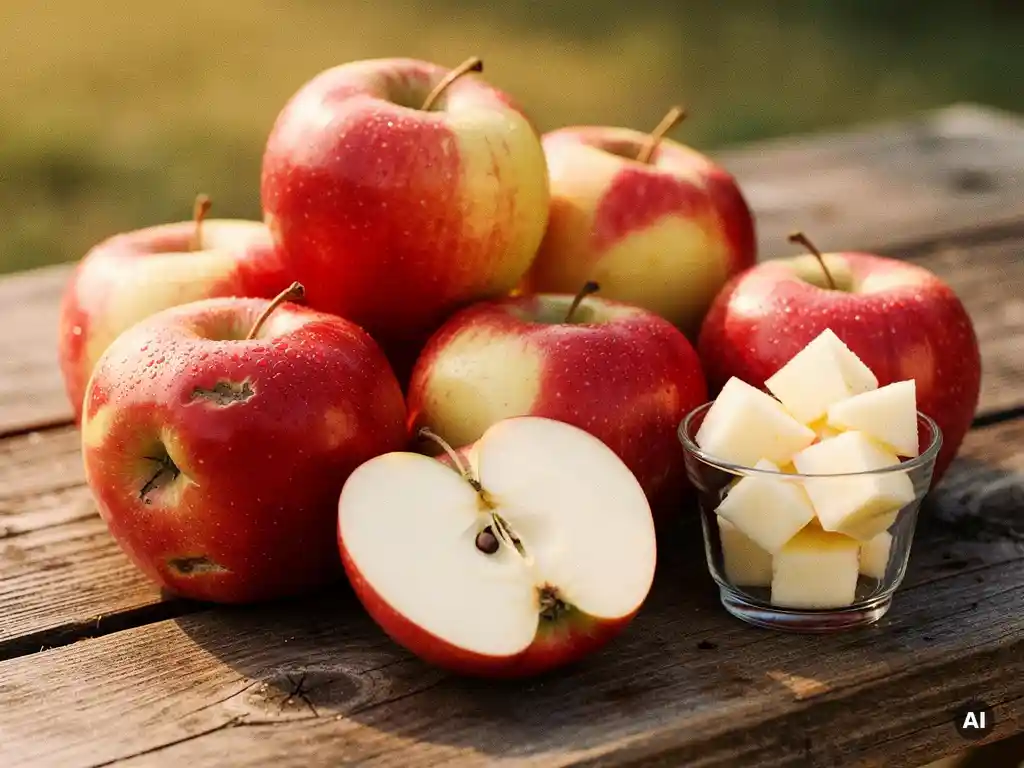
The best apple varieties for fruit snacks and cups combine slow browning, firm texture, and a balanced sweet-tart flavour that holds up well after cutting and packaging. Varieties such as Kanzi®, Gala, Fuji, and Honeycrisp are widely used in the snack industry, though newer club cultivars are increasingly outperforming them on key processing criteria. Below, we unpack exactly what makes an apple variety snack-ready, from browning resistance to breeding innovations, and if you have specific sourcing or licensing questions, feel free to get in touch with us directly.
What makes an apple variety suitable for fruit snacks and cups?
An apple variety is suitable for fruit snacks and cups when it delivers a combination of slow enzymatic browning, firm flesh that withstands cutting and packaging, a flavour profile that appeals to a broad consumer base, and consistent size and shape for efficient processing. No single trait is enough on its own: snack producers need all of these qualities working together.
From a commercial standpoint, yield consistency and storability also matter enormously. A variety that browns within minutes of being sliced creates significant waste and reduces shelf life, making it commercially unviable regardless of how good it tastes. Similarly, a variety with excellent flavour but soft flesh will bruise during mechanical processing and arrive at the consumer looking unappealing. The best apple varieties for fruit cups strike a careful balance across all of these dimensions, which is precisely why apple breeders are investing so heavily in developing cultivars optimised for fresh-cut applications.
Which apple traits prevent browning in cut fruit products?
Browning in cut apples is caused by enzymatic oxidation: when the flesh is exposed to air, polyphenol oxidase enzymes react with naturally occurring phenolic compounds to produce brown pigments. Apple varieties that are naturally slower to brown tend to have lower levels of these reactive phenolic compounds or reduced enzyme activity, making them far better suited to fresh-cut snack and cup applications.
Breeders and producers look for several specific traits when evaluating browning resistance:
- Low polyphenol oxidase activity: Varieties with naturally lower enzyme activity brown more slowly without any chemical treatment.
- Reduced reactive phenolic content: Some cultivars simply contain fewer of the substrate compounds that drive oxidation.
- Dense, firm cell structure: Firmer flesh releases less juice when cut, which slows the oxidation process at the cut surface.
- Higher natural acidity: A lower pH environment inhibits enzymatic activity, so more acidic varieties tend to brown more slowly.
It is worth noting that even the most browning-resistant varieties are typically treated with mild antioxidant solutions (such as ascorbic acid or calcium chloride dips) in commercial fresh-cut operations. However, starting with a variety that is naturally slow to brown reduces the concentration of treatment needed and extends shelf life significantly.
What’s the difference between club varieties and open varieties for snack producers?
Club varieties are apple cultivars managed under exclusive licensing agreements, meaning only approved growers within a specific network can produce and sell them. Open varieties, by contrast, are available to any grower without restriction. For snack producers, the distinction affects supply security, consistency, pricing, and the ability to differentiate a product on the shelf.
Club varieties: controlled quality, limited access
Club varieties offer snack producers a more consistent product because grower networks are carefully managed for quality, size, and harvest timing. The trade-off is that supply is controlled and prices tend to be higher. For premium fresh-cut snack lines where brand differentiation matters, a recognisable club variety name can add genuine marketing value: consumers who already trust a variety by name are more likely to reach for a snack product carrying that name.
Open varieties: flexibility and volume
Open varieties give snack producers maximum sourcing flexibility. They can work with multiple growers across different regions, reduce supply risk, and often negotiate more competitive pricing at volume. The downside is that quality and consistency can vary more significantly between growers and seasons, which can create challenges for fresh-cut operations that require tight specifications. For high-volume commodity snack products, open varieties are often the practical choice.
We at Better3Fruit develop both club and open varieties, and we encourage snack producers to consider which model best fits their supply chain structure and product positioning. You can explore our current apple and pear variety portfolio to see what is available for licensing.
Which apple varieties are commonly used in the fruit snack industry?
The most commonly used apple varieties in the fruit snack and cup industry include Gala, Fuji, Granny Smith, Honeycrisp, and Kanzi®. Each brings a different combination of flavour, texture, and processing characteristics that suits different snack formats and consumer preferences.
- Gala: Widely used due to its mild sweetness, consistent sizing, and reasonable storability. Its relatively soft flesh can be a limitation in fresh-cut applications where shelf life is critical.
- Fuji: Valued for its high sugar content and firm, dense flesh. Fuji holds up well after cutting and has a long storage season, making it a reliable choice for year-round snack production.
- Granny Smith: The go-to choice when tartness is desired. Its firm flesh and higher acidity make it naturally slower to brown, and it contrasts well with sweeter varieties in mixed snack packs.
- Honeycrisp: Extremely popular with consumers for its explosive crunch and balanced sweetness. Its main limitation for snack producers is its higher cost and more demanding growing requirements.
- Kanzi®: A Better3Fruit variety that has become one of the most successful club cultivars globally. Its firm texture, intense sweet-tart flavour, and strong brand recognition make it a compelling choice for premium fresh-cut snack lines.
Newer cultivars such as Morgana® and Giga® are also gaining attention in processing contexts, with traits specifically developed to meet the demands of modern food production and extended shelf life requirements.
How does apple breeding produce varieties better suited to snack applications?
Apple breeding produces snack-optimised varieties by deliberately selecting parent plants that carry the most commercially valuable traits, including slow browning, firm flesh, high yield, and disease resistance, and crossing them to combine those traits in a single cultivar. Modern breeding programmes use molecular markers to identify desirable genetic characteristics early, dramatically accelerating the development timeline.
At Better3Fruit, we introduce around 10,000 new seedlings of each crop into field trials every year, with more than 30,000 new varieties under evaluation at any given time. This scale allows us to screen for very specific combinations of traits that matter to snack producers: flesh firmness after storage, browning rate after cutting, sugar-acid balance, and resistance to the diseases that affect post-harvest quality. Traditional breeding programmes relied entirely on growing a seedling to maturity before evaluating it, a process that could take a decade or more. Molecular marker technology allows us to screen for target traits at the seedling stage, which means only the most promising candidates make it to full field evaluation.
Climate resilience is also becoming an increasingly important breeding target. As growing seasons shift, snack producers need varieties that can maintain consistent quality across a wider range of conditions, and breeding programmes are now building that resilience directly into new cultivars from the outset.
Should snack producers prioritise flavour or texture when selecting an apple variety?
For most fresh-cut snack and cup applications, texture should be the primary selection criterion, with flavour as a close second. Texture directly determines shelf life, visual appeal after cutting, and performance through mechanical processing, all of which affect whether a product reaches the consumer in acceptable condition. Flavour matters enormously for repeat purchase, but it cannot compensate for a product that browns quickly or breaks down in the pack.
That said, the two traits are not entirely separable. A variety with outstanding texture but a bland or unpleasant flavour will struggle to build consumer loyalty, no matter how well it performs operationally. The most successful apple varieties in the snack industry, including Kanzi® and Honeycrisp, succeed precisely because they deliver on both dimensions simultaneously: a satisfying crunch that holds up after cutting, combined with a flavour profile that consumers actively seek out.
The practical advice for snack producers is to set a minimum threshold for texture (flesh firmness, browning rate, and shelf life performance) and then select the variety with the best flavour profile that clears that threshold. This approach avoids the trap of choosing a delicious variety that cannot survive the supply chain, while still ensuring the end product is something consumers want to eat again. If you would like guidance on which varieties best match your specific snack application, contact us and we will be happy to help you find the right fit.
This content was generated with the help of AI and it may contain mistakes