
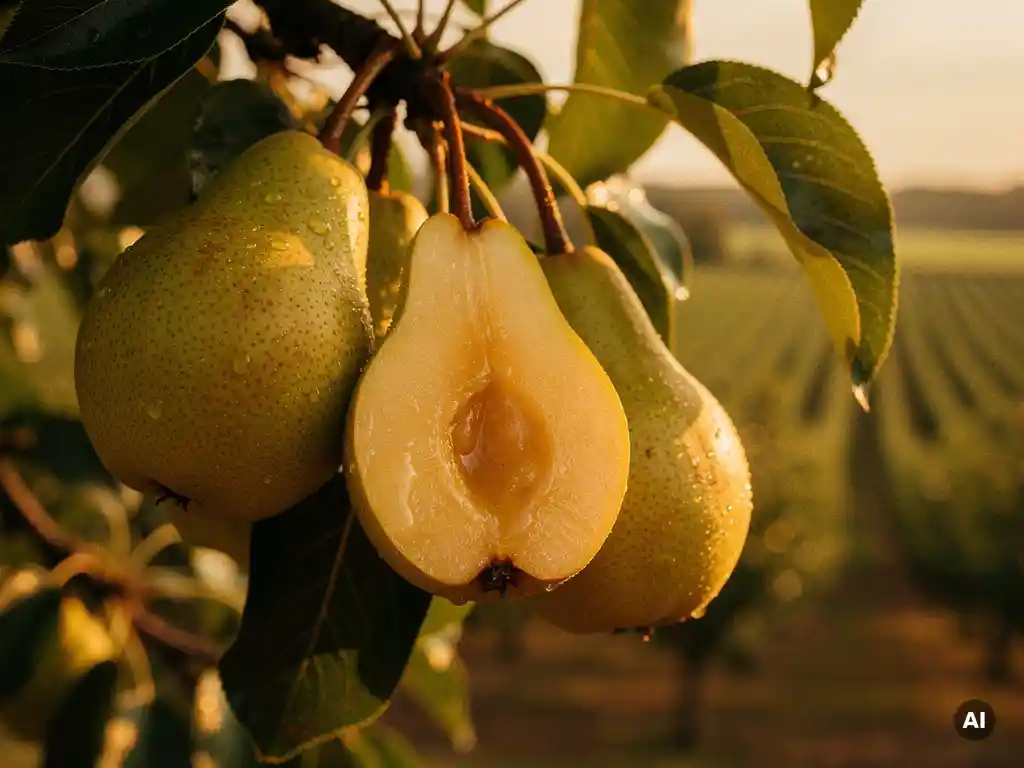
Climate-adaptive pear varieties are cultivars specifically bred to perform well under shifting and increasingly unpredictable weather conditions, including warmer winters, irregular rainfall, late frosts, and prolonged heat stress. Unlike standard commercial varieties, they are developed with traits that allow the tree and fruit to remain productive even when the climate no longer behaves as it once did. Below, we unpack the key questions growers, breeders, and industry partners are asking about this emerging area of pear breeding. If you’d like to speak with us directly about our work in this space, feel free to get in touch.
How do pear varieties adapt to changing climate conditions?
Pear varieties adapt to changing climate conditions through a combination of genetic traits that regulate how the tree responds to temperature, water availability, and seasonal cues. Climate-adaptive pear varieties are selected and bred to tolerate a broader range of conditions, from mild winters with insufficient chilling hours to summer heat events that stress fruit development and reduce quality.
Adaptation works at several levels. At the physiological level, some varieties have a lower chilling requirement, meaning they can break dormancy and flower reliably even after a warm winter. Others show greater stomatal regulation, allowing them to manage water loss more efficiently during dry spells. At the fruit level, climate resilience can mean maintaining sugar content, texture, and skin integrity even when temperatures fluctuate during the growing season. Breeding programs identify and stack these traits to create varieties that remain commercially viable across a wider range of growing environments.
What traits make a pear variety climate-resilient?
A climate-resilient pear variety typically combines a reduced chilling requirement, tolerance to heat stress during fruit development, resistance to drought conditions, and robust disease resistance, since many fungal and bacterial diseases thrive under the wetter, warmer conditions that climate change brings. No single trait defines climate resilience; it is the combination that matters.
The most commercially relevant traits include:
- Low chilling requirement: Enables reliable flowering after warm winters, which are becoming more common across traditional pear-growing regions.
- Late or frost-tolerant flowering: Reduces the risk of crop loss from late spring frosts, which remain a serious threat even as average temperatures rise.
- Heat tolerance during fruit fill: Prevents sunburn, russeting, and premature ripening that degrade fruit quality in hot summers.
- Water use efficiency: Allows the tree to maintain productivity under reduced irrigation or irregular rainfall patterns.
- Disease tolerance: Reduces dependence on chemical inputs at a time when pesticide regulations are tightening and disease pressure is shifting geographically.
Growers and breeders increasingly look for varieties that score well across all of these dimensions, rather than excelling in only one area while remaining vulnerable in others.
How are climate-adaptive pear varieties bred?
Climate-adaptive pear varieties are bred by combining traditional cross-breeding with modern molecular tools such as marker-assisted selection. This allows breeders to identify and select climate-relevant traits much earlier in the plant’s development, dramatically accelerating the breeding cycle and improving the precision with which target traits are combined.
At Better3Fruit, we use molecular markers to screen thousands of seedlings for specific genetic characteristics without waiting years for the plant to mature and express those traits visibly. With over 10,000 new pear varieties entering our evaluation fields every year, and more than 30,000 under assessment at any one time, this scale gives us the statistical power to identify genuinely exceptional candidates. Crossing parents that carry complementary climate-relevant traits, such as one parent with strong heat tolerance and another with low chilling requirements, allows us to develop offspring that combine both. The most promising selections then move through multi-year field trials across different growing environments to confirm their real-world performance before any commercial release is considered.
Why are traditional pear varieties struggling with modern climates?
Traditional pear varieties were selected and optimized for the climate conditions that existed during the 20th century. As those conditions shift, many established varieties face a growing mismatch between what they need to perform well and what the climate now provides, particularly around winter chilling hours, frost timing, and summer heat intensity.
Most classic European pear varieties, for example, require a defined period of winter cold to break dormancy correctly. When winters are too mild, these varieties may flower erratically, produce poorly, or fail to set fruit at all. At the other end of the season, hotter and longer summers can cause premature ripening, sunburn damage, and reduced shelf life, all of which hurt commercial value. Traditional varieties were also bred at a time when chemical crop protection was widely available and relatively unrestricted. As regulations tighten and disease patterns shift with the climate, varieties that lack inherent disease tolerance become increasingly difficult and expensive to manage. The result is that growers face higher input costs, greater yield unpredictability, and more risk, all with varieties that were never designed for the conditions they now face.
What’s the difference between disease-tolerant and climate-adaptive pear varieties?
Disease-tolerant pear varieties are bred to resist or limit the impact of specific pathogens, such as fire blight, scab, or canker, while climate-adaptive pear varieties are bred to remain productive under a broader range of environmental stresses, including heat, drought, and irregular chilling. The two categories overlap significantly, but they are not the same thing.
Disease tolerance is, however, an important component of climate adaptability. As temperatures and humidity patterns shift, disease pressure changes too, pathogens spread into new regions, and the windows of infection risk lengthen. A variety that cannot tolerate disease in a warming climate will require more chemical intervention, which conflicts with the sustainability goals that regulators and retailers are increasingly demanding. The most forward-looking breeding programs, including ours, treat disease tolerance not as a standalone objective but as one layer within a broader climate resilience strategy. You can explore our current pear variety portfolio to see how these traits are represented across our commercial releases.
When will climate-adaptive pear varieties be commercially available?
Some climate-adaptive pear varieties are already entering commercial availability, though the pipeline is still developing. Pear breeding cycles are long, it typically takes 15 to 20 years from an initial cross to a fully commercialized variety, which means that varieties entering the market now reflect breeding decisions made one to two decades ago, before climate resilience was as central a priority as it is today.
The good news is that breeding programs that pivoted toward climate resilience earlier are now reaching the point where promising selections are completing field trials and moving toward commercial release. As the industry matures in its understanding of which traits matter most, the pace of relevant variety development is accelerating. Molecular tools are shortening evaluation timelines, and the growing commercial pressure from growers who need more adaptable varieties is driving investment in this direction. For growers and supply chain partners planning ahead, the next five to ten years will likely see a meaningful expansion in the range of commercially available climate-resilient pear varieties. If you’d like to discuss licensing opportunities or learn more about what we have in development, contact us and we’ll be happy to talk through the options with you.
This content was generated with the help of AI and it may contain mistakes