
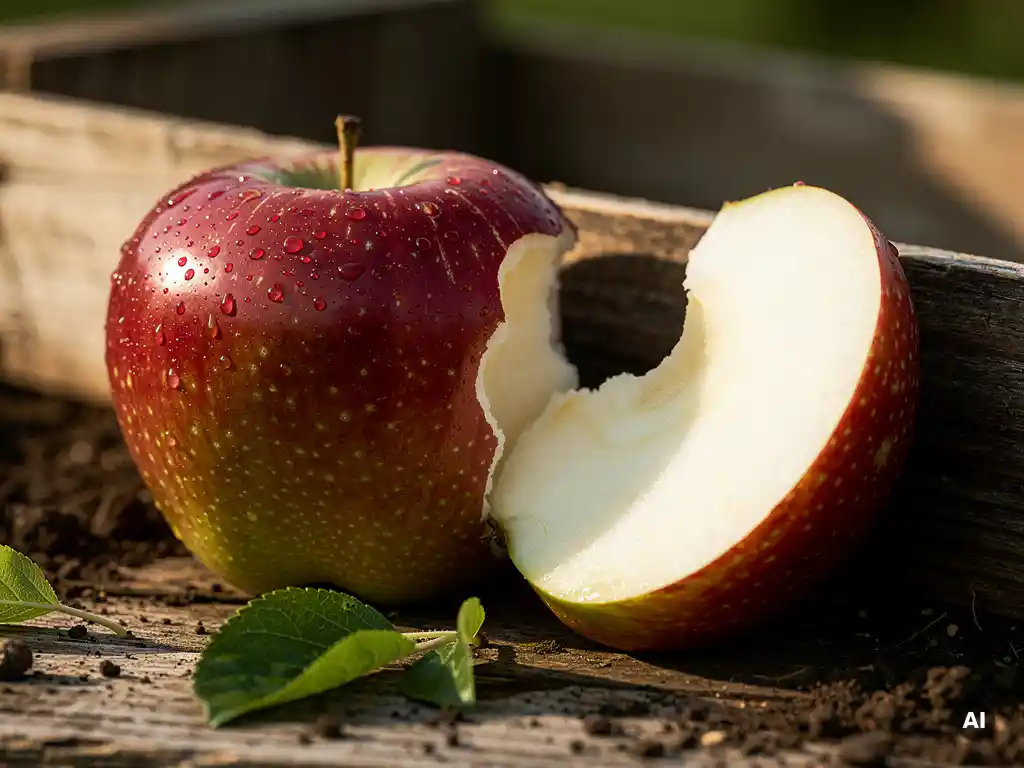
The crunchiness of fruit is determined primarily by cell structure, water content, and the strength of the bonds between individual cells. When you bite into a piece of fruit, the resistance you feel comes from pressurised cells pushing back against your teeth, and how well those cells hold together under pressure. Factors like variety genetics, ripeness stage, and growing conditions all shape this experience. Below, we explore each of those factors in detail, from the biology of fruit texture to how crunchiness is actively selected in apple breeding programmes like ours. If you have questions or want to learn more about what drives our variety development, feel free to get in touch with us.
What makes some fruit varieties crunchier than others?
Fruit crunchiness varies between varieties primarily because of genetics. A variety’s DNA determines cell size, cell wall thickness, the amount of turgor pressure cells can maintain, and how strongly cells bond to one another. These inherited traits mean that two apples grown in identical conditions can feel completely different in the mouth, one dense and snappy, another soft and yielding.
This is why apple breeding programmes invest so much effort in selecting for texture. Crunchiness is not a single trait but a combination of structural properties that must be balanced alongside taste, colour, disease resistance, and storage behaviour. Some varieties are naturally predisposed to produce thick-walled, tightly packed cells that deliver a satisfying snap, while others have looser, thinner-walled cells that break down more easily under pressure. Variety genetics set the ceiling for how crunchy a fruit can ever be; growing conditions and handling determine whether that potential is actually reached.
How does cell structure affect fruit crunchiness?
Cell structure is the single most important biological factor in fruit crunchiness. Fruit flesh is made up of parenchyma cells filled with water and held together by a middle lamella, a layer of pectin-rich material that acts like a biological glue. When you bite into fruit, the crunch you hear and feel is the result of cells rupturing and separating. Varieties with larger, more turgid cells and stronger cell walls produce a more pronounced crunch.
Two structural properties matter most here. First, cell turgor: cells that are under higher internal water pressure push back more firmly against your teeth, creating resistance before they break. Second, cell wall integrity: thicker, more rigid cell walls require more force to rupture, which amplifies the sensation of crunchiness. When the middle lamella is strong, cells tend to break individually rather than slide apart, producing that clean, crisp snap associated with the best crunchy apples. When the lamella weakens, as it does during ripening or storage, cells separate rather than burst, and the fruit feels mealy or soft instead.
Does water content influence how crunchy a fruit feels?
Yes, water content has a direct influence on fruit crunchiness. The turgor pressure inside fruit cells depends on how well hydrated those cells are. When cells are full of water, they are firm and resist deformation, contributing to the crisp, snappy texture we associate with fresh fruit. When water content drops, cells lose turgor, the flesh becomes less rigid, and the fruit feels limp or soft rather than crunchy.
This is why freshly harvested fruit almost always feels crunchier than fruit that has been stored for a long time without controlled conditions. Post-harvest water loss is one of the main reasons fruit texture degrades. Modern cold storage and controlled atmosphere storage slow this process significantly, helping crunchy apple varieties maintain their firmness and juiciness for months after harvest. Varieties that are naturally better at retaining moisture within their cells tend to hold their texture longer in the supply chain.
How does ripeness change the texture of fruit?
Ripeness is one of the most significant drivers of texture change in fruit. As fruit ripens, enzymes break down pectin in the cell walls and middle lamella, weakening the bonds that hold cells together. The result is a progressive softening: a fruit that starts out firm and crunchy becomes increasingly tender, and eventually mealy or mushy if left too long.
The speed of this process varies widely between varieties. Some apple varieties maintain their firmness and crunchiness well into advanced ripeness, while others soften rapidly once they pass their peak. Ethylene, the natural ripening hormone produced by fruit, accelerates cell wall breakdown, which is why storing apples near other ethylene-producing fruit causes them to soften faster. For growers and retailers, understanding a variety’s ripening curve is essential for harvesting at the right moment and delivering fruit at its crunchiest to the consumer.
Can growing conditions affect fruit crunchiness?
Growing conditions can significantly influence fruit crunchiness, even within the same variety. While genetics set the baseline potential for texture, environmental factors determine how fully that potential is expressed. Temperature, sunlight, water availability, and soil nutrition all play a role in shaping the cell structure and water content of developing fruit.
Temperature and sunlight
Cooler growing temperatures and high light exposure during the growing season tend to produce firmer, denser fruit with better texture. Regions with warm days and cool nights are particularly well suited to growing crunchy apples because the temperature differential slows respiration and helps fruit build up sugars and firm cell walls. Excessive heat during fruit development can accelerate ripening and lead to softer texture at harvest.
Water and nutrition management
Consistent water supply during fruit development supports cell expansion and turgor. Irregular irrigation, particularly water stress followed by heavy watering, can cause uneven cell development and compromise texture. Calcium nutrition is especially important for fruit firmness: calcium strengthens cell walls and the middle lamella, helping cells hold together under pressure. Growers in high-quality apple production regions often apply calcium to the orchard specifically to support fruit firmness.
How is crunchiness measured and selected in apple breeding?
In apple breeding, crunchiness is assessed through a combination of instrumental measurement and sensory evaluation. The most common tool is a penetrometer, which measures the force required to push a probe into the fruit flesh, giving a numerical firmness value. More advanced texture analysis equipment can measure multiple aspects of fruit texture simultaneously, including crunchiness, juiciness, and the way cells fracture under load.
At Better3Fruit, texture is one of the core traits we evaluate across our breeding programme. With over 30,000 new varieties under evaluation at any given time, we use these measurements systematically to identify seedlings that combine outstanding crunchiness with the other traits that matter to growers, packers, and consumers, including taste, colour, disease resistance, and storage performance. Sensory panels complement the instrumental data, ensuring that what the numbers capture actually translates into a satisfying eating experience.
Selecting for crunchiness in breeding is not straightforward because the trait is influenced by multiple genes and interacts with other quality characteristics. A variety that is extremely firm at harvest may become crunchy and enjoyable after a period of cold storage, while another may peak at harvest but soften quickly. Understanding these dynamics allows us to develop varieties that deliver consistent texture across the full supply chain, from orchard to consumer. You can explore our current apple and pear varieties to see how texture and quality come together in our commercial releases. If you are interested in licensing opportunities or want to discuss what our breeding programme can offer, get in touch with us and we will be happy to help.
This content was generated with the help of AI and it may contain mistakes