
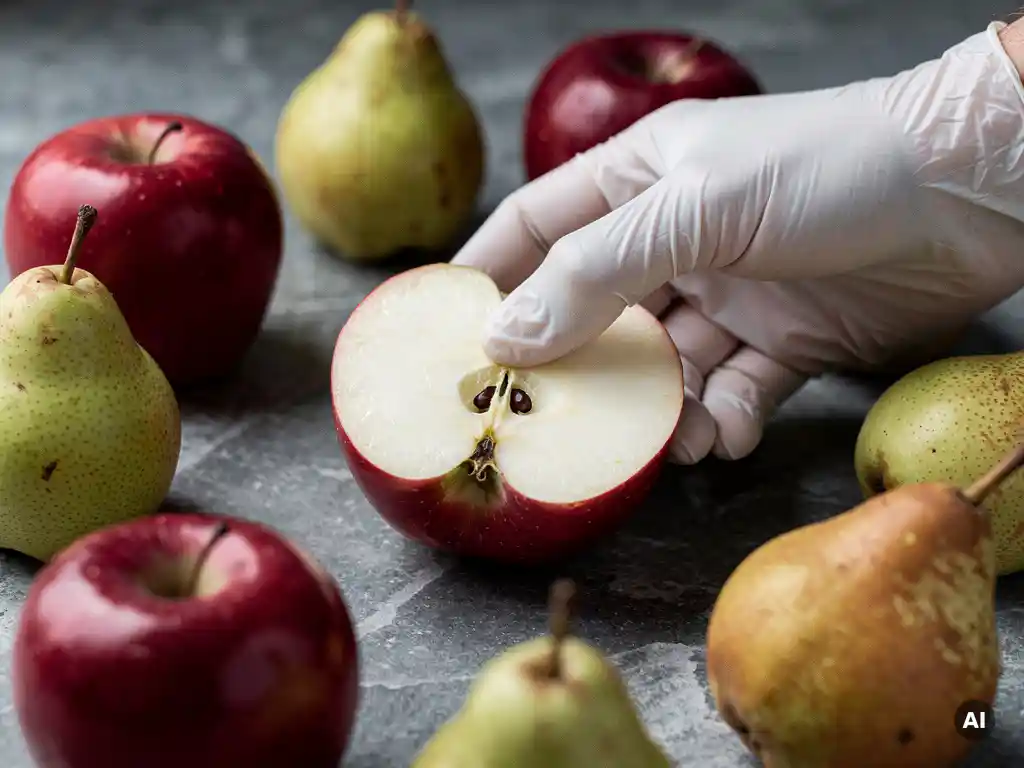
Texture is one of the most important quality traits in fruit breeding because it directly shapes how consumers experience eating an apple or pear. A fruit can look perfect and taste sweet, but if the mouthfeel is mealy, soft, or gritty, most people will not buy it again. At Better3Fruit, we place texture at the heart of our breeding strategy alongside taste, disease resistance, and long-term storability; feel free to get in touch with us if you want to learn more about how we approach variety development.
How does texture affect consumer preference for apples and pears?
Texture has a decisive influence on consumer preference for apples and pears because it is one of the first sensory signals people register when biting into a fruit. Crispness, juiciness, and firmness all create an immediate impression that shapes whether a consumer considers the fruit enjoyable or disappointing, often overriding even flavour in repeat purchase decisions.
Research in consumer behaviour consistently shows that mouthfeel is a key driver of satisfaction in fresh produce. A crisp, juicy apple signals freshness and ripeness to the brain, while a soft or floury texture signals age or poor quality, regardless of sugar content. For pears, the expectation is slightly different: consumers often accept a buttery, melting texture in varieties like Conference, but still expect a certain degree of juiciness and the absence of gritty stone cells.
From a commercial perspective, texture also affects shelf appeal. Retailers and buyers along the supply chain use firmness as a proxy for quality and longevity. A variety that arrives at the supermarket with outstanding firmness has a competitive advantage because it maintains its eating quality for longer in the consumer’s fruit bowl.
What are the main texture traits breeders select for?
The main texture traits breeders select for in apples and pears include crispness, firmness, juiciness, cell structure density, and the presence or absence of grittiness. Each of these traits contributes to the overall mouthfeel and eating experience, and breeders must balance them against each other and against other quality goals like flavour and appearance.
- Crispness: The snap and resistance a fruit gives when bitten. Highly valued in modern apple varieties and closely linked to cell turgor and cell wall integrity.
- Firmness: A measure of how hard the flesh is, often assessed in kilograms of force. Firmness is strongly correlated with storability and shelf life.
- Juiciness: The amount of juice released during chewing. Juicy varieties are consistently preferred by consumers but can be harder to breed without sacrificing firmness.
- Cell structure and density: Fine-grained, dense cell structures tend to produce crisper, more satisfying textures. Coarse cell structures can lead to a mealy or floury mouthfeel.
- Stone cells in pears: Gritty stone cells are a natural feature of pear flesh, but excessive grittiness is a major negative trait. Reducing stone cell content without losing other desirable traits is a key pear breeding challenge.
At Better3Fruit, we evaluate these traits across thousands of seedlings each year, looking for the rare combinations where crispness and juiciness coexist with strong storability, the kind of balance that makes a variety commercially viable across international markets.
How is texture measured in fruit breeding programs?
Texture in fruit breeding programs is measured using a combination of instrumental testing and sensory evaluation. The most common instrument is the penetrometer, which measures the force required to push a probe into the fruit flesh, giving a firmness value in kilograms or Newtons. More advanced methods use texture analysers to capture a fuller picture of how the flesh behaves under pressure.
Penetrometer readings are fast, repeatable, and widely used throughout the industry, making them a practical tool for screening large populations of seedlings. However, they capture only one dimension of texture. A high firmness reading does not automatically mean a crisp, pleasant mouthfeel: it could equally indicate a tough or rubbery flesh that consumers find unappealing.
To address this, breeding programs combine instrumental data with trained sensory panels. Panellists evaluate crispness, juiciness, graininess, and mealiness through structured tasting sessions, providing qualitative data that instruments cannot replicate. Consumer panels add a further layer, capturing real-world preference rather than trained perception.
Molecular tools are increasingly used alongside physical measurements. Molecular markers linked to texture-related genes allow breeders to screen seedlings at an early stage, before the trees even bear fruit. This dramatically accelerates the selection process and reduces the cost of evaluating tens of thousands of candidates each season.
Why is texture so difficult to breed for?
Texture is difficult to breed for because it is a complex, polygenic trait, meaning it is controlled by many genes working together rather than a single gene with a clear on/off effect. This genetic complexity means that the inheritance of texture is unpredictable, and even crossing two crisp, firm parents does not guarantee crisp, firm offspring.
The challenge is compounded by the fact that texture traits interact with each other in ways that are hard to control. Breeding for extreme juiciness, for example, can inadvertently reduce firmness. Selecting for very dense, fine-grained cell structure may improve crispness but reduce the buttery quality that pear consumers expect in certain market segments.
Environmental factors add another layer of difficulty. The same variety can express very different textures depending on growing region, climate conditions during the season, soil type, and orchard management practices. A seedling that shows excellent crispness in Belgium may perform quite differently when grown in warmer, drier conditions in Southern Europe or South Africa.
Finally, texture must be evaluated at the right stage of maturity, and maturity itself varies between seedlings. Comparing texture measurements across a diverse population of seedlings at the same calendar date is not always a fair comparison because some individuals are at peak ripeness while others are still developing. Controlling for this variability requires careful trial design and large sample sizes.
How does texture hold up after harvest and during storage?
Texture changes significantly after harvest and during storage, and how well a variety retains its firmness and crispness over time is one of the most commercially important texture-related traits in apple and pear breeding. A variety that is outstanding at harvest but turns soft within weeks has limited value for international supply chains that depend on months of controlled atmosphere storage.
During storage, cell walls break down as the fruit continues to ripen. Enzymes degrade the pectin that holds cell walls together, leading to softening and, in extreme cases, mealiness. Controlled atmosphere storage, which reduces oxygen and increases carbon dioxide levels, slows this process considerably, but the genetic predisposition of the variety still determines how much softening occurs over time.
Some varieties are naturally better suited to long storage. Their cell walls degrade more slowly, their flesh remains dense and crisp for longer, and they maintain juiciness without becoming watery. These traits are highly heritable and therefore meaningful targets for selection in a breeding program. When we evaluate new seedlings at Better3Fruit, post-harvest texture performance is assessed alongside harvest-time measurements because a variety that cannot hold its quality through the supply chain will not succeed commercially regardless of how good it tastes off the tree.
Pears present a particular challenge here. Unlike apples, most pear varieties need to undergo a ripening period after harvest before they reach optimal eating quality. Managing this window, when texture transitions from firm to buttery without passing through an unpleasant grainy or mealy phase, is a key breeding and handling challenge for the pear industry.
What is the future of texture breeding in apples and pears?
The future of texture breeding in apples and pears lies in the deeper integration of genomic tools, more precise phenotyping technology, and a stronger focus on climate resilience. As breeding programs develop a better understanding of the genetic architecture behind texture traits, selection will become faster, more accurate, and less dependent on costly and time-consuming field evaluations.
Genomic selection, using genome-wide marker data to predict the performance of seedlings before they ever bear fruit, is already transforming how leading breeding programs approach complex traits like texture. As reference populations grow larger and prediction models become more refined, it will be possible to identify high-potential seedlings at the earliest stages of development, dramatically reducing the time and cost of bringing a new variety to market.
Climate resilience is becoming inseparable from texture breeding. Rising temperatures and increasingly variable growing seasons affect how texture traits express in the field. Varieties that maintain their crispness and firmness under heat stress or drought conditions will have a significant competitive advantage in the decades ahead. This is already shaping the long-term goals we set for our breeding populations at Better3Fruit.
Consumer preferences are also evolving. There is growing interest in varieties that combine the familiar crispness of modern club apples with new flavour profiles, unusual skin colours, and functional health attributes. Texture will remain central to this equation, but it will increasingly need to be delivered alongside a broader package of traits that meet the expectations of a more diverse and discerning global market. Explore our current variety portfolio to see how these principles are already shaping the apples and pears we bring to market.
If you are interested in how we approach texture and other key fruit quality traits in our breeding program, we would love to hear from you. Contact us to start a conversation about variety licensing, trial opportunities, or partnership possibilities.
This content was generated with the help of AI and it may contain mistakes