
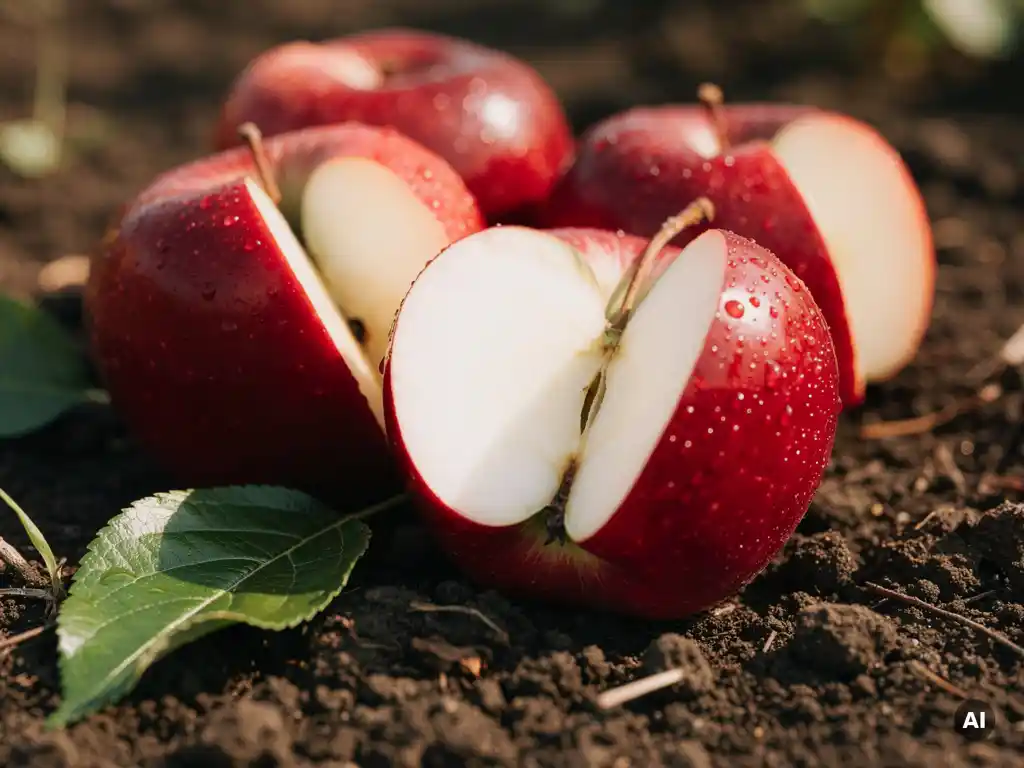
The crunchiest apple varieties include Kanzi®, Honeycrisp, Cosmic Crisp, and SweeTango, apples known for their firm, dense flesh and high cell turgor that delivers a satisfying snap with every bite. Crunchiness in apples comes down to cell structure, water content, and the specific genetics of each variety. Below, we answer the most common questions about apple texture, from what drives crunchiness to how breeding shapes it.
At Better3Fruit, we have spent over two decades developing apple varieties with outstanding eating quality, including texture. If you want to learn more about our work or explore variety licensing, feel free to get in touch with us directly.
What makes an apple crunchy?
Apple crunchiness is determined by cell turgor pressure, cell wall strength, and the density of flesh tissue. When you bite into a crunchy apple, the cells rupture cleanly and release juice, that snap and burst of flavour is the result of cells that are firm, tightly packed, and full of water. Varieties with softer or more loosely structured cells tend to feel mealy or powdery instead.
Several factors contribute to that crunch:
- Cell turgor: Cells that hold high internal water pressure resist deformation and break sharply under bite force.
- Cell wall composition: The balance of pectin, cellulose, and hemicellulose in the cell walls affects how firmly cells hold together and how cleanly they fracture.
- Flesh density: Tightly packed flesh with minimal air pockets amplifies the sensation of firmness.
- Sugar and acid balance: While not directly structural, higher acidity tends to correlate with firmer, fresher-tasting flesh that enhances the perception of crunch.
Genetics plays the defining role, some varieties are simply bred or selected to have these structural traits, while others naturally tend toward softer flesh regardless of how they are grown.
Which apple varieties are known for the crunchiest texture?
The crunchiest apple varieties include Honeycrisp, Cosmic Crisp, SweeTango, Kanzi®, and Envy. These apples consistently deliver firm, juicy flesh with a pronounced snap. What they share is dense, high-turgor cell structure combined with strong cell walls, the two key drivers of outstanding apple crunchiness.
Here is a closer look at some of the best crunchy apples available today:
- Kanzi®: Developed by us at Better3Fruit, Kanzi® offers a firm, dense bite with a sweet-sharp flavour profile. Its texture holds up exceptionally well, making it one of the most popular crispy apple varieties in Europe.
- Honeycrisp: Widely regarded as the benchmark for crunch, Honeycrisp was specifically bred for its explosive, juicy texture. Its unusually large cells rupture dramatically under pressure.
- Cosmic Crisp: A cross between Enterprise and Honeycrisp, Cosmic Crisp inherits strong crunch from its parentage and adds excellent shelf life.
- SweeTango: Another Honeycrisp descendant, SweeTango combines crunch with a lively sweet-tart flavour.
- Envy: Firm, smooth-fleshed, and slow to oxidise after cutting, Envy is a reliable choice for consistent apple texture.
You can explore our own apple and pear varieties to see how we approach texture alongside flavour and grower performance.
How does breeding produce crunchier apple varieties?
Breeders produce crunchier apple varieties by selecting parent plants with desirable cell structure traits and using molecular markers to identify offspring that carry the right genetic combinations early in the breeding process. This approach dramatically speeds up the development cycle and makes it possible to combine crunchiness with other important traits like disease resistance, flavour, and climate resilience.
Traditional apple breeding relies on crossing two parent varieties and growing thousands of seedlings to find the best combinations, a process that can take ten to twenty years from cross to commercial release. Modern programmes like ours at Better3Fruit use molecular marker technology to screen seedlings at a very early stage, identifying which plants carry the genetic signatures linked to firm flesh, high turgor, and strong cell walls before they ever produce fruit.
This means we can evaluate far more genetic combinations in far less time. With over 10,000 new seedlings of each crop entering the field every year and more than 30,000 varieties under evaluation at any time, we can apply rigorous selection pressure on texture alongside taste, yield, and sustainability traits, without sacrificing one for another.
Does apple crunchiness change after harvest?
Yes, apple crunchiness decreases after harvest as cell turgor pressure drops and cell walls begin to break down. The rate of softening depends on the variety, storage conditions, and how long the apple has been off the tree. Controlled atmosphere storage significantly slows this process and helps maintain the firm texture consumers expect.
After harvest, apples continue to respire and produce ethylene, a natural ripening gas that accelerates softening. In ambient conditions, most apples will lose noticeable crunch within a few weeks. Controlled atmosphere (CA) storage, which reduces oxygen and increases carbon dioxide levels while keeping temperatures low, can extend firmness for many months. Some varieties, such as Cosmic Crisp, are specifically noted for retaining their texture under long-term storage.
Handling also matters. Bruising damages cell structure and creates soft spots, while temperature fluctuations can accelerate moisture loss and turgor reduction. For the best eating experience, crunchy apples should be kept cool and consumed relatively soon after purchase.
What’s the difference between a crunchy and a crisp apple?
The terms crunchy and crisp are often used interchangeably, but they describe slightly different textural sensations. A crunchy apple delivers a loud, forceful snap, the result of dense flesh and high cell pressure breaking under bite force. A crisp apple refers more to a clean, fresh fracture with a light, dry break rather than a heavy, juicy burst. In practice, the best apples are both.
Think of crunchiness as the intensity of resistance and sound when you bite, and crispness as the quality of the break, how cleanly the flesh fractures without feeling tough or chewy. Honeycrisp, for example, is both extremely crunchy (loud, forceful) and crisp (clean, juicy fracture). A variety like Golden Delicious, when fresh, can feel reasonably crisp but lacks the density and turgor for real crunch.
For most consumers, the ideal apple texture combines both qualities: firm enough to resist the bite, then breaking cleanly with a burst of juice. This is precisely the eating experience that modern breeding programmes target when developing new crispy apple varieties, balancing structural firmness with a satisfying, juicy release.
If you are curious about how we develop apple varieties with outstanding texture and flavour, or if you are interested in variety licensing, contact us and we will be happy to help.
This content was generated with the help of AI and it may contain mistakes