
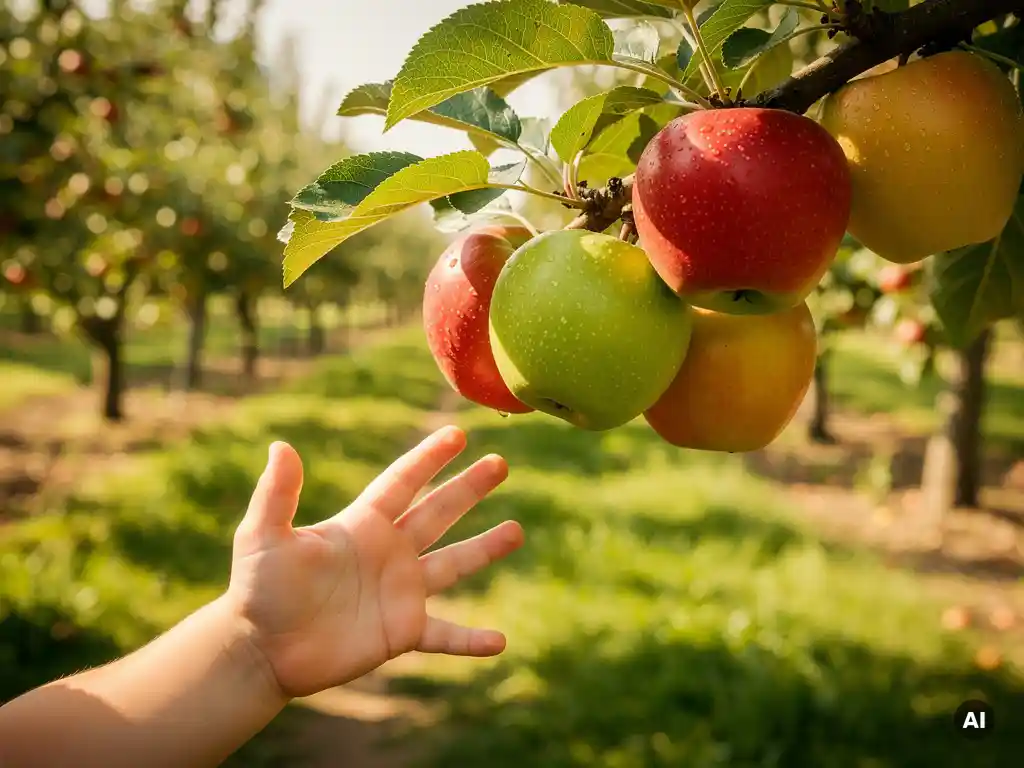
Several fruit varieties have been developed with younger consumers specifically in mind, focusing on the sweet, mild, and crunchy traits that children naturally prefer. Breeders like us at Better3Fruit actively shape apple genetics to match the taste profiles and textures that make fruit enjoyable for kids, helping families reach for an apple rather than a processed snack. If you want to learn more about what drives our variety development, feel free to get in touch with us at any time. The questions below unpack exactly how modern apple breeding serves younger consumers.
What makes a fruit variety appealing to younger consumers?
A fruit variety appeals to younger consumers when it delivers high natural sweetness, a satisfying crunch, a mild or fruity aroma, and an attractive appearance. Children are far more sensitive to bitterness than adults, so varieties with low tannin levels and a clean, sugary finish consistently outperform sharper or more complex flavour profiles in young taste panels.
Beyond flavour, texture plays a surprisingly large role. Kids often reject mealy or soft fruit on instinct, while a firm, juicy bite creates a sensory experience that keeps them coming back. Skin thickness also matters: a tough or waxy skin can put children off entirely, even when the flesh underneath is delicious. Breeders therefore look at the whole eating experience, not just sugar content in isolation.
Visual cues are equally powerful. Bright, uniform colouring, a compact size that fits small hands, and an absence of surface blemishes all increase the likelihood that a child will choose a piece of fruit over an alternative snack. In short, child-friendly fruit varieties succeed by removing every friction point between a young consumer and that first bite.
Which apple varieties are specifically bred for kids?
No apple variety carries an official “for children” label, but several modern club varieties have been developed or selected with the flavour and texture traits that resonate most strongly with younger consumers. At Better3Fruit, varieties like Morgana® and Giga® have been bred with exactly these characteristics in mind, combining high sweetness, firm flesh, and vibrant colour.
Morgana® stands out for its intensely sweet, almost candy-like flavour profile paired with a satisfying crunch, making it a natural fit for children who find traditional apple varieties too sharp or too bland. Giga® takes a different angle, offering an exceptionally large, juicy eating experience that feels generous and fun, which appeals to older kids and teenagers who want something substantial.
More broadly, the trend in modern apple breeding has shifted toward varieties with a higher Brix reading, which measures the natural sugar content in fruit. Higher Brix values consistently correlate with greater child acceptance, which is why breeders now routinely include young consumer panels in their sensory evaluation programmes alongside adult tasters.
How does apple breeding target taste preferences in children?
Apple breeding targets children’s taste preferences by selecting parent varieties that carry genetic markers for high sugar content, low acidity, and firm texture, then combining those traits across thousands of offspring to find seedlings that hit the ideal balance. Molecular marker technology allows breeders to screen for these traits early, long before a tree ever produces fruit.
At Better3Fruit, we use molecular markers as a core tool in our breeding programme. Rather than waiting years for a seedling to mature and produce fruit for tasting, we can identify which young plants carry the genetic blueprint for child-friendly eating qualities at the seedling stage. This dramatically accelerates the path from concept to commercial variety.
Sensory evaluation then refines the selection further. Candidate varieties are tested with real consumer groups, and feedback from younger tasters carries genuine weight in deciding which varieties advance. The goal is not simply a sweet apple, but one where sweetness, texture, aroma, and appearance all reinforce each other into a coherent, enjoyable experience that children will choose repeatedly.
Are sweeter apple varieties healthier for children?
Sweeter apple varieties are no less healthy for children. The natural sugars found in apples come packaged with dietary fibre, vitamins, and antioxidants that processed sweet foods do not provide. A sweeter apple variety simply makes it easier for children to enjoy fruit regularly, which is the primary health goal.
It is worth distinguishing between added sugars and naturally occurring fruit sugars. The sweetness in a high-Brix apple comes from fructose and glucose that are intrinsic to the fruit, moderated by fibre that slows absorption. This is fundamentally different from the refined sugars in confectionery or sweetened drinks. Encouraging children to reach for a naturally sweet apple rather than a processed alternative is a genuine nutritional win.
From a breeding perspective, selecting for higher natural sweetness does not require sacrificing other nutritional qualities. Breeders can simultaneously select for polyphenol content, vitamin C levels, and other beneficial compounds alongside flavour traits. The result is a variety that tastes great to a child and delivers real nutritional value, making the case for fruit as a daily habit much easier for parents and educators to make.
What role do club varieties play in reaching younger fruit consumers?
Club varieties play a central role in reaching younger consumers because they allow breeders, growers, and marketers to build a consistent brand experience around a fruit variety. Unlike open varieties available to any grower, club varieties are licensed exclusively, which means quality standards, sizing, and presentation can be tightly controlled from orchard to shelf.
This consistency matters enormously when the target consumer is a child. Young people are creatures of habit. When a child enjoys a Kanzi® or a Morgana® apple, they associate that positive experience with a specific name, colour, and size. The next time they see that variety on a supermarket shelf, recognition drives repeat purchase. Building that kind of brand loyalty with a young audience is only possible when every apple in the bag delivers the same eating experience.
Club varieties also enable targeted marketing campaigns that speak directly to families and children, something that is not feasible with a generic commodity apple. Packaging, portion sizes, and retail placement can all be tailored to the younger demographic. We at Better3Fruit carefully select the right licensing partners for each variety to ensure these elements align, building the critical mass needed to make a variety genuinely visible and accessible to young consumers across multiple markets.
Developing fruit varieties that genuinely appeal to children requires a combination of smart genetics, modern breeding tools, and strategic commercial partnerships, all of which sit at the heart of what we do at Better3Fruit. If you are interested in licensing one of our child-friendly varieties or want to explore what our breeding programme can offer your business, contact us today and we will be happy to discuss the possibilities.
This content was generated with the help of AI and it may contain mistakes