
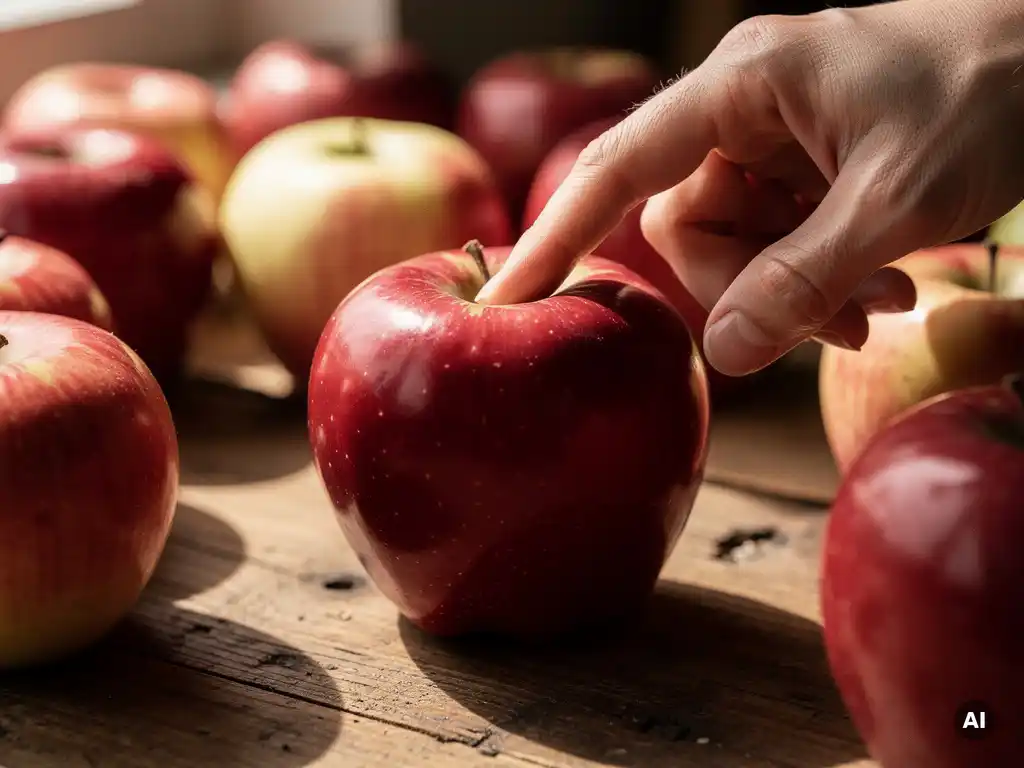
Texture influences buying behavior more than taste because consumers evaluate texture before they ever take a bite. The physical feel of fruit, its firmness, crunch, and juiciness, is assessed visually and by touch at the point of purchase, while taste only becomes relevant after the sale is already made. This makes texture the dominant driver of the initial purchasing decision, and as the sections below show, it also plays a decisive role in whether a shopper returns. If you want to learn more about how we approach fruit quality at Better3Fruit, feel free to get in touch with us.
How does texture shape a consumer’s first impression of fruit?
Texture shapes a consumer’s first impression of fruit by providing immediate, visible, and tactile signals of quality before any sensory experience of flavor is possible. A firm, smooth apple communicates freshness and ripeness. A soft, wrinkled, or mealy one signals age and poor handling, and most shoppers will return it to the shelf without a second thought.
This first impression happens in seconds. Consumers rely on a combination of visual cues, skin tightness, surface sheen, color uniformity, and physical touch to form a rapid quality judgment. These cues are deeply intuitive. We associate firmness with freshness across almost all fruit categories, which means a variety that holds its structure well has an inherent advantage at retail, regardless of how it tastes.
For apple breeders, this reality shapes how new varieties are evaluated. A variety that delivers outstanding flavor but arrives at the shelf with compromised firmness will consistently underperform a less flavorful variety that looks and feels crisp. First impressions in fruit retail are textural impressions.
What role does texture play in repeat purchases?
Texture plays a central role in repeat purchases because it is the sensory attribute consumers most reliably remember and seek to replicate. When a shopper bites into an apple and experiences a satisfying crunch and juicy resistance, that physical memory drives them back to the same variety. A disappointing texture, floury, soft, or dry, creates an equally strong negative association that discourages return.
Flavor can be variable. Sweetness and acidity shift with growing season, storage duration, and ripeness at harvest. Texture, by contrast, is perceived as a more stable indicator of consistent quality. Consumers who find a variety with a reliably pleasing mouthfeel tend to develop strong brand or variety loyalty, which is why texture consistency is one of the most commercially valuable traits a fruit variety can carry.
This is also why club variety programs, where production, storage, and retail standards are tightly controlled, tend to outperform generic category sales. When texture is protected across the supply chain, repeat purchase rates follow.
Why do shoppers judge fruit texture before they taste it?
Shoppers judge fruit texture before they taste it because texture is the only quality dimension that can be assessed without consuming the product. At the point of purchase, taste is inaccessible. Texture, however, communicates through sight and touch, the two senses available to every shopper standing in the produce aisle.
This is not a conscious decision. It is a deeply embedded evaluative shortcut. Humans have long used physical firmness as a proxy for nutritional value and edibility in fresh produce. A fruit that holds its shape and resists gentle pressure is instinctively read as safe, ripe, and worth buying. One that yields too easily raises doubt.
Retailers understand this dynamic well. Display practices, careful stacking, appropriate temperature, controlled lighting, are designed to preserve and showcase textural integrity. The sensory experience of fruit purchasing is overwhelmingly pre-taste, and texture is its primary language.
What’s the difference between texture and taste in fruit breeding?
In fruit breeding, texture and taste are distinct trait categories that are measured, selected, and inherited differently. Taste refers to the chemical composition of the fruit, primarily the balance of sugars and organic acids, alongside aromatic volatile compounds. Texture refers to the structural and mechanical properties of the flesh, firmness, crispness, juiciness, cell density, and how the fruit breaks down under pressure.
How taste traits are selected in breeding
Taste traits are influenced by a large number of genes and are highly sensitive to environmental conditions such as sunlight, temperature, and soil. This makes them more difficult to predict and stabilize across growing regions. Breeders assess taste through sensory panels, refractometer readings for sugar content, and titratable acidity measurements. Achieving a consistent flavor profile across diverse climates is one of the most complex challenges in apple and pear breeding.
How texture traits are selected in breeding
Texture traits, particularly firmness, tend to be more heritable and measurable. Penetrometer readings provide objective firmness data at harvest and after storage, allowing breeders to track how well a variety holds its structure over time. At Better3Fruit, we use molecular markers to identify texture-related traits early in the breeding cycle, which allows us to screen thousands of seedlings efficiently and select for the crispness, juiciness, and post-harvest firmness retention that consumers and retailers demand. Explore our current variety portfolio to see how these traits translate into commercial releases.
Which apple textures are most preferred by consumers today?
Consumers today most consistently prefer apple textures that combine high firmness with juiciness, varieties that deliver an audible, satisfying crunch alongside abundant juice release. This profile, often described as “crisp and juicy,” has become the dominant consumer preference across most major apple markets in Europe and North America.
The shift toward this texture profile has been building for years, driven partly by the commercial success of varieties like Kanzi®, which demonstrated that a genuinely crisp, dense, juicy eating experience commands both premium pricing and strong repeat purchase. Mealy or soft textures, once more common in older heritage varieties, are now consistently rated poorly in consumer preference studies, regardless of how well those varieties perform on flavor.
Within the crisp-and-juicy preference, there is some segmentation by market. Some consumers favor a particularly hard, dense bite, while others prefer a slightly more tender crispness. Juiciness, however, is nearly universally valued. Dry-textured apples consistently underperform at retail even when their flavor profile is strong, which reinforces the primacy of texture in the overall sensory experience of fruit.
How can growers and retailers protect fruit texture after harvest?
Growers and retailers can protect fruit texture after harvest primarily through controlled atmosphere storage, careful temperature management, and minimizing physical handling. These post-harvest practices are essential because even the best-textured variety will lose its crispness and firmness if storage conditions are poorly managed.
Controlled atmosphere (CA) storage, where oxygen and carbon dioxide levels are precisely regulated, significantly slows the ripening process and preserves cell wall integrity, which is the structural basis of firmness. Combined with low-temperature storage, CA allows high-quality apple varieties to maintain their textural properties for months without meaningful degradation.
At the retail level, temperature control in display cases, appropriate humidity levels, and careful stacking to avoid bruising all contribute to protecting the texture consumers expect to find. Bruising in particular is a critical failure point, even internal bruising that is invisible on the surface leads to soft spots that destroy the eating experience and erode consumer trust in the variety or brand.
For growers, variety selection is also a post-harvest decision. Choosing varieties with strong natural firmness retention, a trait we prioritize in our breeding program, reduces the risk of textural failure across a longer retail window. The best post-harvest strategy starts in the orchard with the right genetics. Contact us to find out which of our varieties best match your production and storage conditions.
This content was generated with the help of AI and it may contain mistakes