
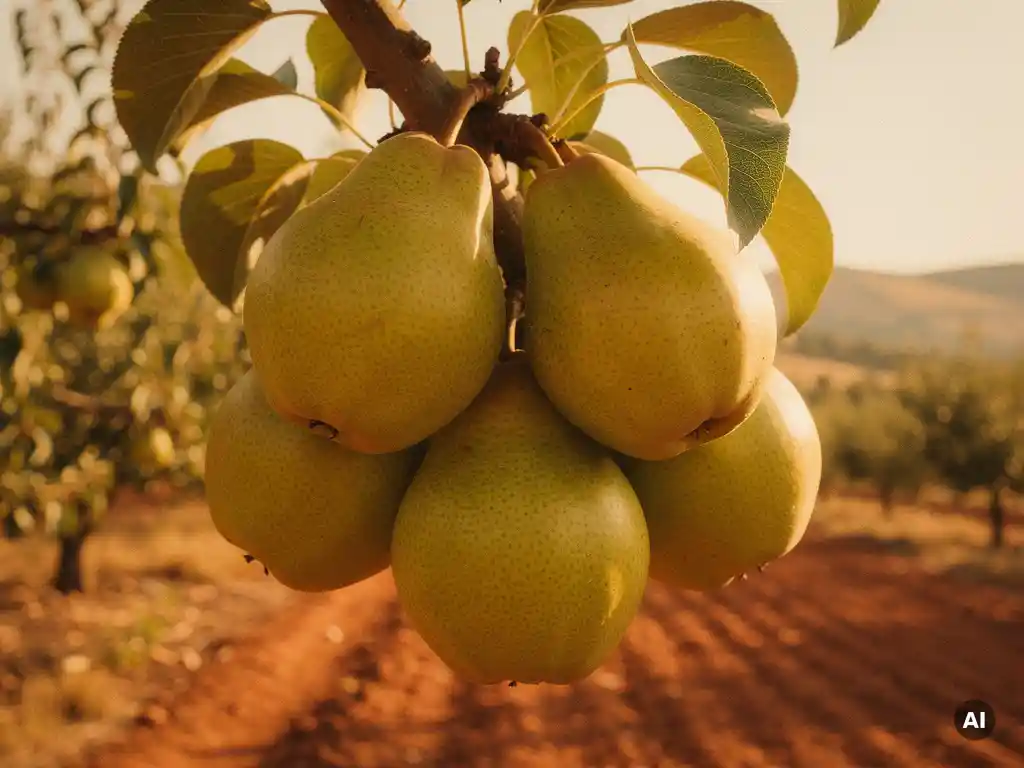
A pear variety is suitable for international licensing in warm regions when it combines low chill hour requirements, strong disease and heat tolerance, reliable fruit quality, and genuine commercial appeal in target markets. These traits determine whether a cultivar can actually perform in the field and succeed on the shelf. The sections below unpack each of these dimensions in detail, from agronomic performance to market readiness and the licensing process itself. If you have a specific question about our varieties or licensing options, feel free to get in touch with us directly.
Which traits make a pear variety perform well in warm climates?
A pear variety performs well in warm climates when it requires fewer chill hours to break dormancy, tolerates heat during fruit development, and maintains consistent fruit quality under higher temperature stress. Low chill hour requirements are the single most critical agronomic trait, because most traditional European pear cultivars were bred for temperate conditions and simply will not flower or fruit reliably in warmer growing zones.
Beyond dormancy, warm climate performance depends on how a variety handles the full growing season. Heat during the cell division phase of fruit development can reduce fruit size and alter texture. Varieties that maintain their eating quality, skin finish, and sugar-acid balance despite temperature fluctuations are far better candidates for licensing in regions across the Mediterranean, South Africa, South America, and parts of Asia.
Water use efficiency also plays a growing role. As irrigation costs rise and water availability becomes less predictable, varieties that produce well under moderate water stress give growers a meaningful agronomic and economic advantage. At Better3Fruit, our breeding program actively selects for climate resilience as a long-term priority, which means warm-region suitability is increasingly built into new varieties from the earliest evaluation stages rather than retrofitted later.
What does international variety licensing actually involve for pear growers?
International pear variety licensing is a formal agreement that gives growers, nurseries, or marketing organizations the right to propagate and sell a protected cultivar in a defined territory, in exchange for royalty payments tied to production volume or sales. Licensing protects the breeder’s intellectual property while giving commercial partners structured access to new genetics.
For pear growers, a license typically covers the right to obtain certified plant material from approved nurseries, grow the variety within agreed quality standards, and sell fruit under the variety’s brand or registered name. Royalties are usually calculated per kilogram of fruit sold or per tree planted, depending on the structure of the agreement.
What distinguishes responsible licensing from a simple sale of plant material is the ongoing relationship it creates. A well-structured license includes quality protocols, supply coordination, and marketing alignment. This matters especially in international markets, where inconsistent quality across regions can damage a variety’s reputation quickly. We encourage strategic partnerships that build critical mass in a market rather than scattering licenses without coordination, because a strong, coherent supply chain is what turns a promising cultivar into a commercially successful one. You can explore our current licensed pear varieties to get a sense of what is available for different markets.
How do breeders evaluate a pear variety’s readiness for global release?
Breeders evaluate a pear variety’s readiness for global release by assessing multi-year performance data across diverse growing environments, stability of key traits under varying conditions, and commercial viability in target markets. A variety must demonstrate consistent agronomic performance and consumer appeal before it is considered ready for international licensing.
The evaluation process is lengthy by necessity. At Better3Fruit, we enter around 10,000 new pear seedlings into field trials each year, and at any point we have more than 30,000 varieties under active evaluation. Most of these never reach commercial release. The ones that do have typically been observed across multiple seasons, in multiple climates, and under different soil and management conditions.
Key evaluation criteria include fruit size, color, texture, flavor profile, shelf life, post-harvest behavior, and response to storage. Breeders also assess how consistently a variety delivers these traits across seasons, since a cultivar that performs brilliantly in one year but erratically in the next is not commercially reliable. Molecular marker tools allow us to screen for specific traits much earlier in the breeding cycle, which accelerates the identification of genuinely promising candidates and reduces the time growers wait for new genetics to reach them.
Why does disease resistance matter more in warm growing regions?
Disease resistance matters more in warm growing regions because higher temperatures and humidity levels create ideal conditions for fungal pathogens, bacterial infections, and pest pressure that are less prevalent or less severe in cooler climates. A variety without adequate disease tolerance will require significantly higher chemical inputs in warm environments, increasing costs and reducing sustainability.
Fire blight, caused by the bacterium Erwinia amylovora, is one of the most serious threats to pear production globally, and its spread accelerates in warm, wet spring conditions. Scab, powdery mildew, and various post-harvest rots are also more aggressive in warmer growing zones. Growers in these regions face a harder management challenge, and a variety that carries natural resistance or tolerance to these pressures gives them a real competitive advantage.
From a licensing perspective, disease resistance also affects the long-term commercial viability of a variety. A cultivar that requires intensive spray programs to remain productive will face increasing regulatory and market pressure as pesticide use restrictions tighten globally. Breeding for disease and pest tolerance is therefore not just an agronomic consideration but a strategic one. Our breeding strategy places disease resistance alongside taste and yield as a primary selection criterion, precisely because we see it as foundational to the sustainability of any variety we release internationally.
What role does market demand play in licensing a pear variety internationally?
Market demand is a decisive factor in international pear variety licensing because a cultivar that performs well agronomically but lacks consumer appeal or retail interest will not generate the royalty volumes needed to sustain a commercial program. Breeders and licensing partners must align variety traits with what buyers, retailers, and consumers in target markets are actually looking for.
Consumer preferences vary significantly across regions. In some markets, a large, blushed pear with high sweetness commands a premium. In others, texture and crunch are the primary drivers of repeat purchase. Understanding these preferences before committing to a licensing strategy helps ensure that the right variety reaches the right market, rather than forcing a cultivar into a market where it will struggle to build a following.
Retail and category trends also shape demand. The growth of club varieties in premium fresh produce retail has created space for differentiated pear cultivars that can be branded and marketed with a clear identity. A variety with a distinctive appearance, strong flavor story, and consistent supply chain has real commercial potential in this environment. We carefully select the right licensing partner for each variety to ensure that market development, branding, and supply are coordinated from the start, because a variety’s commercial success depends as much on how it is brought to market as on what it delivers in the orchard.
If you are exploring warm-climate pear variety licensing and want to discuss which cultivars might suit your region and market, contact our team to start a conversation.
This content was generated with the help of AI and it may contain mistakes