
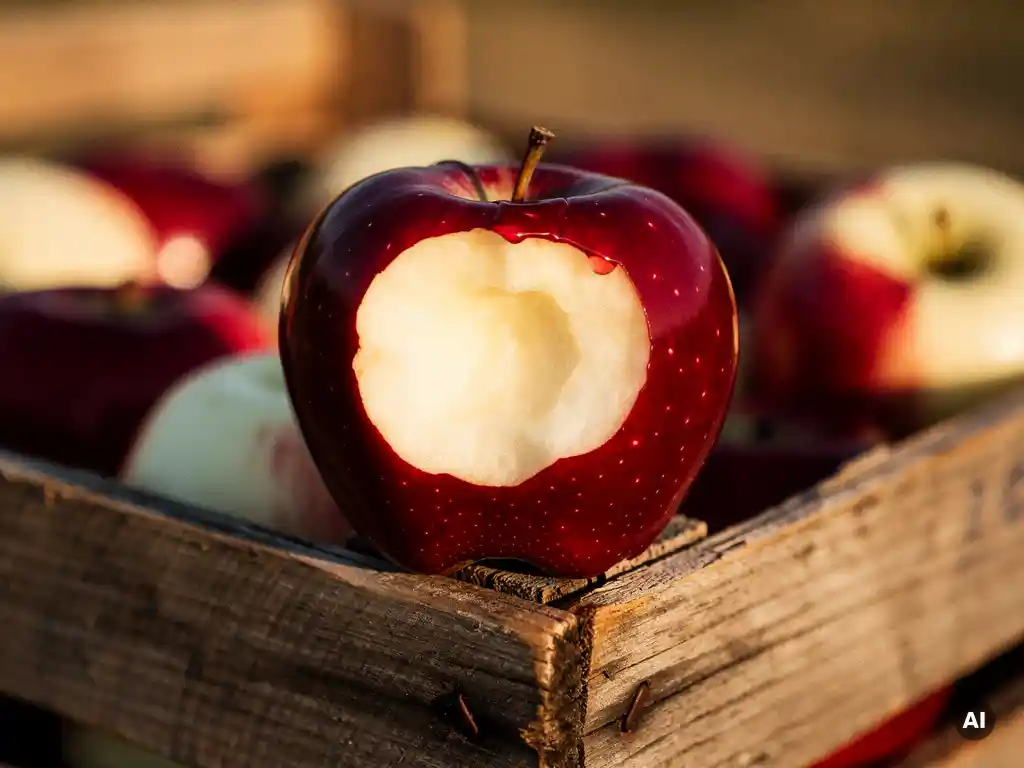
Texture is more important than taste in apples because it determines whether a consumer finishes the fruit or throws it away. A flavourful apple that is mealy, soft, or mushy will be rejected before its taste is ever fully appreciated, while a crisp, firm apple invites bite after bite. The sections below unpack exactly why apple texture carries so much weight, how it shapes flavour perception, and what apple breeding is doing about it. If you have questions about any of this, feel free to get in touch with us directly.
How does texture actually affect the way an apple tastes?
Apple texture directly shapes taste perception because the physical experience of biting into a fruit influences how flavour compounds are released and detected. A crisp, firm apple ruptures cell walls efficiently, releasing juice, sugars, and aromatic volatiles quickly and in high concentration. A soft or mealy apple releases those same compounds slowly and unevenly, making the flavour seem flat even when the sugar content is identical.
This is not a minor effect. The crunchiness of an apple creates what food scientists call a multisensory eating experience, where the sound, resistance, and mouthfeel of each bite prime the brain to expect and perceive flavour more intensely. Apple mouthfeel, in other words, acts as a delivery mechanism for taste. When that mechanism breaks down, the entire eating experience suffers. This is why two apples with the same Brix reading (a measure of sugar content) can taste completely different depending on their textural qualities.
What makes an apple’s texture good or bad?
Apple texture quality is determined primarily by cell structure, cell wall integrity, and the balance of water content within the fruit’s flesh. A good texture means the cells are tightly packed, well hydrated, and held together by firm cell walls. When a consumer bites in, those cells burst cleanly, producing the satisfying crunch and juiciness associated with high eating quality. A poor texture occurs when cell walls weaken, cells separate rather than burst, or the flesh loses moisture, resulting in a mealy, floury, or spongy mouthfeel.
Several factors contribute to textural decline:
- Post-harvest storage: Extended cold storage, especially without controlled atmosphere conditions, causes cell walls to break down over time.
- Ripening stage at harvest: Apples picked too late have already begun softening on the tree.
- Variety genetics: Some cultivars are genetically predisposed to maintain firmness longer than others.
- Growing conditions: Temperature fluctuations, water stress, and calcium levels in the soil all influence flesh firmness.
Of these, genetics is the factor that apple breeding can most directly address, which is why apple crunchiness and firmness are now core targets in modern breeding programmes.
Why do consumers reject apples based on texture before taste?
Consumers reject apples on texture first because the textural assessment happens immediately and instinctively with the first bite, while full flavour perception takes several seconds to develop. If the initial bite delivers a soft, mealy, or dry mouthfeel, the eating experience is already compromised, and most consumers will not continue eating long enough to register the fruit’s flavour profile.
This pattern is well established in consumer preference research across fresh produce. Texture is a sensory signal that operates faster than taste. It communicates freshness, ripeness, and quality in a fraction of a second. A mealy apple signals decay or over-ripeness, triggering rejection at a near-instinctive level. This is why apple eating quality in retail and foodservice settings is so closely tied to firmness benchmarks, and why growers and packers invest heavily in maintaining textural standards throughout the supply chain.
From a breeding perspective, this consumer behaviour makes texture a non-negotiable trait. A variety can have outstanding flavour complexity, excellent colour, and strong nutritional value, but if it cannot consistently deliver a satisfying crunch and juicy mouthfeel, it will not succeed commercially.
How is texture measured and evaluated in apple breeding?
In apple breeding, texture is measured using a combination of instrumental testing and sensory evaluation. The most common instrumental method is penetrometer testing, which measures the force required to push a probe into the apple flesh, giving an objective firmness reading in kilopascals or pounds-force. This provides a reliable, repeatable baseline for comparing varieties and tracking firmness changes over time.
Beyond penetrometer readings, more advanced programmes use texture profile analysis to capture multiple parameters at once, including hardness, cohesiveness, and juiciness. Acoustic measurements, which capture the sound produced during biting, are also used to quantify crunchiness in ways that correlate closely with consumer preference scores.
Sensory panels remain essential alongside instrumental methods. Trained tasters assess apple mouthfeel, crispness, juiciness, and the presence or absence of mealiness in structured tasting sessions. At Better3Fruit, we evaluate thousands of new seedlings each season, and texture assessments are built into the earliest stages of selection. A variety that does not meet firmness and mouthfeel thresholds does not advance, regardless of how promising its other traits may be.
Which apple varieties are known for exceptional texture?
Apple varieties known for exceptional texture tend to share high flesh density, strong cell wall integrity, and the ability to maintain firmness well into the storage season. Among commercially successful examples, Kanzi® (bred by us under the cultivar name Nicoter) is widely recognised for its firm, dense flesh and satisfying crunch, which has been a key driver of its success as one of the most prominent club varieties of the past two decades.
More recently, varieties like Morgana® and Giga® from our portfolio have been developed with texture as a leading trait alongside flavour and visual appeal. Giga® in particular is noted for an exceptionally crisp bite and high juice content, qualities that translate directly into strong consumer scores in taste panels.
Beyond our own programme, varieties such as Honeycrisp (developed in the United States) built an entire market position almost entirely on textural excellence, demonstrating just how powerfully apple crunchiness can drive consumer loyalty and premium pricing. You can explore our current apple and pear varieties to see how texture features across the range.
Can apple texture be improved without sacrificing flavour?
Yes, apple texture can be improved without sacrificing flavour, and modern apple breeding has demonstrated this consistently. The traits that govern texture and those that govern flavour are genetically distinct, which means breeders can select for both simultaneously rather than trading one off against the other. Using molecular marker technology, it is now possible to identify seedlings that carry favourable alleles for both firmness and flavour compounds at an early stage, long before the fruit is ever tasted.
The challenge historically was that some of the most flavourful heritage varieties had poor textural qualities, while some of the firmest varieties lacked complexity in taste. Crossing these parents required many generations to combine both traits in a single cultivar. Modern marker-assisted selection dramatically accelerates this process by allowing breeders to screen thousands of seedlings genetically before committing to field trials.
At Better3Fruit, our breeding strategy is built on the principle that eating quality is indivisible. Texture, flavour, juiciness, and aroma are all components of a single consumer experience, and we select for all of them together. The result is a pipeline of varieties that do not ask growers or consumers to compromise. Better apple texture and better apple taste are not opposing goals. With the right breeding tools and a long-term programme, they are entirely compatible.
If you are a grower, licensor, or industry partner interested in learning more about how we develop varieties that lead on both texture and taste, contact us to start a conversation.
This content was generated with the help of AI and it may contain mistakes