
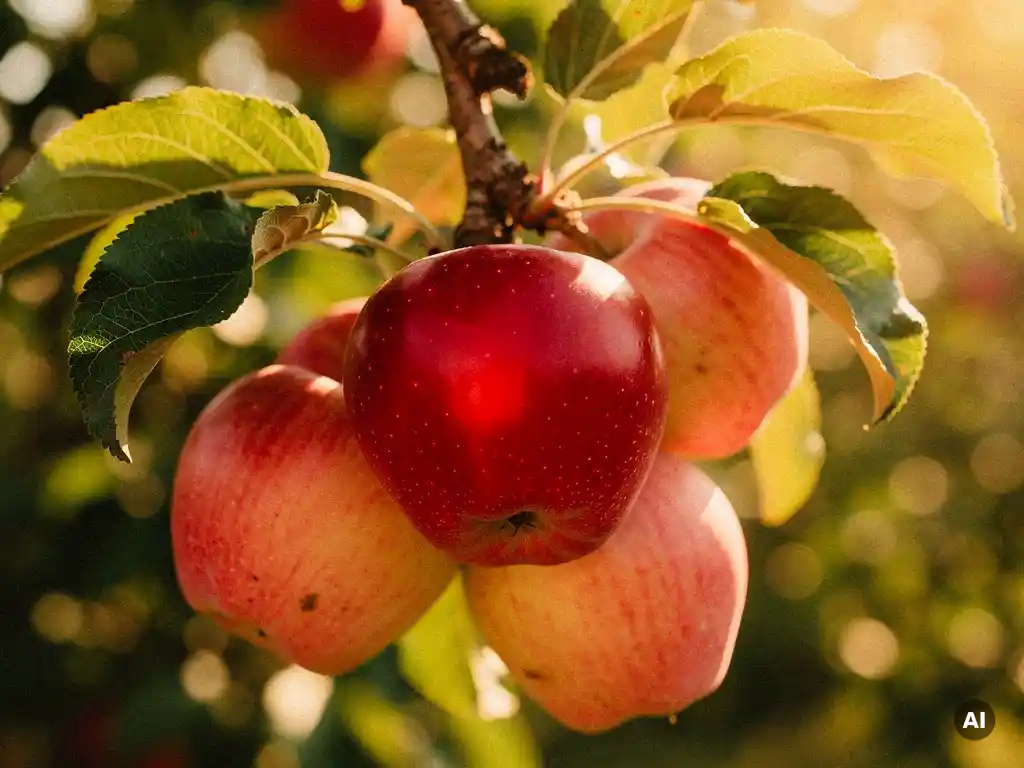
Apple varieties with strong genetic color development, particularly those bred for anthocyanin production that triggers at cooler temperatures, retain their color best under climate stress. Varieties like Kanzi® and newer club cultivars developed through modern breeding programs show greater color stability because their pigmentation response is tied to genetic expression, not solely to environmental cues. This article unpacks the key questions growers are asking about apple skin color, heat stress, and variety selection in a warming climate. If you want to discuss which varieties suit your growing region, feel free to get in touch with us directly.
Why do apples lose their color under hot or stressful conditions?
Apples lose their red skin color in hot or stressful conditions because high temperatures suppress anthocyanin synthesis, the biological process that produces red and pink pigmentation in apple skin. When daytime temperatures consistently exceed roughly 30°C during the fruit development period, the enzymes responsible for anthocyanin production become less active, resulting in fruit that stays green or develops a dull, washed-out blush instead of a deep, uniform red.
Anthocyanin accumulation in apple skin depends on a combination of cool night temperatures, adequate light exposure, and the genetic capacity of the variety itself. Heat stress disrupts all three of these conditions simultaneously. Warm nights prevent the temperature differential that drives pigmentation, while drought stress diverts the plant’s resources away from secondary metabolites like anthocyanins toward basic survival functions. The result is fruit that may be perfectly healthy internally but fails to meet the visual quality standards that retailers and consumers expect.
Beyond heat, other climate stressors compound the problem. Irregular rainfall, prolonged cloud cover, and early harvest pressure caused by accelerated fruit maturity all reduce the window during which color can develop properly. For growers in regions experiencing more frequent summer heat events, this is becoming a recurring commercial challenge rather than an occasional setback.
Which apple varieties are known for strong color stability?
Apple varieties with strong color stability are typically those bred for high anthocyanin production that is less dependent on extreme temperature differentials to trigger. Kanzi®, developed through our breeding program at Better3Fruit, is a well-established example of a variety that produces consistent color across a range of climatic conditions, which has contributed significantly to its commercial success as a club variety.
More broadly, varieties with striped or blushed red skin patterns driven by robust genetic expression tend to outperform solid-red varieties that rely heavily on cool nighttime temperatures for full color development. Solid-red sports of older varieties like Gala or Fuji were selected in an era when growing conditions were more predictable, and many of them struggle to color adequately in warmer seasons.
Newer breeding selections entering commercial evaluation increasingly include color performance under warm conditions as an explicit selection criterion. At Better3Fruit, varieties like Morgana® and Giga® represent this newer generation of thinking, where coloring ability is assessed alongside taste, texture, and disease tolerance rather than treated as a secondary trait.
What traits do breeders look for when developing color-stable apples?
When developing color-stable apple varieties, breeders prioritize genetic markers linked to strong anthocyanin biosynthesis that activates reliably across a broad temperature range. The goal is not simply to produce red fruit in ideal conditions, but to maintain commercial color quality when growing conditions are suboptimal.
Key traits breeders evaluate include:
- Anthocyanin gene expression: Varieties with multiple active copies of the MYB10 transcription factor gene tend to produce more anthocyanin and maintain color more reliably under heat stress.
- Skin thickness and wax layer: A thicker cuticle can protect developing pigmentation from UV degradation and water loss during heat events.
- Maturity timing: Varieties that ripen later in the season benefit from cooler autumn temperatures during their critical color development window.
- Stress tolerance: Varieties that maintain physiological function under drought or heat stress are better positioned to allocate resources to pigmentation rather than survival responses.
At Better3Fruit, molecular marker technology allows us to screen thousands of seedlings for these genetic traits early in development, long before a fruit ever reaches a grower’s orchard. This dramatically accelerates the identification of candidates with genuine color stability rather than relying solely on field observation over many seasons.
How does climate change affect apple coloring across growing regions?
Climate change affects apple coloring by shifting the temperature patterns that anthocyanin production depends on, with the most significant impact being warmer nights during late summer and early autumn, the critical period when most commercial apple varieties develop their skin color. Growing regions that previously produced well-colored fruit reliably are now reporting more variable results as average temperatures rise.
The effect is not uniform across all regions. Higher-altitude growing areas and those with maritime climates that naturally produce cool nights are currently less affected than continental or lower-altitude regions. However, even traditionally favorable areas are seeing color quality become less predictable as extreme heat events become more frequent within the growing season.
For growers in warmer regions, the practical consequences include higher rates of cosmetic rejects, reduced packout percentages, and pressure to harvest earlier, before color has fully developed, to avoid heat damage. Earlier harvesting, in turn, affects flavor development and storage performance, creating a cascade of quality issues that extend well beyond skin color alone. This is why climate resilience has become a primary long-term goal in modern apple breeding, not simply a desirable bonus.
Should growers prioritize color retention when selecting apple varieties?
Yes, growers in regions experiencing warmer summers or increasing climate variability should treat color retention as a significant selection criterion when choosing apple varieties, but it should be weighed alongside taste, disease resistance, yield, and market fit rather than treated in isolation. Color is the first quality signal consumers and buyers assess, and poor color directly affects commercial returns regardless of internal fruit quality.
The practical case for prioritizing color stability is straightforward. A variety that colors reliably reduces the risk of cosmetic rejects, gives growers more flexibility in harvest timing, and maintains packout rates even in difficult seasons. Over a multi-decade orchard investment, these advantages compound significantly.
That said, color stability alone should not drive variety selection. A variety with excellent color but poor disease tolerance will create its own set of costs through increased spray programs. A variety that colors well but lacks consumer appeal in the target market will struggle commercially regardless of its technical performance. The most effective approach is to select varieties where color retention is built into a broader package of agronomic and market strengths, which is precisely the direction modern breeding programs are moving.
Exploring the full variety portfolio is a practical starting point for growers looking to match variety characteristics to their specific growing conditions and market requirements. If you want to discuss which apple varieties are best suited to your region and climate outlook, contact us and we will be glad to help you find the right fit.
This content was generated with the help of AI and it may contain mistakes