
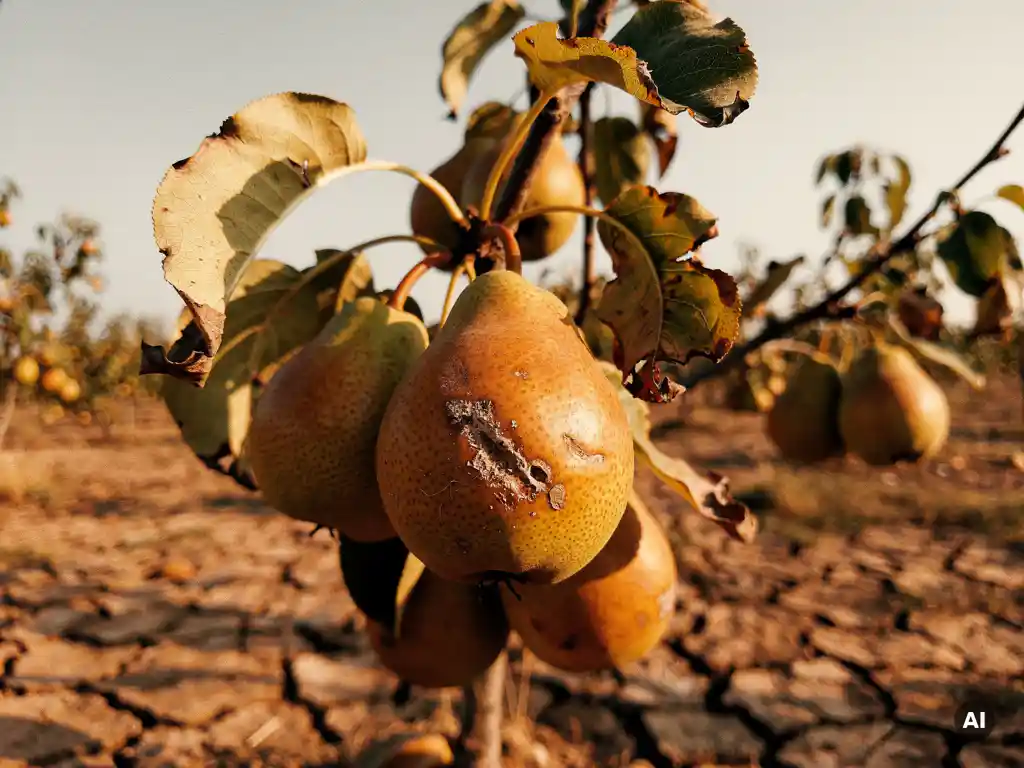
Climate change affects pear growing by disrupting the precise temperature conditions these trees depend on at every stage of their annual cycle. Warming winters reduce the chilling hours pear trees need to break dormancy properly, while unpredictable spring frosts threaten blossoms that are opening earlier than ever. From orchard floor to export market, climate pressures on pear cultivation are reshaping how growers plan, invest, and breed. Below, we answer the most pressing questions about climate impact on pears, and what the industry is doing about it. If you want to talk through any of these challenges with a specialist, feel free to get in touch with us.
What specific climate conditions do pear trees need to thrive?
Pear trees need a distinct cold period in winter, a frost-free window during flowering, and a long, warm growing season to produce high-quality fruit. Most commercial varieties require between 900 and 1,500 chilling hours, temperatures consistently below 7°C, to break dormancy reliably. Without sufficient pear chilling hours, trees wake up unevenly, flower poorly, and set fewer fruit.
Beyond the cold requirement, pear trees are sensitive to late frosts during bloom, which can destroy an entire season’s crop in a single night. They also need warm, dry summers to develop the sugar levels and texture that make fruit commercially attractive. Soil drainage, wind exposure, and humidity all play supporting roles, but temperature management across the full year is the foundation of successful pear cultivation.
How does rising temperature affect pear blossom timing?
Rising temperatures are causing pear trees to blossom earlier in the season, increasing the risk that open flowers will be caught by late spring frosts. As winters become milder, trees accumulate chilling hours more slowly and then accelerate through dormancy break when warm spells arrive. In some European growing regions, flowering has shifted forward by one to two weeks compared to historical averages.
This shift creates a dangerous mismatch. The last frost date in many regions has not moved forward at the same pace as flowering, meaning blossoms are now more exposed than they were a generation ago. A single frost event at full bloom can reduce fruit set by 80% or more, turning a promising season into a financial loss before summer even begins.
Earlier flowering also affects pollination. Bees and other pollinators may not yet be active in sufficient numbers when trees bloom ahead of schedule, reducing the efficiency of fruit set even in years when frost does not strike. Pear tree temperature sensitivity at this life stage makes it one of the most climate-vulnerable points in the entire growing calendar.
What are the biggest climate-related threats to pear orchards today?
The biggest climate-related threats to pear orchards today are insufficient winter chilling, late spring frost events, summer heat stress, and the spread of pests and diseases into regions where they were previously kept in check by colder temperatures. Each of these pear farming challenges is intensifying as global temperatures rise.
Insufficient chilling hours
In warmer growing regions, parts of southern Europe, South Africa, and South America, growers are already recording winters that fall short of the chilling requirements for their established varieties. The result is erratic budbreak, poor fruit uniformity, and reduced yields. Some growers apply chemical dormancy-breaking agents to compensate, but these are costly and only partially effective.
Frost, heat, and disease pressure
Late spring frosts remain the most acute seasonal risk, but summer heat waves are an emerging threat of equal concern. Extreme heat during fruit development can cause sunburn, internal browning, and premature drop, all of which reduce marketable yield. At the same time, milder winters allow fungal pathogens and insect pests to survive and expand their range, increasing disease pressure across orchards that previously enjoyed a natural cold-season buffer.
How are pear growers adapting to a changing climate?
Pear growers are adapting to climate change through a combination of orchard management changes, technology investments, and variety selection. The most common adaptations include installing frost protection systems such as wind machines and overhead irrigation, adjusting pruning and training practices to manage canopy temperature, and shifting planting dates or locations to find more suitable microclimates.
Precision weather monitoring has become a standard tool on progressive farms, allowing growers to anticipate frost events and activate protection systems in time. Irrigation scheduling is also evolving to buffer against summer heat stress, with deficit irrigation strategies helping maintain fruit quality without excessive water use.
At the strategic level, some growers are reconsidering which varieties they plant altogether. Varieties that perform well under reduced chilling conditions, or that flower slightly later to avoid the frost window, are increasingly attractive. This is where plant breeding intersects directly with climate resilience, and where the choices made in orchards today will shape the industry for the next 20 to 30 years.
Can new pear varieties help solve climate challenges?
Yes, new pear varieties bred with climate resilience as a primary goal can meaningfully reduce the impact of climate change on pear farming. Varieties with lower chilling requirements, later or more compact flowering windows, and stronger resistance to heat-related physiological disorders give growers more flexibility as growing conditions shift. Breeding for these traits is now a central priority in modern apple and pear development programs.
At Better3Fruit, we develop new pear varieties using modern tools such as molecular markers, which allow us to identify and select for specific traits, including climate-relevant ones, far more efficiently than traditional breeding alone. Our breeding strategy explicitly targets disease and pest tolerance alongside taste, texture, and grower yield, with climate resilience and multi-level sustainability as primary long-term goals.
The reality is that no single variety will solve every climate challenge in every region. But a well-designed breeding program can produce a portfolio of varieties suited to different climatic conditions, giving growers, packers, and marketers the tools to stay productive as conditions evolve. Explore our current pear variety portfolio to see what we are developing and how these varieties are positioned for the future of pear orchard sustainability.
Climate change is one of the defining challenges for pear cultivation in the coming decades, but it is also driving real innovation in how varieties are bred, how orchards are managed, and how the industry thinks about long-term resilience. If you would like to discuss how our breeding work could support your operation or region, get in touch with us; we are always glad to explore what is possible together.
This content was generated with the help of AI and it may contain mistakes