
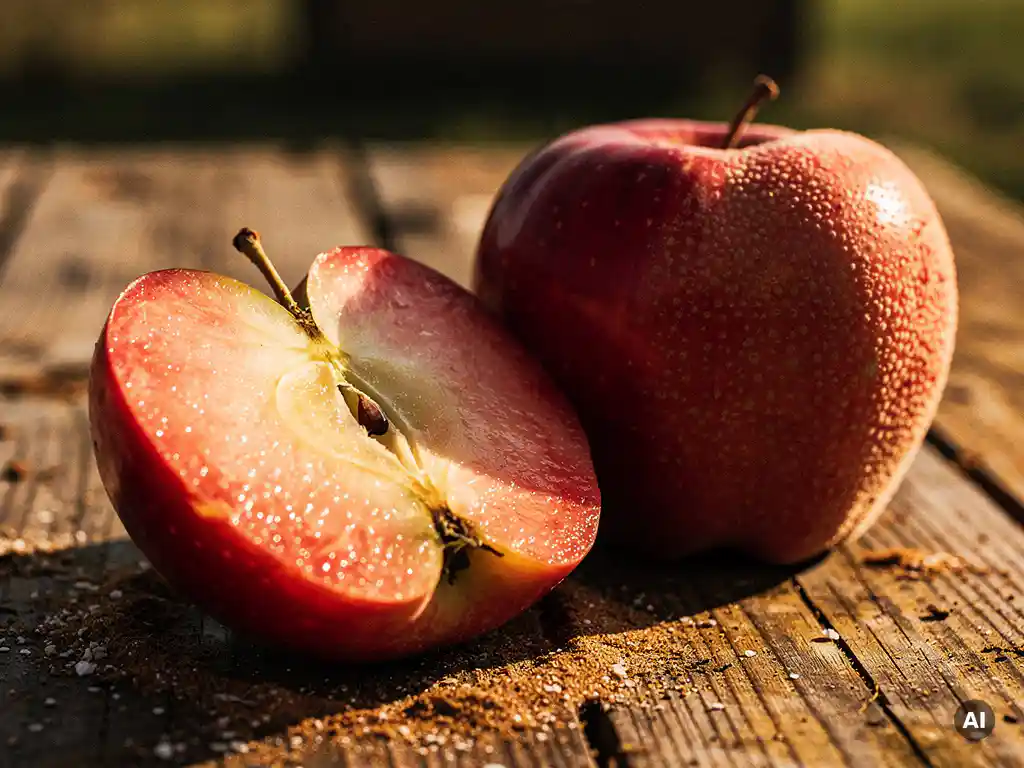
The difference between mealy and crunchy fruit comes down to cell structure. Crunchy fruit has firm, tightly bonded cells filled with water, which create resistance and a satisfying snap when you bite into them. Mealy fruit has cells that have separated or broken down, losing their cohesion and releasing moisture in a way that feels dry and grainy rather than juicy. This breakdown is driven by ripening, storage conditions, and the genetic makeup of the variety itself. The sections below unpack each of those factors in detail, and if you have questions about specific varieties, feel free to get in touch with us directly.
What causes fruit to become mealy instead of crunchy?
Fruit becomes mealy when the pectin that holds its cells together breaks down. Pectin is a natural structural compound in cell walls, and as fruit ripens, enzymes called polygalacturonases and pectinases degrade it. When pectin weakens, cells separate from each other rather than breaking apart together, which is what gives mealy fruit its characteristic dry, grainy feel instead of a clean, juicy crunch.
This process is a normal part of ripening, but it can accelerate well beyond the ideal eating window if fruit is left on the tree too long, stored incorrectly, or exposed to temperature fluctuations. The speed at which pectin breaks down varies considerably between varieties, which is why some apples stay crisp for months while others go soft within days of being picked. Ethylene gas, the natural ripening hormone produced by the fruit itself, plays a key role in triggering these enzymatic changes, and anything that increases ethylene production or exposure will speed up the process.
What does mealy fruit actually feel like compared to crunchy fruit?
Mealy fruit feels dry, soft, and powdery in the mouth, even though it contains plenty of moisture. The sensation comes from individual cells releasing their liquid separately rather than all at once, so instead of a burst of juice, you get a starchy, almost floury texture. Crunchy fruit, by contrast, delivers a firm resistance followed by a clean break and an immediate release of juice.
The difference is immediately obvious when you bite into an apple. A crunchy apple produces an audible snap and feels dense. A mealy apple compresses without resistance and feels dry despite not being dehydrated. This is why fruit texture is such a critical quality attribute in apple breeding. Consumers associate crunchiness with freshness and flavor intensity, even when two pieces of fruit have identical sugar levels. The perception of juiciness is closely tied to how cells fracture, not just how much water the fruit contains.
Why do some apple varieties go mealy faster than others?
Some apple varieties go mealy faster because of genetic differences in how they produce and respond to ethylene, and how their cell walls are structurally composed. Varieties with thinner cell walls and higher baseline ethylene production tend to soften and lose crunch much more quickly after harvest than varieties bred for firm, dense flesh.
This is one of the core challenges in apple breeding. At Better3Fruit, texture and firmness retention are central traits we evaluate across our breeding program. A variety that tastes exceptional at harvest but turns mealy within two weeks in a home refrigerator will not succeed commercially, no matter how good its flavor profile is. Varieties like Kanzi® were selected in part because they maintain their characteristic crunch well into the storage period, which is a trait that requires careful selection over many breeding cycles.
Beyond genetics, the growing environment also plays a role. Fruit grown in warmer conditions or harvested late in the season tends to have softer cell walls at the point of picking, which means it has less margin before mealiness sets in. Calcium levels in the fruit, which are influenced by soil nutrition and irrigation management, also affect cell wall integrity and therefore how long a variety holds its texture.
How does storage affect whether fruit turns mealy?
Storage conditions have a major influence on whether fruit stays crunchy or becomes mealy. Cold temperatures slow the enzymatic breakdown of pectin, which is why refrigeration extends the crisp eating window. However, storing fruit at temperatures that fluctuate or drop below the recommended range can cause cell damage that actually accelerates mealiness once the fruit warms up again.
Controlled-atmosphere storage, widely used in commercial apple supply chains, goes further than simple refrigeration. By reducing oxygen levels and increasing carbon dioxide, it slows both respiration and ethylene activity, which dramatically slows the softening process. This is why commercially stored apples can maintain their texture for many months. For consumers at home, the practical takeaway is straightforward: keep apples cold, keep them away from other ethylene-producing fruit like bananas, and eat them before they warm up repeatedly, as each warming cycle accelerates cell wall breakdown.
Explore our apple and pear varieties to see how different cultivars are positioned for fresh eating versus longer storage windows.
Can mealy fruit be used in cooking or is it only a quality defect?
Mealy fruit is not just a quality defect, it can actually be an advantage in certain cooking applications. Because the cells have already partially broken down, mealy apples cook faster and break down more smoothly into purees, sauces, and compotes. Their softened texture means less cooking time is needed to achieve a smooth consistency, which makes them well suited to applesauce, apple butter, and baked fillings.
That said, for fresh eating and for any recipe where the apple needs to hold its shape, such as a tart, a salad, or a caramelized apple dish, mealiness is genuinely a problem. The texture becomes unpleasant and the fruit lacks the structural integrity to perform well. So the answer depends entirely on how you intend to use the fruit. A slightly mealy apple destined for the compost bin might be perfectly good for sauce or a smoothie, which is a practical way to reduce food waste without compromising the end result.
Understanding fruit texture, from the genetics behind it to how storage shapes it, is at the heart of what we do at Better3Fruit. If you want to know more about how we breed for crunch, flavor, and longevity, or if you are interested in licensing a variety, contact us and we will be happy to help.
This content was generated with the help of AI and it may contain mistakes