
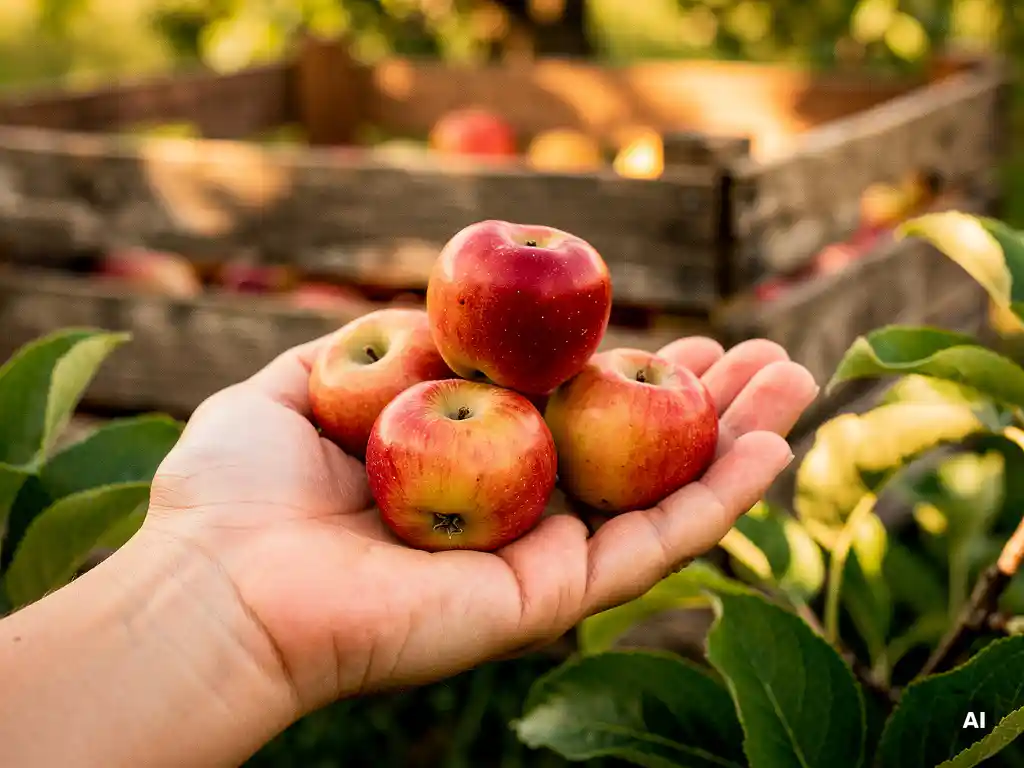
Several apple varieties are naturally suited to mini or snack size, and others have been specifically bred with compact fruit dimensions in mind. The most reliable snack-size apples combine small, consistent fruit weight with strong flavour, attractive appearance, and a shelf life that works for retail and lunchbox use. Below, we unpack the key questions growers, retailers, and breeders ask about small apple varieties, and if you want to explore variety options directly, feel free to get in touch with us.
What makes an apple variety naturally small in size?
An apple variety produces naturally small fruit when its genetic makeup limits cell division and fruit development during growth. This is a heritable trait, meaning the tendency toward compact fruit size is encoded in the variety itself rather than being purely a result of growing conditions. Varieties with this characteristic consistently produce smaller fruit across different orchards and seasons, making them reliable candidates for snack-size markets.
Fruit size in apples is influenced by several interacting factors at the genetic level. The number of seeds per fruit, the rate of cell division in the early weeks after pollination, and the variety’s natural fruit load all play a role. Some varieties simply set more fruit per cluster and partition less energy into each individual apple, resulting in smaller, uniform fruit without any additional intervention from the grower. This is fundamentally different from forcing a large-fruited variety to produce small apples through heavy crop loading, which often compromises flavour and texture.
Climate and rootstock also interact with genetic potential. A variety predisposed to small fruit will express that trait most consistently on dwarfing rootstocks in well-managed, high-density plantings. However, the genetic ceiling remains the primary driver: no management system can reliably make a large-fruited variety produce snack-size apples at commercial scale without quality trade-offs.
Which apple varieties are bred specifically for snack size?
A small number of apple cultivars have been developed with compact fruit dimensions as a deliberate breeding target, rather than as a by-product of other traits. These varieties are selected across multiple generations for consistent fruit weight in the snack-size range, typically between 70 and 100 grams, alongside strong flavour and visual appeal. Breeding for size alone is never the goal: snack-size varieties must also deliver on taste and appearance to succeed commercially.
At Better3Fruit, our breeding programme evaluates tens of thousands of new seedlings every year, and size consistency is one of the traits we assess early in the selection process. Varieties that show natural uniformity at smaller fruit weights progress through further evaluation for flavour profile, disease tolerance, and shelf life. This multi-trait approach ensures that any variety reaching commercial release is genuinely suited to the snack-size segment rather than simply being small.
Our broader apple variety portfolio includes cultivars that perform well in premium retail formats, some of which are particularly well suited to smaller pack sizes and snacking occasions. As consumer demand for convenient, portion-ready fruit continues to grow, snack-size positioning is becoming an increasingly important commercial consideration for new variety releases.
How do growers produce consistent mini-size apples at scale?
Growers produce consistent mini-size apples at scale by combining variety selection with targeted orchard management practices, particularly crop load management and high-density planting systems. The variety is the foundation: without a genetic predisposition toward smaller fruit, achieving uniform snack-size production reliably and profitably is extremely difficult. Once the right variety is in place, growers use specific techniques to maintain size consistency across the entire crop.
The key management levers include:
- Crop load management: Leaving more fruit per tree reduces the energy available to each individual apple, keeping fruit weight in the target range. This requires careful calibration: too heavy a crop load affects flavour and colour, not just size.
- High-density planting: Dwarfing rootstocks and close plant spacing create conditions where individual tree vigour is managed and fruit development is more uniform across the block.
- Irrigation and nutrition: Controlled irrigation and balanced fertilisation help avoid excessive fruit cell expansion in the final weeks before harvest, which is a common cause of oversized fruit in varieties that are borderline for snack-size targets.
- Harvest timing: Picking slightly earlier within the maturity window, before maximum cell expansion occurs, can help maintain fruit in the desired weight range without compromising internal quality.
Sorting and grading technology at the packhouse also plays a role, allowing growers to separate fruit into precise size categories. However, relying on post-harvest sorting alone is not a viable strategy: it only works economically when the variety naturally produces a high proportion of fruit in the target range.
What traits should a snack apple variety have beyond size?
A snack apple variety needs to deliver on flavour, texture, appearance, and shelf life in addition to compact fruit size. Size alone does not make a variety commercially viable in the snack segment. Consumers expect a snack apple to taste good, look appealing, and remain fresh through the supply chain, all without the convenience of being able to cut or peel the fruit before eating.
The most important traits for a successful snack apple include:
- Flavour intensity: Snack apples are eaten without preparation, so the eating experience is everything. A strong, balanced flavour profile, whether sweet, sweet-tart, or aromatic, is non-negotiable.
- Crisp, firm texture: Soft or mealy texture is particularly noticeable when eating an apple out of hand. Snack varieties need to maintain firmness through storage and shelf life.
- Attractive skin colour: Visual appeal drives purchase decisions, especially in retail environments where snack apples are often sold in transparent bags or trays. Consistent, vibrant colouring is a key commercial requirement.
- Thin, tender skin: A thick or tough skin is a significant barrier to enjoyment in a snack apple, particularly for children, who are a core target consumer for this format.
- Good shelf life: Snack apples move through multiple points in the supply chain and may sit in lunchboxes or bags for hours. Varieties that hold their texture and appearance under these conditions have a clear commercial advantage.
- Disease and pest tolerance: Varieties with natural resistance to key diseases reduce input costs and support sustainable production, which is increasingly important for retailers and consumers alike.
Are club apple varieties available in snack-size formats?
Yes, several club apple varieties are marketed and sold in snack-size formats, and this is a growing segment within the club variety model. Club varieties, which are managed under exclusive licensing arrangements to control quality and supply, are well positioned for snack-size retail because the same brand management infrastructure that governs quality standards can also govern size specifications. This makes it easier to deliver a consistent snack-size product to market under a recognised brand.
The club model offers particular advantages for snack-size positioning. Because growers within a club programme follow shared production protocols and supply to a coordinated marketing structure, it is possible to specify fruit size ranges as part of the quality standard. Retailers can then list a snack-size club apple with confidence that the product will be consistent across seasons and supply regions, something that is much harder to achieve with open-market varieties where no central quality governance exists.
We develop and license club apple varieties through carefully selected partnerships that prioritise quality, brand development, and market coordination. If you are a grower, retailer, or marketing organisation interested in exploring snack-size opportunities within our variety portfolio, contact us to discuss how we can work together.
This content was generated with the help of AI and it may contain mistakes