
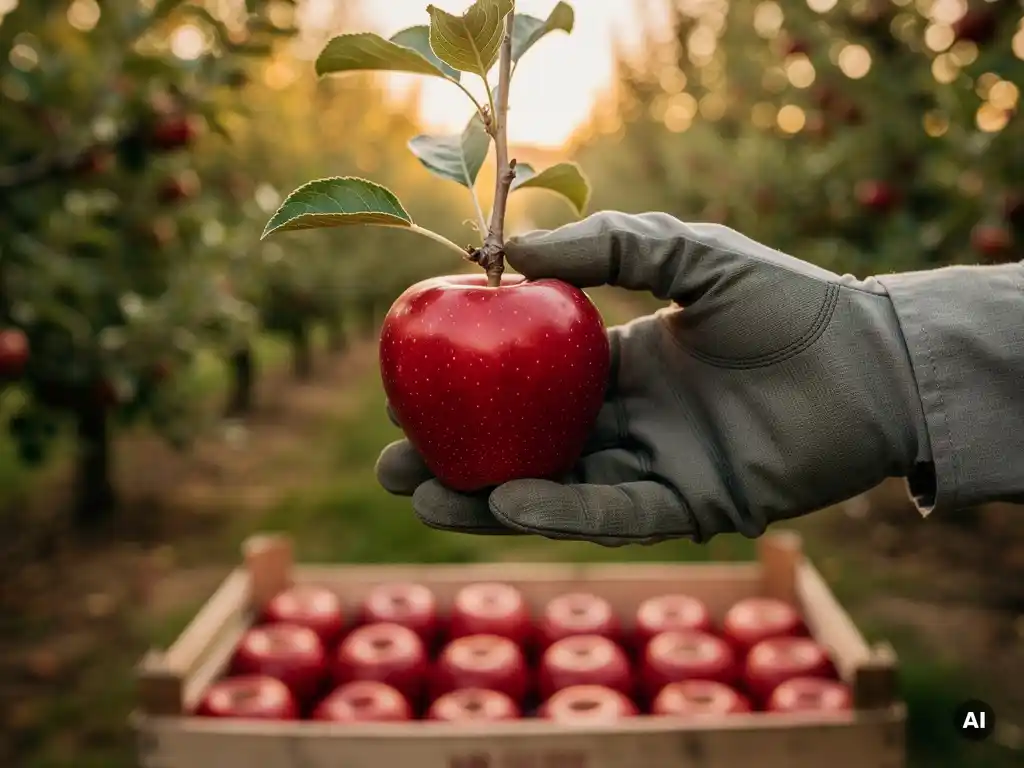
Consistent apple harvest quality comes down to three interconnected pillars: variety selection, orchard management throughout the growing season, and disciplined post-harvest handling. Get all three right, and you create a system where quality is built in from the start rather than chased at the end. If you want to talk through what this looks like for your specific situation, feel free to get in touch with us and we will be happy to help.
The sections below unpack each of the key questions growers ask about apple quality management, from choosing the right variety to knowing when to pick and how to store.
What factors affect apple quality at harvest?
Apple quality at harvest is shaped by a combination of variety genetics, growing conditions, orchard management practices, and timing. No single factor operates in isolation. Fruit size, colour, firmness, sugar content, and freedom from disease or pest damage are all influenced by decisions made weeks and months before picking day arrives.
Understanding these drivers helps you intervene at the right moments during the season rather than discovering problems at harvest when it is too late to act. The most important factors include:
- Variety genetics: The ceiling for quality is set by the variety itself. Some varieties are inherently more consistent in size, colour, and flavour across seasons than others.
- Soil health and nutrition: Calcium levels in particular have a direct bearing on fruit firmness and shelf life. Imbalanced nutrition leads to physiological disorders that show up in storage.
- Water management: Irregular irrigation or drought stress during fruit development causes uneven sizing and can trigger bitter pit or cracking.
- Canopy management: Poor light distribution inside the tree leads to uneven colour development and inconsistent ripening across the crop.
- Pest and disease pressure: Even low levels of infection or infestation can downgrade significant portions of a crop at packing.
- Weather events: Late frosts, hail, and heat spikes during critical windows can cause irreversible quality loss regardless of how well everything else is managed.
Addressing these factors systematically, rather than reactively, is the foundation of reliable apple quality control season after season.
How does apple variety choice influence long-term consistency?
Variety choice is the single most consequential decision for long-term apple harvest quality consistency. A variety with inherent genetic strengths in disease resistance, climate adaptability, and flavour stability gives you a structural advantage that no amount of spray programme or post-harvest intervention can fully replicate.
When evaluating varieties for long-term quality consistency, look beyond the initial impression of fruit appearance. Consider how the variety performs across multiple seasons and in varying weather conditions. Some varieties are highly sensitive to temperature fluctuations during fruit set or colouring, making them unreliable in regions with unpredictable springs or warm autumns. Others carry genetic traits that buffer them against these stresses.
At Better3Fruit, we breed with exactly this in mind. Our breeding programme uses molecular markers to identify and combine traits like taste, texture, disease tolerance, and climate resilience before a variety ever reaches commercial evaluation. This approach significantly reduces the risk that a variety will perform well in trial conditions but disappoint in commercial orchards over time. You can explore the varieties we have developed to see how these traits are expressed across our portfolio.
Growers who commit to well-bred, commercially proven varieties tend to report more predictable pack-out percentages and fewer season-to-season surprises than those who rely on older, less characterised cultivars.
What role do disease and pest pressure play in harvest consistency?
Disease and pest pressure are among the most direct threats to consistent apple harvest quality because they can render otherwise well-grown fruit unmarketable at packing. Scab, powdery mildew, fire blight, and codling moth are the most common culprits, and their impact compounds when control is reactive rather than preventive.
Effective apple orchard management treats disease and pest control as a season-long programme rather than a series of emergency responses. The key principles are:
- Start with resistant or tolerant varieties: Varieties with genetic resistance to scab, for example, dramatically reduce fungicide dependency and the risk of late-season infection breaking through.
- Monitor thresholds, not calendars: Spray timing based on actual infection pressure and pest population monitoring is more effective and more sustainable than fixed calendar schedules.
- Maintain orchard hygiene: Removing infected leaf litter and pruning out fire blight strikes reduces inoculum levels going into the following season.
- Protect critical windows: Petal fall and early fruit development are the highest-risk periods for most fungal diseases. Missing protection during these windows has disproportionate consequences for final fruit quality.
Choosing varieties with built-in disease tolerance is the most durable way to reduce this pressure. It does not eliminate the need for a spray programme, but it raises the floor of protection and gives growers more margin for error when conditions turn unfavourable.
How do you determine the right harvest window for apples?
The right harvest window for apples is determined by a combination of internal maturity indicators rather than by calendar date or external colour alone. Picking too early produces fruit that lacks flavour development and may not ripen properly in storage. Picking too late results in rapid softening, reduced shelf life, and susceptibility to storage disorders.
The most reliable way to determine harvest timing is to use multiple maturity indices together:
- Starch-iodine test: As apples ripen, starch converts to sugar. The starch pattern index gives a numerical score that correlates with internal maturity and can be tracked weekly through the pre-harvest period.
- Flesh firmness: Measured with a penetrometer, firmness declines as the fruit matures. Each variety has a target firmness range at harvest for optimal storage potential.
- Soluble solids content (Brix): Higher sugar content generally indicates greater maturity, though this varies by variety and growing conditions.
- Seed colour: Seeds turning brown is a useful visual indicator of advancing maturity, particularly for early-season varieties.
- Days after full bloom: This variety-specific benchmark provides a useful starting point for when to begin formal maturity testing.
Tracking these indicators from at least two weeks before the expected harvest window gives you the data to make a confident, informed decision rather than relying on guesswork. Variety-specific guidance from your nursery, breeder, or extension service will help you calibrate what the numbers mean for your particular cultivar.
What post-harvest practices protect apple quality in storage?
Post-harvest apple quality is protected primarily through rapid cooling, controlled atmosphere storage, and careful handling at every stage between orchard and packing line. The goal is to slow the biological processes that cause softening, flavour loss, and decay without introducing new damage from rough handling or temperature fluctuations.
Cooling and controlled atmosphere storage
Apples should be cooled to near-zero temperatures as quickly as possible after picking. Every hour at ambient temperature accelerates ripening and shortens eventual shelf life. For longer-term storage, controlled atmosphere (CA) conditions reduce oxygen levels and elevate carbon dioxide to suppress respiration and ethylene production, effectively pausing the ripening process. The specific CA parameters vary by variety, so using the wrong settings can cause internal disorders like low-oxygen injury.
Handling and packaging
Bruising is one of the most common causes of post-harvest quality loss, and it is almost entirely preventable. Drops of even a few centimetres onto a hard surface can cause internal bruising that only becomes visible days later at the packing line. Padding picking bins, minimising transfer points, and training harvest crews to handle fruit gently are all straightforward interventions that protect pack-out rates. Packaging choices also matter: ventilated bins and crates that allow airflow reduce the risk of localised warming and condensation during storage.
Should I join a club variety programme to improve quality consistency?
Joining a club variety programme can significantly improve quality consistency for growers who want structured support, coordinated market access, and clear production standards. Club programmes typically provide variety-specific agronomy guidance, defined harvest protocols, and a route to premium markets that reward consistent quality with better returns.
The trade-off is that club membership comes with obligations. Growers must meet production standards, adhere to supply agreements, and in some cases pay royalties or licensing fees. For growers who are already disciplined in their orchard management, the additional structure of a club programme can feel like a natural fit. For those who prefer full autonomy over their production and sales decisions, the constraints may feel limiting.
The key questions to ask before joining any club programme are:
- Does the variety have genuine consumer demand and a credible market development plan behind it?
- Is the licence structure transparent and fair, with no hidden obligations?
- Does the programme provide genuine agronomy support, or is it primarily a commercial arrangement?
- Is the supply base being managed to avoid overproduction that would erode the price premium?
We build our variety licensing around exactly these principles. Better3Fruit selects strategic partners for each variety to ensure coordinated marketing, quality control, and supply management, meaning growers who come into our programmes benefit from a structure designed to protect the value of the variety over the long term rather than simply maximise planted area.
Consistent apple harvest quality is achievable, but it requires treating variety selection, in-season management, harvest timing, and post-harvest handling as a connected system rather than separate tasks. If you are ready to take the next step, contact us to discuss how our breeding programme and variety portfolio can support your quality goals.
This content was generated with the help of AI and it may contain mistakes