
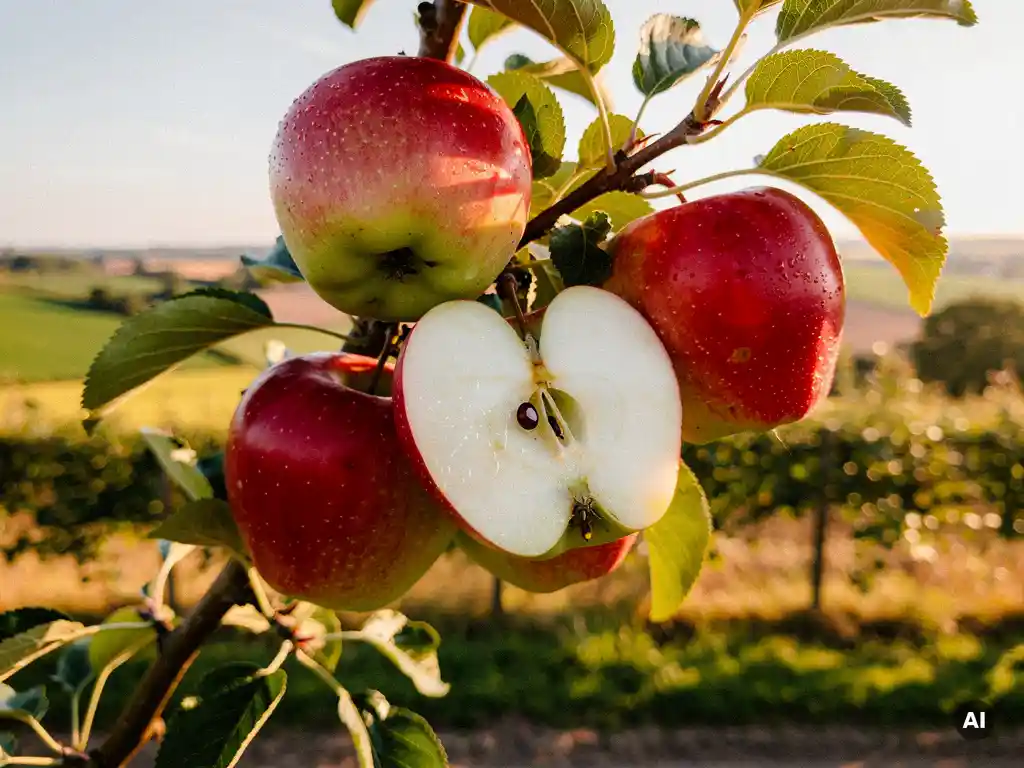
Climate-adaptive apple varieties are apple cultivars specifically bred to perform well under shifting and increasingly unpredictable weather conditions, including higher temperatures, irregular rainfall, late spring frosts, and new pest and disease pressures linked to a changing climate. These varieties are developed by fruit breeders who use advanced tools such as molecular markers to select for resilience traits alongside taste, yield, and storability. The questions below unpack exactly how this breeding works, which traits matter most, and why it is becoming one of the most important directions in modern apple cultivation. If you want to learn more about our work in this space, feel free to get in touch with us directly.
How do fruit breeders develop apples that adapt to climate change?
Fruit breeders develop climate-adaptive apple varieties by crossing parent plants that carry desirable resilience traits and then using molecular marker technology to identify promising offspring early, long before a seedling ever produces fruit. This approach dramatically accelerates the breeding cycle and allows breeders to stack multiple climate-relevant traits into a single cultivar without sacrificing taste or commercial appeal.
Traditional apple breeding relied on growing thousands of seedlings to maturity and evaluating them visually and through taste, a process that could take 15 to 20 years per variety. Modern molecular tools allow breeders to screen genetic material at the seedling stage, selecting only those individuals that carry the right combination of markers associated with heat tolerance, drought resilience, or disease resistance. At Better3Fruit, we introduce around 10,000 new varieties of each crop into the field every year and maintain over 30,000 varieties under evaluation at any one time, precisely because this scale is necessary to find the rare combinations that meet all commercial and environmental requirements simultaneously.
What traits make an apple variety climate-resilient?
A climate-resilient apple variety typically combines tolerance to temperature extremes, resistance to emerging disease and pest pressures, efficient water use, and the ability to produce consistent fruit quality even when growing conditions deviate from the seasonal norms the variety was originally bred for.
Key traits breeders prioritise include:
- Heat and drought tolerance: The ability to maintain fruit size, colour development, and sugar accumulation during unusually warm or dry summers.
- Late frost resilience: Delayed or protected flowering phenology that reduces the risk of blossom damage from spring cold snaps, which are becoming more frequent in many European and North American growing regions.
- Disease resistance: Genetic resistance to fungal diseases such as scab and mildew, which reduces reliance on chemical inputs and keeps orchards productive when disease pressure increases.
- Pest tolerance: Reduced susceptibility to insects and mites whose populations are expanding into new regions as winters become milder.
- Grower yield stability: The capacity to deliver commercially viable crop loads even in variable seasons, which is essential for growers managing economic as well as environmental risk.
No single trait defines climate resilience. The value lies in combining several of these characteristics within a variety that still delivers the eating quality and shelf life that retailers and consumers expect.
Why are disease and pest pressures changing with the climate?
Disease and pest pressures are changing because warmer winters, wetter springs, and longer growing seasons are altering the geographic range, seasonal timing, and population dynamics of pathogens and insects that affect apple orchards. Organisms that were once limited by cold temperatures are now surviving and spreading into regions where they were previously absent or rare.
Apple scab, caused by the fungus Venturia inaequalis, thrives under wet spring conditions. As rainfall patterns shift, some regions are experiencing more intense spring moisture, creating longer and more severe scab infection windows. At the same time, mildew pressure increases with warmer, drier conditions in summer. Pest species such as spotted wing drosophila and certain aphid populations are expanding their ranges northward as mild winters reduce natural population controls. For growers, this means that varieties bred for the disease and pest profile of 20 years ago may no longer be adequately protected. Breeding for broad-spectrum, durable resistance is therefore not just an environmental goal but a practical commercial necessity.
How do climate-adaptive varieties differ from standard apple cultivars?
Climate-adaptive apple varieties differ from standard cultivars primarily in the deliberate, multi-trait selection process behind them. Standard commercial varieties were often selected primarily for appearance, flavour, and storability under the relatively stable growing conditions of past decades. Climate-adaptive varieties are bred with resilience built in from the start, not added as an afterthought.
In practical terms, a standard cultivar may require more fungicide applications to manage scab in a wet season, more irrigation to maintain fruit size in a dry one, and may suffer more blossom loss in a late frost event. A climate-adaptive variety is designed to perform acceptably across a wider range of conditions, reducing input costs for growers and improving supply reliability for the broader supply chain. This does not mean climate-adaptive varieties compromise on taste or appearance. The challenge, and the focus of programmes like ours, is to ensure that resilience and eating quality are achieved together, not traded against each other.
Which apple-growing regions benefit most from climate-adaptive breeding?
Apple-growing regions that are experiencing the most pronounced climate shifts benefit most from climate-adaptive breeding. This includes traditional European production areas in Belgium, the Netherlands, Germany, France, and northern Italy, as well as emerging and expanding growing regions in eastern Europe, South Africa, Chile, and parts of North America where temperature and rainfall patterns are becoming less predictable.
In northern Europe, the primary concerns are late spring frosts following earlier warm spells that accelerate blossom development, combined with increased disease pressure from shifting rainfall. In warmer and drier southern regions, heat stress during fruit development and water scarcity are the dominant challenges. Regions at the margins of traditional apple production, where the crop is only viable within a narrow climatic window, stand to benefit most from varieties that can tolerate a broader range of conditions. Because we license our varieties worldwide with no preferred regional partners, growers and licence holders across all these geographies can access climate-adaptive cultivars suited to their specific conditions. You can explore our current apple and pear varieties to see which may be relevant for your region.
What role do private breeders play in climate-resilient fruit development?
Private fruit breeders play a central role in climate-resilient apple development because they can operate with long-term focus and commercial independence that public research institutions and individual growers often cannot maintain. Private breeders invest in large-scale, multi-decade breeding programmes and recover those investments through variety royalties, creating a sustainable model for continuous innovation.
Because private breeders are funded by the success of the varieties they release rather than by short-term grant cycles, they can afford to pursue breeding goals that take 15 to 20 years to materialise. Climate resilience is precisely this kind of long-horizon objective. We operate as a fully independent private company, which means we set our own breeding priorities without external influence and without obligations to preferred commercial partners. This independence allows us to focus on traits like disease resistance, pest tolerance, and climate adaptability as primary goals rather than secondary considerations. The result is a pipeline of varieties designed not just for today’s growing conditions but for the orchards of the next generation. If you are interested in licensing a climate-adaptive variety or exploring a partnership, contact us to start the conversation.
This content was generated with the help of AI and it may contain mistakes