
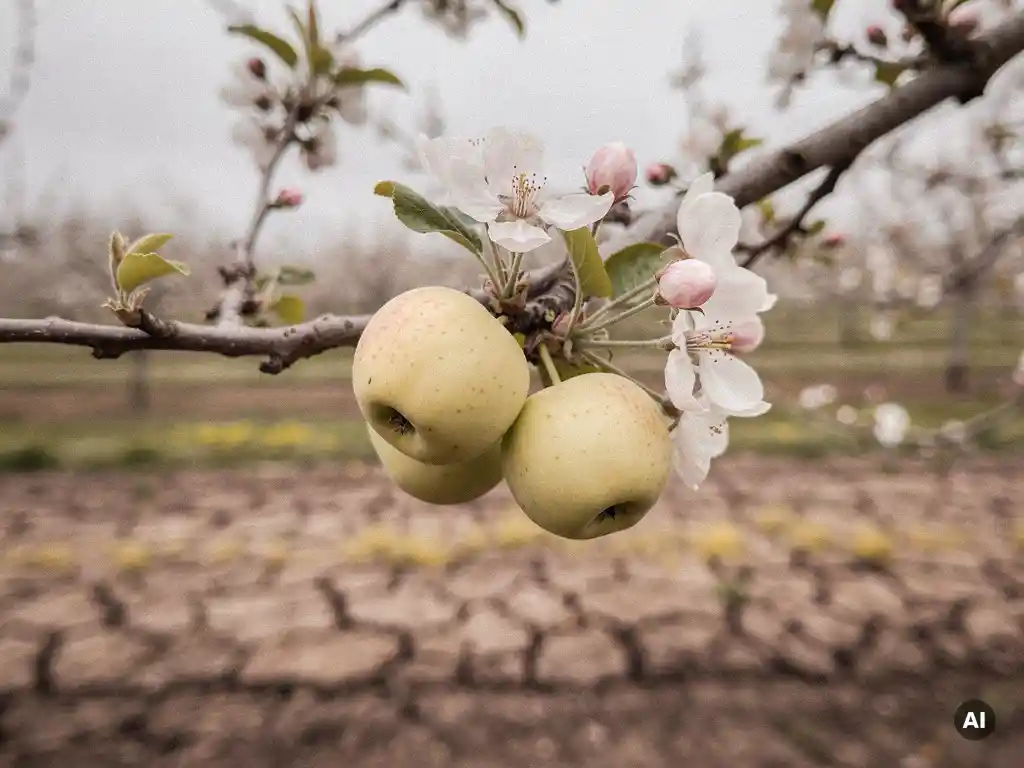
Insufficient chill units reduce fruit quality by disrupting the natural dormancy cycle that apples and pears depend on to develop properly. When trees do not accumulate enough cold hours during winter, they struggle to break dormancy uniformly, which leads to delayed and uneven flowering, poor fruit set, and ultimately smaller, misshapen fruit with compromised flavour and texture. This effect is becoming increasingly relevant as winters grow milder in many traditional fruit-growing regions. The sections below unpack each dimension of the problem, from the biology of chill accumulation to practical strategies growers can adopt. If you have questions specific to your situation, feel free to get in touch with us directly.
How do chill units affect apple and pear development?
Chill units are a measure of the cold exposure that apple and pear trees require during winter dormancy to resume normal growth in spring. Without sufficient chill accumulation, the hormonal signals that trigger budbreak, flowering, and fruit development do not function correctly, leaving trees in a state of incomplete dormancy release that undermines the entire growing season.
During autumn, deciduous fruit trees enter endodormancy, a deep rest phase controlled by internal hormones, primarily abscisic acid. Cold temperatures between roughly 2°C and 9°C are the most effective at satisfying this requirement. As chill hours accumulate, inhibitory hormones decline and growth-promoting hormones build, preparing the tree for a coordinated spring awakening. The precise threshold varies by variety, but the underlying mechanism is consistent across apple and pear crops. When that threshold is not met, the tree’s internal clock remains out of sync with the calendar, and every subsequent stage of development pays the price.
What are the signs of insufficient chill hours in an orchard?
The most visible signs of insufficient chill hours in an orchard are delayed, erratic, or prolonged budbreak, sparse and asynchronous flowering, and poor fruit set. Growers may also notice excessive blind wood, where buds fail to open at all, and a general lack of canopy uniformity that makes orchard management significantly more difficult.
Beyond the visual symptoms, insufficient chill accumulation often shows up in the data before it is obvious in the field. Flowering periods stretch over several weeks rather than the usual compact window, which reduces pollination efficiency and increases exposure to late frost events. Leaf emergence may lag behind flowering, depriving developing fruitlets of the photosynthetic support they need in the critical early weeks. In severe cases, trees may produce a flush of vegetative growth at the expense of reproductive development, resulting in heavy canopies with very little harvestable fruit.
How does low chill accumulation directly impact fruit quality?
Low chill accumulation directly impacts fruit quality by causing uneven cell division in the early stages of fruitlet development, which produces smaller, misshapen fruit with irregular skin finish. Flavour development also suffers, as the sugar and acid balance that defines eating quality depends on a full and well-timed growing season that begins with proper dormancy release.
The texture of apples and pears is particularly sensitive to chill deficits. Fruit that develops from poorly synchronised flowering tends to show variable maturity within the same batch, making it harder to time harvest correctly. Some fruit matures too early and softens quickly in storage; other fruit from the same tree remains immature at the same picking date. Post-harvest performance, including shelf life and crunch retention, declines noticeably when chill requirements have not been fully satisfied. For premium club varieties where consistent quality is a commercial requirement, even a modest chill shortfall can result in significant downgrading at the packhouse.
Which apple and pear varieties are most vulnerable to chill deficits?
Apple and pear varieties with high chill hour requirements are most vulnerable to chill deficits. Traditional European varieties, many of which were bred in cool-temperate climates, typically require between 800 and 1,200 chill hours and perform poorly when winters are mild. Low-chill varieties, bred specifically for warmer climates, can satisfy their requirements with 300 to 500 hours and are far more resilient to warming winters.
Among apples, older heritage varieties and many widely grown commercial cultivars carry chill requirements that were calibrated to the climate conditions of past decades. As winters have warmed, these varieties face increasing stress in regions that were once considered perfectly suited to them. Pears, particularly European varieties such as Conference and Doyenné du Comice, tend to have even higher chill requirements than most apples, making them especially exposed. At Better3Fruit, our apple and pear varieties are developed with long-term climate resilience as a core breeding goal, which means we actively work to bring chill requirements in line with what growers can realistically expect from their winters going forward.
How is climate change shifting chill unit availability worldwide?
Climate change is reducing chill unit availability in fruit-growing regions worldwide by raising average winter temperatures, shortening the effective chilling period, and introducing more frequent warm spells during what should be the coldest months. Regions that historically provided reliable chill accumulation are now recording consistent shortfalls, while some areas that were marginal for apple and pear production are becoming increasingly unsuitable.
The shift is not uniform. Higher-altitude and higher-latitude growing regions are experiencing the change more slowly, while low-altitude Mediterranean climates, parts of South Africa, and some regions of South America and Australia are already seeing significant reductions in seasonal chill accumulation. The problem is compounded by the fact that warm periods interspersed with cold do not simply pause chill accumulation; they can actively reverse it under some chill models. This means that erratic winters, even those with occasional cold snaps, may deliver far less effective chilling than the raw temperature averages suggest. For apple dormancy and pear dormancy to be fully satisfied, sustained and consistent cold matters as much as total cold exposure.
What can growers do to manage insufficient chill hours?
Growers managing insufficient chill hours have several practical options: applying dormancy-breaking chemicals such as hydrogen cyanamide to stimulate uniform budbreak, selecting low-chill or climate-resilient varieties suited to their region, using evaporative cooling or shade cloth to reduce heat accumulation during critical periods, and adjusting orchard management practices to support tree health under stress.
Variety selection and breeding
The most durable long-term solution is planting varieties with chill requirements that match the actual winter climate of the orchard, not the climate of twenty years ago. This means working with breeders who are actively developing cultivars with reduced chill requirements alongside the flavour, texture, and disease resistance that the market demands. Selecting the right variety at planting removes the need for costly chemical interventions every season and reduces the risk of catastrophic crop failure in unusually mild winters.
Agronomic and chemical interventions
For existing orchards, hydrogen cyanamide applications timed to coincide with the end of the natural chilling period can partially compensate for chill shortfalls by chemically breaking endodormancy. Mineral oils and other rest-breaking agents are also used in some regions. These tools are effective but add cost and complexity to orchard management, and their efficacy diminishes as chill deficits grow more severe. Complementary practices such as delayed pruning, irrigation management, and strategic canopy manipulation can help trees make the most of the chill hours that are available.
Understanding the relationship between chill accumulation and fruit quality is increasingly central to sustainable orchard planning. As climate patterns continue to shift, the varieties growers choose today will determine how resilient their orchards are over the next two to three decades. We work closely with growers, licensees, and industry partners to ensure that our breeding programme stays ahead of these challenges. If you want to explore which varieties are best suited to your growing conditions, contact us and we will be happy to help.
This content was generated with the help of AI and it may contain mistakes