
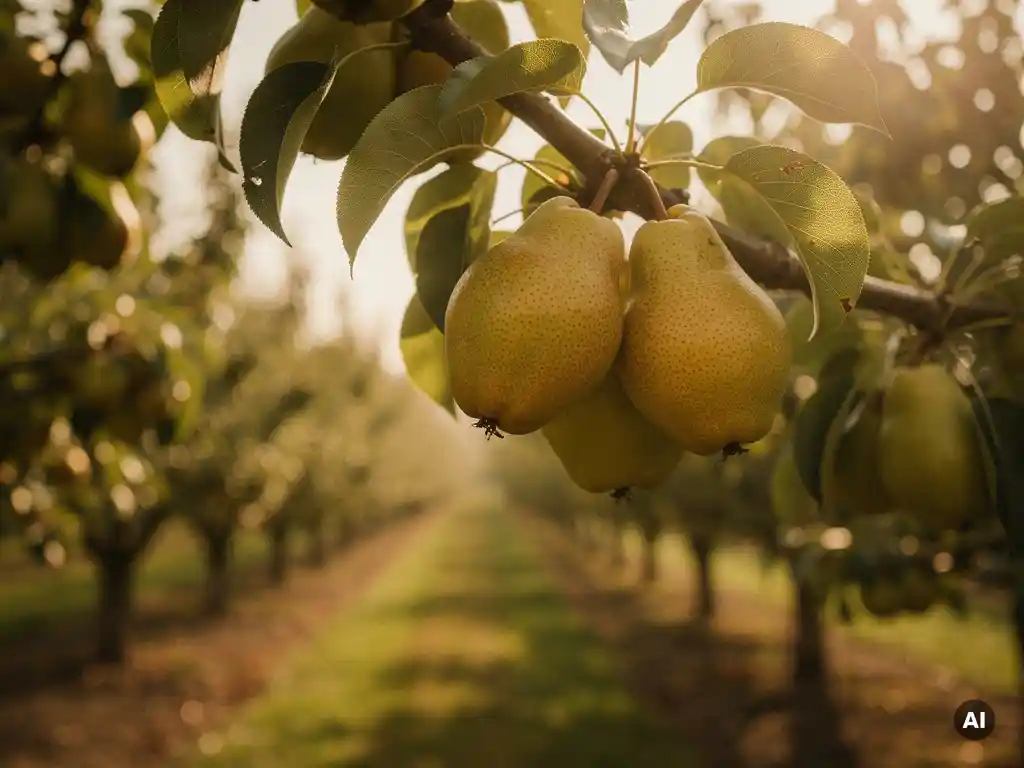
Pear varieties that combine well with warm summers include heat-tolerant cultivars with strong skin integrity, efficient water use, and the ability to maintain fruit quality under high temperatures. Varieties with later ripening windows, natural disease resistance, and good sugar-to-acid balance tend to perform most reliably when summer temperatures rise. This article walks through the key questions growers ask when selecting pear varieties for warmer growing conditions, and if you want to discuss specific options with us directly, feel free to get in touch.
How do warm summers affect pear fruit development?
Warm summers accelerate pear development, often shortening the time between bloom and harvest. This can reduce fruit size, alter sugar and acid levels, and increase the risk of sunscald and russeting. In regions where summer temperatures regularly exceed comfortable thresholds, growers frequently see earlier maturity dates, softer flesh at harvest, and a narrower picking window that demands precise timing.
The ripening process in pears is driven by ethylene production, which intensifies under heat stress. When temperatures stay elevated for extended periods, ethylene can spike prematurely, causing fruit to soften before it reaches optimal size. This is particularly challenging for varieties bred in cooler, maritime climates that were never designed to handle prolonged heat exposure.
Beyond ripening, heat affects cell division during the early stages of fruit development. Pears that experience high temperatures in the weeks after petal fall may develop smaller cells, resulting in denser but smaller fruit. Skin finish can also suffer, with russeting and cracking becoming more common when hot days are combined with fluctuating night temperatures or irregular irrigation.
What traits make a pear variety heat tolerant?
A heat-tolerant pear variety typically combines a robust skin structure, efficient stomatal regulation, and a genetic profile that supports stable ripening under temperature stress. Varieties with thicker cuticles are better equipped to limit water loss, while those with deeper root systems can access soil moisture during dry spells. Strong cell wall composition also helps fruit maintain firmness even as temperatures push ripening forward.
Beyond physical structure, heat tolerance in pears involves how a variety manages its internal chemistry. Cultivars that maintain a balanced sugar-to-acid ratio under heat stress produce fruit that still tastes good at harvest, even if ripening has been accelerated. Varieties prone to rapid acid degradation in warm conditions can taste flat or overripe by the time they reach the consumer.
Disease resistance is another dimension of heat tolerance worth considering. Warm, dry summers may reduce some fungal pressure, but they can increase susceptibility to fire blight, particularly during warm spring periods that precede the summer heat. Varieties with built-in resistance to fire blight and other bacterial diseases offer growers an important buffer in changing climates.
Which pear varieties perform best in warm summer climates?
Pear varieties that perform best in warm summer climates tend to be those with later natural ripening windows, strong skin integrity, and tolerance for reduced chill hours. Varieties from Mediterranean breeding programs or those specifically selected under warm conditions have a clear advantage. Conference, Abate Fetel, and Williams remain popular in warmer European regions, though their performance varies significantly by microclimate and rootstock choice.
Newer breeding selections are increasingly designed with climate resilience in mind. Varieties that combine good heat tolerance with disease resistance and consumer-appealing flavour profiles are becoming the focus of modern programs. Growers in warm regions should look for cultivars that have been trialled specifically in their climate zone rather than relying solely on historical performance data from cooler growing areas.
Rootstock selection plays an equally important role. Even a heat-tolerant scion variety can underperform if grafted onto a rootstock poorly suited to dry or warm soils. Matching variety to rootstock and local conditions is the foundation of successful pear cultivation in warm summer climates. You can explore the range of varieties we have developed and are currently trialling on our varieties page.
How does modern pear breeding address summer climate challenges?
Modern pear breeding addresses summer climate challenges by using molecular marker technology to identify and select for heat tolerance, disease resistance, and fruit quality traits simultaneously. This approach allows breeders to screen thousands of seedlings at the genetic level before they ever enter field trials, dramatically accelerating the development of varieties suited to warmer growing conditions.
At Better3Fruit, we run one of the largest pear breeding programs in the world, with over 10,000 new pear varieties entering field evaluation every year. Our breeding strategy places climate resilience and multi-level sustainability at the centre of long-term goals, alongside the taste, texture, and yield traits that make a variety commercially viable for growers. This means new selections are not just evaluated for how they taste in ideal conditions, but for how they perform when summers are hot and dry.
Molecular markers allow us to link specific genetic sequences to desirable traits, making it possible to combine heat tolerance with fire blight resistance, good fruit finish, and strong flavour in a single variety. What once took decades of conventional crossing and observation can now be guided with far greater precision, reducing the time it takes to bring a climate-adapted variety from the breeding program to commercial orchards.
Should growers choose club varieties or open varieties for warm regions?
Growers in warm regions should weigh both options carefully. Club varieties offer coordinated marketing, quality standards, and brand recognition that can command premium prices, while open varieties provide more flexibility in where and how fruit is sold. Neither model is inherently better for warm climates: the more important factor is whether the specific variety, regardless of its commercial structure, has been bred and trialled for performance in heat.
The case for club varieties in warm climates
Club varieties often come with more structured support from the licensing organisation, including access to agronomy guidance, harvest timing data, and quality benchmarks developed across multiple growing regions. For growers entering a new climate zone or working with a variety they are unfamiliar with, this support structure can reduce risk. Club programs also tend to invest in variety development over time, meaning growers benefit from ongoing improvement in production protocols.
The case for open varieties in warm climates
Open varieties give growers the freedom to sell through any channel and to adapt their approach without the constraints of a club agreement. In warm regions where growing conditions vary significantly between seasons, this flexibility can be valuable. Open varieties also allow growers to respond more quickly to local market demand without coordinating with a broader licensing structure. The trade-off is that without coordinated marketing, building consumer recognition around an open variety requires more independent investment.
At Better3Fruit, we work with both models and select the right commercial structure for each variety based on what will best support growers and build sustainable market demand. If you are weighing up which approach suits your operation, we are happy to talk it through. Reach out to us and we will help you find the right fit.
This content was generated with the help of AI and it may contain mistakes